7 minutes ago
GLPS urges consensus for president, warns consequences of political crisis
Periskopi(3 months ago)
(3 months ago)The group for Juridical and Political Studies (GLPS) has asked political parties to reach consensus on electing the president, citing the 34-day deadline by the Constitutional Court as an opportunity to exit the political crisis. GLPS Executive Director Njomza Arifi, in an interview for Online Economy, said the country already [...]
The group for Juridical and Political Studies (GLPS) has asked political parties to reach consensus on electing the president, citing the 34-day deadline by the Constitutional Court as an opportunity to exit the political crisis.
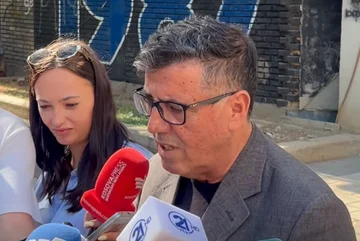
GLPS Executive Director Njomza Arifi, in an interview for Online Economy, said the country has already entered the second year of a deep political crisis, which is undermining the reforming processes and the international image of Kosovo.
“Yes, the Constitutional Court has given 34 more days for the election of the president, this should be seen by all political parties as an opportunity to emerge from the crisis in which we are immersed, because Kosovo is actually entering the year, in the second year of a deep political crisis which naturally undermines the reform processes in Kosovo, but also Kosovo's image in the international arena. So our call is for political parties to sit down and find a common consensus so that in whatever form the elections, which would have major consequences”, she said.
Arifi stressed that new elections do not guarantee solutions and can further deepen the political crisis. Moreover, a new set of elections does not mean that we would have a very different outcome to reach a solution. Therefore, consensus is the key at this moment in order to avoid any other crisis that could deepen”, she said.
Niomza Arifi warned that a new election process would negatively affect the implementation of international agreements and important reforms.
“Yes, some of the international agreements we've asked to be voted for and made solutions so that we don't delay, if we went into a new election cycle despite their voting let's say the growth plan, we would still, we would be affected by implementing reforms and those commitments that we've undertaken under the growth plan. Beyond other important parts such as rule of the law, the public administration -- that is, a new set of elections -- would imply a deadlock of Kosovo institutions and a government in office again, which could not exercise full competencies”, she said.
According to her, the main demand of international partners, particularly of the European Union, remains institutional stability in Kosovo.
“We have seen it during the past year, but also as years since the international community's main call, especially the European Union has been for Kosovo to have stable institutions. So some of the very important processes Kosovo has undertaken as if the growth plan would be influenced by one, let's say new political instability. Therefore, of course the political crises will not have, would not reflect a good Kosovo in the international arena”, she said.
The Constitutional Court has given Kosovo lawmakers some time over a month to elect the country's new president after it overturned a decree by the current president, Vjosa Osmani, on March 25th for the distribution of the Assembly after the president's election at a session on March 5th. The decree, according to the Constitutional Court, has no legal effect.
From the Kosovo presidency, they welcomed the decision and said it has been found that Osman has not committed constitutional violations.
The Constitutional Court published the full conviction regarding Osman's decree issued on March 6th, deciding that if within 34 days, since the act of law has entered into force, MPs do not elect the president, the Parliament is distributed.
According to the decision, after the distribution '%ex transitione '% (included automatically under the Constitution) of the legislature, Kosovo must hold new elections within 45 days.