6 hours ago
The elections in Hungary: Orban's opponent, <x0-optimistic” for the result
Periskopi(3 months ago)
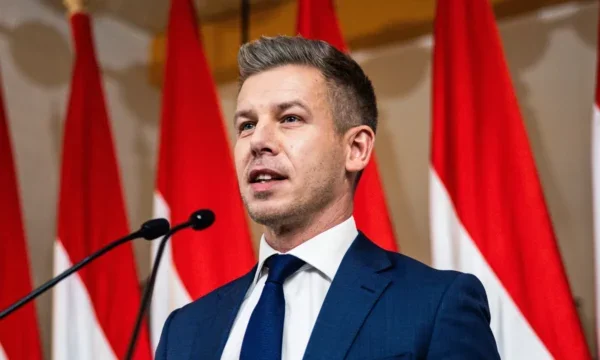
(3 months ago)Places for parliamentary elections in Hungary have been closed, as exits to the polls were sometimes highest. The main election race was between current Prime Minister Viktor Orban, who has been in power for 16 years, and opposition leaders Peter Magyar. After the polls closed, Magyar told the media he is <x0-optimistic”, but cautious “” [...]
Places for parliamentary elections in Hungary have been closed, as exits to the polls were sometimes highest. The main election race was between current Prime Minister Viktor Orban, who has been in power for 16 years, and opposition leaders Peter Magyar.
After the closure of polling stations, Magyar told the media he is <x0-optimistic”, but cautious “” for the election result.
Following the closure of the deployments, several polls have been published, two of which envision Magyar's victory, already an Orban one.
According to a survey by the 21st headquarters Research Centre in Budapest, which was conducted this week and was published after the polls were closed, the opposition leader Peter Magyar's pro-European party, Peter Magyar, is expected to win 55 per cent of the vote, meanwhile, the Fidesz coalition. - KDNP is expected to gain 38.
Meanwhile, the Media poll, also conducted before the polls, says Magyar's party will gain 57.1 per cent, or 135 seats in Parliament -- two more than 133 per majority of two-thirds.
But another poll, by Alapjogocker, suggested Orban will win the sixth term. According to this survey, the Fidesz party is expected to win 44.5 per cent of the vote, meanwhile, Tisza 42 per cent.
The polling stations were closed at 7: 00 a.m. and the exit was 77.8 percent, half an hour before the completion of the process. This figure marks the new record, as the highest exit was recorded earlier in 2002 when 70.5 percent of voters had voted.
Preliminary results are expected to come up shortly after the polls are closed, but if the race is narrow, the winner may not be announced until the count of all votes until next Saturday, according to the National Electoral Office.
The Hungarian elections are being monitored carefully by Kiev and Moscow, as well as by the European Union, as US President Donald Trump has offered support to Orban, who has maintained close ties with Russia, even after Moscow began the invasion of Ukraine in 2022.
Both camps have charged foreign interventions during the campaign in Hungary, which has 9.5 million inhabitants.
Only five parties are participating in the vote's at least participating parties since Hungary's democratisation in 1990 after some parties have withdrawn from the race to increase the party's chances of winning Tisza.
Orban, 62, is targeting the sixth consecutive term.
As an EU member, he has managed to block or soften many EU decisions on sanctions against Russia after Moscow began its full-scale invasion of Ukraine in 2022. It has also hampered some decisions on EU support for Ukraine.
Magyar, 45, entered the political scene two years ago, gaining support amid economic stagnation.
The leader of the Tisza party, Peter Magyar, has called on Hungarians “to regain their homeland” to confirm Hungary's EU country, and has promised to fight corruption and offer better services to citizens.
Orban at election gatherings has warned “not to put anything at risk”, calling for “to be replaced by what we achieved.
The Hungarian prime minister has made Ukraine the key theme of his campaign, presenting this neighbouring state, struggling against Russia's launched invasion as state <x0 secondary> on Hungary.
He has also pledged that he will continue printing against “false civil society organisations, bought journalists, judges and politicians”.
According to the Ambesty Italyal organisation, Hungary, along with Bulgaria, are the most corrupt states of the EU. / REL