44 minutes ago
The Constitution Not Read Same by All
Periskopi(3 months ago)
(3 months ago)In Kosovo, political disputes often end up in the Constitutional Court, as the country's highest legal document, passed on April 9, 2008, is not read the same by all actors today. Is the Constitution unclear, or is it being used politically? Written 18 years ago, the Constitution of Kosovo as the highest act [...]
Written 18 years ago, Kosovo's Constitution, as the highest judicial act, aims to define the rules of the political game.
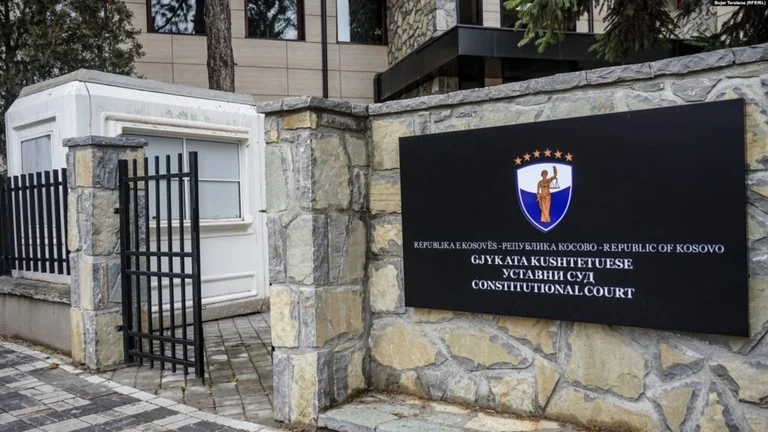
But in Kosovo, the game has often stopped to be clarified at the Constitutional Court.
From June 2025 to January 2026, the Constitution responded to five cases related only to the issue of the Kosovo Assembly binding.
Meanwhile, he reviewed three more political cases during the past month.
The court abolished President Vjosa Osmani's decree on the distribution of the Parliament; rejected Osmani's request by Parliament Speaker Albulen Haxhiu, about non-participating MPs at the session for the president and, declared Osman's request unacceptable about the appointment of members of the Central Election Commission.
Why so many cases in Constitutional?
Is the Constitution so unclear, or is the possibility for interpretation by the Court being used for political purposes?
In assessing the connoisseurs, this is not a black and white issue.
Visar Morina, professor of Constitutional Law at Pristina University, says about Radio Free Europe that the Kosovo Constitution is not unclear in its entirety, but estimates there are some more general formulaulations that are still not the main reason for the large number of cases sent to the Constitution.
He considers that one of the circumstances that contributed to the increase in cases of review is the fact that the Constitution regulates fundamental state issues, such as institution formation, the restriction of power, competencies, long term rates, which, according to him, are not in some cases equally understood by all politicians.
When political dialogue and institutional compromise are lacking, then constitutional dilemmas naturally shift to Constitutional Court”, Morina says, calling normal action into constitutional democracy.
The accuracy of the language by which a constitution is written is estimated to allow less space for its rules to be interpreted in various ways.
When constitutional provisions are not clear enough, they naturally create opportunities for readings different from political and institutional actors, increasing the potential for constitutional disputes”, it says.
But interpretations by the court, according to Professor Morina, cannot be completely avoided even the carefully designed constitutions.
After all, constitutional interpretation is an essential function of constitutional courts, he says.
Law collapse, presidents, government...
In addition to the political processes within the institutions, the Constitutional Court judges before them also had dozens of Parliament laws for review.
Thirteen of them, among other things, the Law for the Bureau for verification and confiscation of unwarranted property that had been approved by MPs in December 2024, they were knocked down at the beginning of 2026.
The court said the laws were not in line with the country's Constitution, after finding rules for governance, power sharing, values, the exercise of office, labour regulations and commissions when MPs had adopted them in the Assembly.
Beyond laws, constitutional interpretations in Kosovo's political history have also brought down presidents and governments.
In 2010, then President Fatmir Sejdiu resigned after the Court found he violated the Constitution, holding both the president's and the head of the Democratic League of Kosovo.
A year later, the court fell from President Behgjet Pacolli's office, since his form of choice had been unconstitutional.
In 2020 the government of Avdullah Hoti collapsed after her election was deemed unconstitutional.
Should Kosovo Constitution Be Changed?
Professor Morina says it has consistently evolved, both through written amendments and through interpretations of the Constitutional Court, which have since become precedent for similar circumstances.
According to him, what needs to be changed depends on the priorities of the state and society as well as on external factors, such as the European integration process or aspirations for membership in international organisations.
The Kosovo Assembly adopted the Constitution on April 9th 2008, as it went into effect two months later.
The amendment to the Constitution requires double voting: agreement by two-thirds of all MPs, and by two-thirds of minority community deputies. So any change requires broad consensus.
In a reality where the Constitution is not read equally by all, the Constitutional Court often remains the place where political disputes end.
Thank you for reading this joker. If you like it, we invite you to share it with others. (They can subscribe here for free to accept every issue of our news.)