3 minutes ago
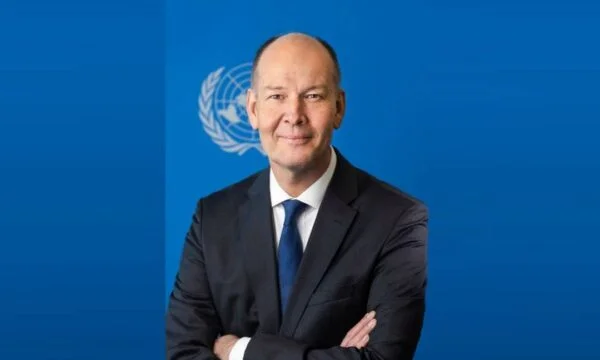
Chief UNMIK brings president's Kosovo non-election topic to UN, attacks on journalists
Periskopi(3 months ago)
(3 months ago)Chief UNMIK Peter Due, in his first report to the UN, has also cited the issue of the president's non-election, stressing that he hopes differences will be overcome. Let's hope that differences are overcome, a new president is elected, and new legislative elections are avoided. This would help [...]
Chief UNMIK Peter Due, in his first report to the UN, has also cited the issue of the president's non-election, stressing that he hopes differences will be overcome.
Let's hope that differences are overcome, a new president is elected, and new legislative elections are avoided. This would help keep institutions focused on general public interest and the needs of citizens,”, he stressed.
On the other hand, Due has also spoken of attacks on journalists in Kosovo, calling for “the preservation of journalists' independence, free of any form of political or other pressure, as well as the immediate prosecution and prosecution of any assault on them”.
Full media communication sent by UNMIK
P SSP Peter Due calls for continued dialogue and confidence building during his first report to the UN Security Council for Kosovo
April 9, 2026 Today, during his first report to the UN Security Council for Kosovo since taking office three months ago, UN Secretary General Special Representative (PSSP) Peter Due presented an update on recent developments.
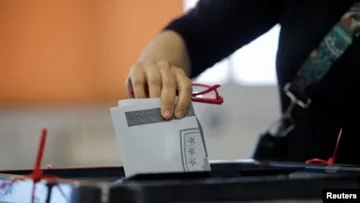
P The SSP welcomed the peaceful and comprehensive legislative elections held in December, followed by the government's rapid framework and timely formation, proved a stability and progress trajectory. However, the process of electing the new Kosovo president is not yet complete. Let's hope that differences are overcome, a new president is elected, and new legislative elections are avoided. This would help to keep institutions focused on general public interest and the needs of citizens,” he said.
P The SSP also praised the active participation of all communities in municipal elections held in October and November, as well as the timely establishment of local governance administrations throughout Kosovo. North Kosovo “, the return of mayors of Serb majority municipalities, marked an important step towards re-agement in local institutions. However, this process has not been without challenges,” he stressed. In my last meetings with some of these heads, I heard concerns about partial surrenders, administrative gaps and language barriers.” He welcomed recent efforts to strengthen co-operation between central institutions and municipal leaders in the north.
P The SSP also welcomed recent progress in the EU-launched dialogue between Belgrade and Pristina, including progress in implementing the Foreign Law. It is important that Belgrade and Pristina exploit this moment, advancing the implementation of existing agreements, including the establishment of the Association/Unitivity of Serb majority municipalities. I hope a high-level meeting between President Vucic and Prime Minister Kurti will take place in the near future,” he said.
He reiterated the call for full co-operation by authorities in Belgrade and Pristina, in order for those responsible for Banjska in 2023 and for attacks on Iber-Lepenc in 2024 to be brought to justice.
Noting that Kosovo has a dynamic civic activism, The SPP called for preserving the independence of journalists, free from any form of political or other pressure, as well as for the immediate investigation and prosecution of any assault on them.
Noting the continuing concerns of non-most communities related to equality, access to justice and services, freedom of expression and sensitive property rights issues, The SPSP stressed that implementing laws on languages and appointing a Language Commissioner are essential for promoting inclusion and ensuring full exercise of rights for all communities.
In the end, PSSP Due underlined trust building remains priority for UNMIK, even in the face of financial restrictions. With his commitments, the Mission aims to advance meaningful participation of women and young people in political processes, as part of a broader commitment to promote a culture of peace, where participation is inclusive, where all voices are heard and where every community sees itself involved in the road ahead,” he concluded.