12 minutes ago
Anti-Call center event in Tirana, Europol publishes details
Periskopi(2 months ago)
(2 months ago)The Albanian criminal network operating a large-scale online fraud scheme has been destroyed through a collaborative investigation involving Austrian and Albanian authorities, with support from Europol and Eurojust. The operation, which lasted more than two years, resulted in the arrest of ten individuals, the control of several locals, and the nearly sequential [...]
The operation, which lasted more than two years, resulted in the arrest of ten individuals, control of several locals and the seizure of nearly 900 000 euros in cash, as Europol has made public.
The criminal network, which allegedly operated several centrist call in Tirana, is believed to have caused considerable financial damage, totaling at least 50m euros. Call Center had been established and organised professionally, likely with legitimate business structures displaying a clear division of hierarchical roles and management.
The victims were attracted by seemingly legitimate online investment platforms through fraudulent social media advertising or online research, lured by the promise of profitable investment. Following the initial census with these online false mediators, fraud victims were assigned <x0 holding agents” who imitated advisers or investment brokers.
These agents managed their accounts for long periods of time, often using remote access software to gain full control of the fraud's electronic devices.
The frauds claimed to be professional expertise and used psychological pressure to persuade them to make additional investments, falsely claiming it would be profitable. In fact, the funds were never invested, but were channeled into a complex international money laundering scheme, eventually disappearing into the hands of the criminal organisation.
Operators were organised in teams of six to eight individuals, each specialising in a specific language to target their respective national markets. Languages covered included German, English, Italian, Greek, and Spanish. As is common in investment fraud, knowledge of the language was used to create and build faith. The suspects relied on this element to deceive their victims by presenting false investment opportunities and convincing them to transfer considerable amounts of money.
The rate and professionalism of the criminal network were evident in its structure, which included up to 450 employees in different departments, including customer purchases, handled by <x0 conversion agents” and client service managed by <x2 subsygents. Moreover, the network had teams dedicated to management, finance, IT, human resources and various activities of the support office.
Team leaders monitored their teams' daily activities, while a manager at each center call co-ordinated and instructed team leaders and general operations. The operators received a monthly salary of approximately 800 euros, along with a progressive commission on any successful, partially paid contracts in cash and part through bank transfer.
As a result of these fraudulent schemes, the victims transferred significant amounts of money, estimated to exceed 50m euros. The authors also contacted again people who had suffered losses through fraudulent platforms, providing services to recover their funds.
Interested individuals were instructed to open accounts on crypto notes platforms and make an initial deposit of 500 euros. Operators, using user names and acting under nicknames, persuaded victims to make this initial payment in an attempt to cheat again.
The investigation was initially launched by Austrian authorities due to the large number of victims identified in Vienna around June 2023. In April 2024, Austrian authorities, through Europol, addressed Albanian authorities with a request for information concerning an address The IP, allegedly used by the authors, who were on the territory of the Republic of Albania. After that request, Albanian authorities launched a criminal investigation.
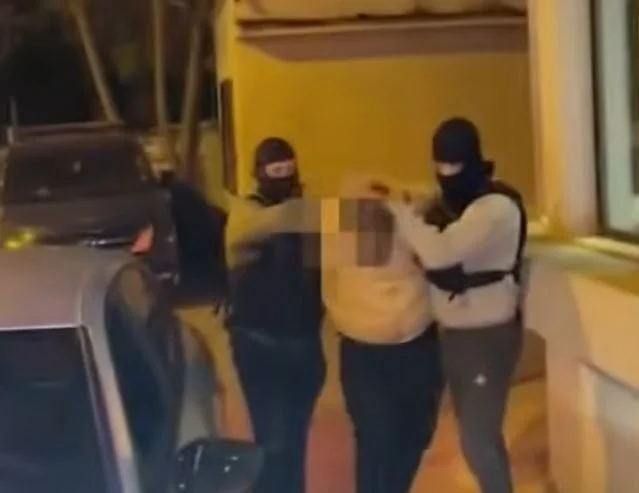
With Eurojust's support, a joint investigation was launched, leading to a day of co-ordinated action on April 17th 2026. The reported raids resulted in the arrest of ten individuals in Tirana, research conducted at three call centres and nine private homes led to the seizure of 891 735 euros in cash, 443 computers, 238 mobile phones, 6 laptops, and various data carriers and storage media.
The victim of this fraud scheme was all over Europe and worldwide, including Italy, Germany, Greece, Spain, Canada and the United Kingdom.