an hour ago
Shea: NATO's intervention in Kosovo saved Kosovars' lives
Periskopi(4 months ago)
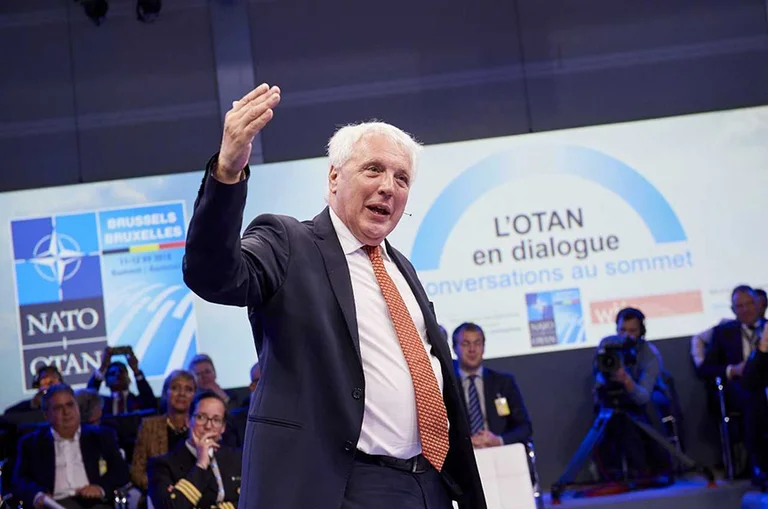
(4 months ago)Former spokeswoman NATO during the Kosovo war, Jamie Shea, in an interview for RTKLive, on the 27th anniversary of the start of NATO air strikes on the former Yugoslavia (Serbia), said he had been convinced that using force was necessary to save Kosovars' lives and that justice was on their side. [...]
According to the former NATO official, the decision was not difficult because Milosevic's stubborn stance and Serbian actions, as the massacre in Recak, convinced all allies that NATO should intervene to prevent a humanitarian catastrophe in Kosovo.
Shea estimated that, even though twenty-seven years later Serbia has still not apologised for crimes committed in Kosovo, this is unfortunate. Because facing the darkest side of its history and apologizing for past mistakes is a sign of a mature democracy. And it is essential if countries want to move forward and have normal relations with their neighbours”, he said.
He said it is the moral responsibility of Serbia's government to accept crimes committed in Bosnia, Croatia and Kosovo and to appoint an independent commission of international and Serbian historians to investigate and bring all facts to light.
Shea talked about the terrorist attack on Banjska. Serbia has used tactics against Kosovo to try to weaken it. Banjska incident in September 2023 is a good example. Therefore, NATO's main task today is to help Kosovo with better intelligence on these forms of hybrid war and to develop its internal stability to protect against them”, he said.
Serbia continues to use aggressive rhetoric to neighbouring countries, including Kosovo and Croatia. The Shea relates this to the lack of political vision and manhood on the part of Serbia's leaders since the fall of the Milosevic regime.
He has also spoken of Kosovo as part of NATO. Kosovo shares NATO values and has shown that it wants to contribute to NATO's overall security and not only benefit from the security that NATO can provide for Kosovo, for example through KFOR”, he said.
Full interview:
Today it is marked 27 years by NATO intervention aimed at preventing crimes in Kosovo. How do you remember that time?
Shea: It was a time of anxiety, as can be expected. You never know what will happen when you use military force, because even your opponent has a role and can interfere with your goals, at least for a while. But I was convinced that using force was necessary to save the lives of Kosovars. We had tried diplomacy and given Milosevic and his regime every opportunity during the months before March 1999 to find a peaceful solution, but they continued to use violence. So I believed that justice was on our side.
RTKlive: How difficult were the decisions to make?
Shea: The key thing was to become proper military planning, and NATO military commanders had accomplished this over several months. Also, to ensure the maximum participation of NATO allies to show solidarity and a collective will to halt Serb violence against Kosovo's civilian population. And define a legal basis acceptable to all and a clear objective. Political side was just as important as military. NATO is a defence alliance and no ally wanted to use force if there was another peaceful solution. But in the end, the decision was not difficult because Milosevic's stubborn stance and Serbian actions, such as the massacre in Recak, convinced all allies that NATO should intervene to prevent a humanitarian catastrophe in Kosovo.
Twenty-seven years later, Serbia has not yet apologised for crimes committed in Kosovo. How do you evaluate this?
Shea: Sadly, facing the darkest side of its history and apologizing for past mistakes is a sign of a mature democracy. And it is essential if countries want to move forward and have normal relations with their neighbours. Can you imagine a Germany that would not accept the crimes of the Nazi era, or a France that would not seek forgiveness for war crimes in Algeria, or a U.S. that would not feel ashamed of imposing slavery on millions of its inhabitants until the mid - 19th century? Our view of such places would be quite different. Therefore, I believe it is the moral responsibility of Serbia's government to accept the crimes committed in Bosnia, Croatia and Kosovo and to appoint an independent commission of international and Serbian historians to investigate and bring all facts to light. Many others have done so, so why not Serbia?
How do you assess the current security situation in the region in the context of NATO's role and development?
Shea: The situation is clearly much more stable than 27 years ago. KFOR forces have remained in Kosovo all this time to maintain peace and the EU, taking over from NATO in 2004, has carried out a similar task in Bosnia. The actions of NATO and the EU helped prevent a civil war in northern Macedonia during the 20022004 period. There have been tensions due to many unresolved disputes both within countries of the region and between them, but harsh rhetoric so far has not been associated with open military aggression, as in the 1990s. Thank God. Threats are now more of the hybrid activities, or so-called “gray” of some countries, such as propaganda and deinformation campaigns, economic blackmail through trade boycotts and restrictions, as well as the use of parallel and secret security forces or structures to create chaos and promote political divisions. Serbia has certainly used these tactics against Kosovo to try to weaken it. Banjska incident in September 2023 is a good example. Therefore, NATO's main task today is to help Kosovo with better intelligence on these forms of hybrid war and to develop its internal stability to protect against them.
Serbia continues to use aggressive rhetoric to neighbouring countries, including Kosovo and Croatia. Do you think this shows that he has not yet accepted peace with the region?
Shea: I link this to the lack of political vision and citizenship on the part of Serbia's leaders since the fall of the Milosevic regime. They have achieved only half of a democratic transition, and, despite EU membership application, have made insufficient progress in fighting corruption and in modernising the economy. So they have turned to old and disreputed calls to nationalism and the rewrite of history to draw attention to social and economic problems, which are clearly the main concern of the Serbian population, as have highlighted the recent protests against the government. Serbia also ranks low in terms of press freedom. However, as Serbia draws closer to the EU, it should be hoped that pressure -- both internal and external -- for real and sustainable reforms will increase and produce long-awaited results.
NATO will soon mark its 77th anniversary. How do you see NATO at this moment of time?
Shea: NATO is obviously going through some challenging times. The Russian invasion of Ukraine has significantly increased the threat to NATO's own territory from Russia and has forced European allies to launch a long-term and costly re-armament programme. Spending 5% of national GDP for protection will not be easy for Europeans at an economic stagnation time, as well as the shocks of energy prices and inflation resulting from war in Iran. At this dangerous moment, we also see the United States, under Trump's second administration, lower their commitment to NATO and even threaten an even smaller involvement in Europe in the future, if the allies do not help the United States in the Strait of Hormuz or comply with its demands regarding Greenland. The new US National Security Strategy also gives priority to Latin America and China ahead of Europe and Russia. So, NATO must find a way to stay united and spend this difficult period. The positive aspect, however, is that this new situation is forcing Europe to take on more responsibility for its security and to reduce dependence on influence or outside pressure. This <x0). European strategic strategic autonomy” has long been needed and, if accomplished, will make NATO a more balanced alliance between North America and Europe, and subsequently more stable in the long run than an alliance highly dependent on US military capacities.
What is your position about Kosovo within the Partnership for Peace?
Shea: I am a staunch supporter of Kosovo becoming a full member of the Partnership for Peace. NATO should have offered Kosovo this opportunity for years. This would pave much more ways for practical co-operation with NATO than the limited group of activities the allies have agreed on so far, and it is a logical development for a country like Kosovo aimed at NATO membership. I don't see why the issue of recognition should be used to prevent Kosovo from taking the first step towards NATO integration by joining the Partnership for Peace -- a step that two dozen other European countries have long taken. Kosovo shares NATO values and has shown that it wants to contribute to NATO's overall security and not only to take advantage of the security that NATO can offer Kosovo, for example through KFOR.
Do you think Kosovo and other countries in the region should increase their defence budgets?
Shea: KFOR continues to protect Kosovo and as a result I do not see a threat that would require a major increase in Kosovo's defence budget. From NATO's perspective, security is important, of course, but also the country's domestic social and economic development. A dynamic economy will set the stage for future defence investment, as well as an educated workforce that can build Kosovo's scientific and technological base. Therefore, a balance should be found between <x0ms and prosperity”, amid greater economic protection and prosperity. Without this balance, it is difficult in peacetime to maintain public support for defence spending in a European democracy. Instead of focusing on the abstract levels of defence spending, what Kosovo must do is have a clear and politically agreed concept of what security forces are needed in size and equipment (military and police), and then what kind of industrial partnerships should build at the international level to train and equip its security forces in the long run. The concept of needs and requirements should guide the defence budget rather than the contrary.