7 hours ago
“The lack of political consensus is blocking resolving the presidential issue”
Periskopi(4 months ago)
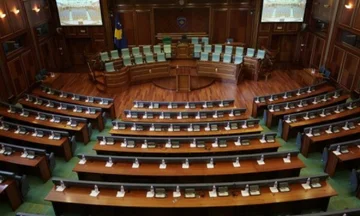
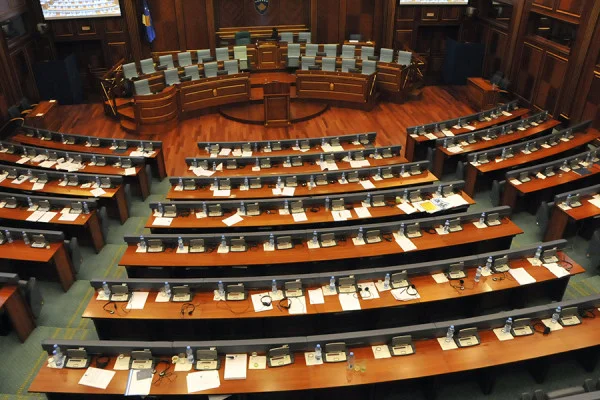
(4 months ago)The decree for the distribution of the Kosovo Assembly, sent to the Constitutional Court by the country's president, Vjosa Osmani, has prompted mixed reactions. In the FOL movement, they estimate that the lack of political consensus by political parties resulted in the situation created in the country. Project manager in this organisation, Burbuke Kastrati in an interview for Economy [...]
In the FOL movement, they estimate that the lack of political consensus by political parties resulted in the situation created in the country.
The project manager in this organisation, Burbuke Kastrati, in an interview for Online Economy has said the lack of consensus and culture of compromise between parties has caused a recurring problem with the president's issue, leading the country to an institutional blockade.
She added that the Constitutional Court's decision is expected to answer the presidential decree and hopes to boost interparty communication, avoiding the need for new elections that citizens would not welcome.
Kastrati cited the lack of the culture of compromise that, according to her, causes repeated problems on the president's issue.
“We have seen with deep concern the issue of restoring Kosovo to what was actually an institutional impasse for almost a year, almost on the side of... so we had an dysfunctional government, at the same time we had a government in office for almost a year. I believe that this, this case in which we are currently at present, has to do directly with the lack of a political consensus by Kosovo parties in relation to the presidential issue. So it seems that parties in Kosovo have not yet managed to create the culture of compromise and communication in relation to the president's issue. So, it seems like a recurring problem the president's issue and blockades that are placing themselves in institutions every time the issue is put - the president's position on the matter” -- she stressed.
Kastrati said the Constitutional Court's decision should answer the matter of the decree.
For us it is very important that this process go, namely the Constitutional Court, waiting for the Constitutional Court's decision, this is one for us, so a decision that I believe will bring back some kind of text will answer the matter of the decree. Since, then, given that the president's case failed to be resolved at the last session, which was actually the session that was seen with a kind of agreement to make constitutional amendments in relation to the election of the president, it was seen that there is no agreement in the report and there are no specific numbers in relation to the president by the political parties”, she said.
Kastrati stressed that the blockade came from political parties and that he hopes the Constitutional decision serves for communication.
We hope that this decree will also provide an answer to the institutional blockade, depending on whether the country will end up again in new elections or even there will be a resumption of the presidential process. Since the three times as seen in the Constitution have not been illustrated, as envisioned in the Constitution of Kosovo, where there is the procedure that is actually done, so three times is developed until it is reached in the quorum, namely, the last time the quorum has to be 61 votes. So there is also a clear difference in the president's name, and it is seen that there are no numbers. So I believe that even this period that the country expects a Constitutional Court decision, I believe it will also serve Kosovo political parties to actually start communicating once again to unlock institutions from this situation”, Kastrati said.
As for the possibility of new elections, Kastrati said that citizens would not welcome that and that an agreement between political parties would be the best solution.
We've had a totally lost year. This was said yesterday by the European Commission in relation to our European agenda and with every other aspect in the country. I believe last year was again, we had four choices, so nationals, then locals and still nationals in December. I believe Kosovo citizens would not welcome this because we spent a whole year in elections and I believe interparty communication and finding a compromise in relation to a president would be the best solution for the country at this point where we are”, she stressed.
Kosovo President Vjosa Osmani has issued a decree on the distribution of the Parliament, since according to her, the country's representatives “decided to put the country into a” election.
“Through this decree I am imposing constitutional obligation which is clearly defined ... It is a great disaster that they [deputees] did not choose the interest of Kosovo”, Osmani has said.
The Vetevendosje (LVV) movement, the ruling party, said the distribution of the Assembly represents an unprecedented act that conflicts with order and will lead to the Constitutional Court.
On March 5th was the deadline when Kosovo would have to elect the president, 30 days before Osman's mandate expired on April 4th.
The session was interrupted in lack of quorum, as opposition was absent in the hall. In the race were Glauk Konjufca and Fatmire Kolcaku-Muhrama, both from the ruling party, Vetevendosje Movement.
As a result, Parliament Speaker Albulen Haxhiu urged the Constitutional Court to temporarily suspend constitutional deadlines for the election of the new president.
The Constitutional Court has imposed temporary measures until 31 March on President Vjosa Osmani's decree to distribute the Kosovo Assembly. The Constitution said the decision prohibits any action from President Osmani regarding the March 6th decree, as well as prohibiting any action from Kosovo's Parliament until the provisional measure is in force. /Periscope