2 hours ago
Kosovo security under threat of long-range missiles
Periskopi(3 months ago)
(3 months ago)Kosovo is seen as a potential target of Iran, due to the presence of KFOR and the US base Bondsteel, but remains protected through NATO umbrella and co-operation with allies. Iran's new missile capitals, demonstrated by the attack on Diego Garzia, suggest the impact radius could reach as much as 4,000km, [...]
Iran's new missile capitals, demonstrated by the attack on Diego Garcias, suggest the impact radius could reach as many as 4,000km, including parts of Europe.
Experts warn of a real threat to Europe, though it remains questionable whether Iranian missiles can penetrate NATO air defence.
Diego Garcia in the Indian Ocean is located some 4,000 miles [4,000 km] from Iran. Attempting to strike by rockets has raised the alarm for this country's missile power and has added fears that it could target large parts of Europe, even Kosovo.
The rockets were launched on March 20th towards a US military base and the United Kingdom one failed, while the other collapsed. What he managed to fly traveled some 3,000 miles [3,000 km] from the base of his departure.
The Israeli Army said Iran has launched long-range ballistic missiles towards an American target, proving the capacity of some 4,000km to target European capitals as well.
These missiles are not meant to hit Israel. Their range reaches European capitals. Berlin, Paris and Rome are within range of direct threat”, Israeli Army chief Eyal Zamir said.

The Institute for War Studies (ISW), headquartered in Washington, estimated this was Iran's most distant ever attempt to hit a missile target.
“Sulmi showed that Iranian missiles can reach across the 2,000km border, which the regime has long said has long set as a limit... The attack attempted to overturn some of the assumptions about Iran's missile programme, especially the threat it could pose to Europe”, according to the ISW.
So far it was believed that Iran did not have the capacity to strike at such distances, while the regime itself claimed to have placed that 2,000km border on its ballistic missile program.
According to US intelligence estimates, Iran has about 14 different kinds of missiles equipped with nuclear or conventional warheads.
Contacted by Radio Free Europe, NATO did not comment on the attacks on Diego Garcias and Iran's missile capacities, referring only to the previous statement in the case Turkey successfully perceived similar attacks by Iran.
As Iranian missile capabilities continue to be reviewed, an EU official told Radio Free Europe, on condition of anonymity, that this is a new dimension of war with Iran and that the continent's air defence four years after the start of war in Ukraine is quite impoverished. So far, the EU has allocated Ukraine over 70 billion euros in military aid to fight Russian invasion.
Mark Cantian, retired U.S. Navy colonel, currently senior adviser at the Centre for Strategic and International Studies in Washington, considers the threat to Europe as “very real”.
According to him, based on the demonstrated range of past missile concessions, Iran could hit some parts of Southeast Europe. He says the United States and NATO have long predicted this danger and have built defence systems in Poland and Romania, but warns that Europe is not fully prepared.
Because the threat is relatively new. The first steps for protection against Iran have been taken, while capacities in the east are developing for protection against Russian missiles and drones. Poland has built a very powerful army and air defence system, while similar steps are being taken by Baltic countries”, says Canciaan for the Radio Free Europe Expo programme.
More sceptical of Iran's capacities to directly hit Europe says Gordan Akrap, former official of the Croatian intelligence community, now legalists at the University of Defence and Security “Dr. Frank Tugman.
First, if Iran has missiles that can hit targets at a distance of 45,000 miles. Even if it has those possibilities considering the great fleet in the Mediterranean and the distribution of anti-missile systems I am convinced that they would be destroyed during the approaching phase, as they would have to cross Israel or Turkey. Likely, they would be neutralised in those” spaces, says Akrap for Expose.
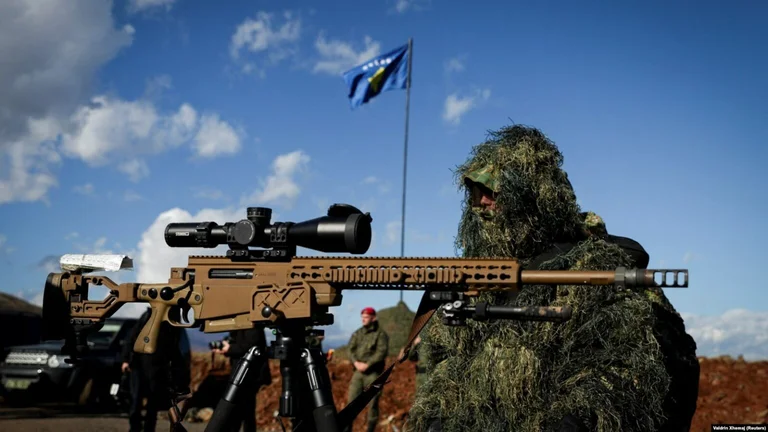
In this context, Kosovo is also involved in analysis, due to its international presence. The country houses NATO's peacekeeping mission, KFOR, as well as the largest American base in the Balkans, Bondsteel. According to both experts, this makes Kosovo a potential target, but not vulnerable.
Colonel Canciaan stresses that Kosovo is involved within the coverage of NATO's anti-missile system in Romania and can strengthen its defence by closely co-operating with the alliance.
Many countries have relations with NATO that enable them to co-ordinate things such as air defence. Of course, Swedes and Finnish people had these relationships many years before they became members. So, it is possible to place a small country under the umbrella of NATO without necessarily being a member of it”, Canciaan says.
NATO, its KFOR force, respectively, oversees Kosovo's low air space, while its high space of over 6,200m is under the control of Hungary's NATO member country.
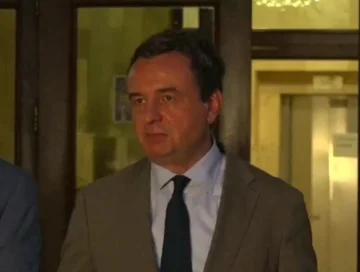
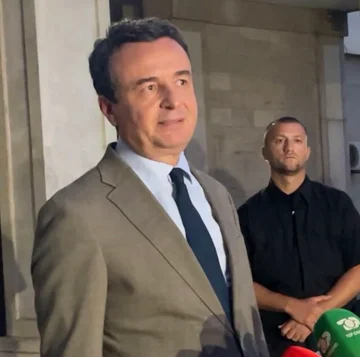
Kosovo Prime Minister Albin Kurti has promised that, during the new government mandate, over 1 billion euros will be allocated for the Kosovo Security Force, which already possesses weapons acquired by NATO allies.
Akrap agrees that Kosovo benefits from its relationship with NATO, but suggests that the future of security cannot rely solely on major structures such as the European Union and NATO, due to major challenges in making decisions. He emphasises that the more flexible form of co-operation, such as Kosovo's defence agreement with Albania and Croatia, can help it prepare better for future challenges.
No one can come out victorious by any conflict or war, if he acts alone. Therefore, partnerships must be built, both at the international level and at the domestic level. Distracts serve no one except the attackers”, Akrap says.
Kosovo has no diplomatic relations with Iran, which is listed near Serbia against recognising its independence. Some Serbian citizens have distributed on social networks the coordinates of the US base Bondsteel, calling on Iran to attack it.
NATO has told Radio Free Europe that KFOR continues to provide a safe and secure environment for all Kosovo citizens, while the country's authorities have said they are closely monitoring possible implications of war, but have not clarified more.
Canian argues that Kosovo and Europe are already involved indirectly in this war, through power cuts, the blocking of oil shipments in the Strait of Hormuz and economic uncertainty, while, in the assessment of Akrapi, these countries should be rightly concerned even by potential terrorist shares by individuals or networks linked to Iran.
We should not forget the fact that many members of different Shiite organisations have been attacked by Western and Israeli targets found across the world”, Akrap says.
The conflict in Iran erupted on 28 February, when the United States and Israel launched joint attacks to curb the Islamic Republic's nuclear programme. In response, Iran and its allies hit Israel and US targets in allied countries from Saudi Arabia to Cyprus.
Canan says the attack on Diego Garcia was an Iranian message that there are still <x0-letters to play” even after weeks of war.
In other words, it hits sites that house American bases or that allow the US to use its bases in their territory”, he says.
According to him, no one can know for certain how long this war will last and avoid any clear prediction. He emphasises that the possible negotiations that conflict, are extremely complex, as six sides will have to agree: The United States, Israel, mediators, Iran's Revolutionary Guard, Gulf States and leading global actors, Europe and Japan.
In short, experts describe the situation as a threat to evolution, with more and more countries developing capacity to strike at great distances. This means that Europe, they believe, must prepare for a world where threats are no longer geographically limited.
In this context, Akrap underlines that Kosovo must act wisely, pursue responsible policies and accept strategic compromises, which will advance its relations with the EU and with NATO. / REL