5 hours ago
Djindjic blames victims' families for his associate's scandalous exhibition, Shkelzen Gashi
Periskopi(3 months ago)
(3 months ago)The exhibition, organised in Pristina Square by “Admovere” and <x2Interra” with incorrect data on the massacres that were committed in Kosovo, has prompted numerous reactions. The head of Pristina has revoted permission for this exhibition, until citizens in protest have covered the exhibition bans located in the square. There is [...]
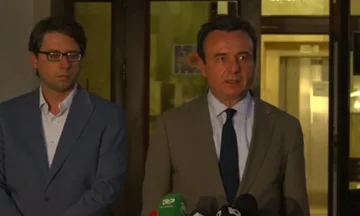
In this regard, Shkelzen Gashi's associate, Rron Djindovci, has reacted, arguing errors in the exhibition with the lack of official data from the state of Kosovo.
Djindjic has written that the data is from Natasa Ka persecuted. Djindovci has specifically mentioned the Dubrava Massacre, for which there has been reactions, saying that according to Natasa Ka persecuted, a number of people killed figure they were armed men or soldiers.
According to Djindovci, this is also due to the goal of raising their value or even of pensions provided by the state for family members of those killed as soldiers, compared to those as civilians.
Kosovo activist also says reactions are being prompted by political opponents of Albin Kurti, attacking Shkelzen Gashi's exhibit “to harm Kurtin '%s'.
Djindjic's full reaction:
The Truth About Massacre Exhibition
1. The truth is that Kosovo officially does not have an exact number of those killed and their status at the moment of murder by Serb forces during the war.
2. The only ones given to be served by are the records of the organisation of Natasa Katruja, which for this contribution to documenting the killings in Kosovo, is decorated by a series of Kosovo municipalities and institutions, including the Presidency and the Prime Minister.
3. There have been 105 massacres in Kosovo, and that's what we agreed on in 2025, because Shkelzen Gashi finally collected them in a book.
4. Shkelzen Gashi fully under 4 years of initiative worked on collecting timely articles, other circumstantial evidence, and checked about 10,000 victims of the Natasa Katrusion registers connected with where those people were killed, under what circumstances and finally arrived to say that 105 massacres were committed in Kosovo.
5. The book explains that there are many cases of noncompliance numbers declared in memorial manifestations and numbers for which there are reliable evidence.
6. This phenomenon happens because of various reasons, but one of the most frequent is declaring civilians killed as soldiers. It's supposed to be in order to raise their value and/or take on a larger pension that the state shares for the family of those killed as soldiers compared to those killed as civilians.
7. Dubrava's massacre, as well as some, contains murdered men of war as soldiers in the Natasa Katrusion registers because their family has decried them as such. This is the only official clue.
8. The book clearly states that a certain number of those killed in the Dubrava massacre prove to be soldiers.
This hysteria is being driven by political opponents of Kurt, who are attacking Shkelzen and his work only to mark Kurt, but are in fact making Kosovo famous. They're attacking an extraordinary attempt at the painful truth of civilians killed in our country.
Meanwhile, Kosovo society must honour all martyrs, without differences and without hierarchy. Lost lives for Kosovo are the basis of our state, the basis of our freedom, the necessary condition for calling people.