4 minutes ago
KFOR Commander: No decision to reduce American troops from Kosovo
Periskopi(5 months ago)
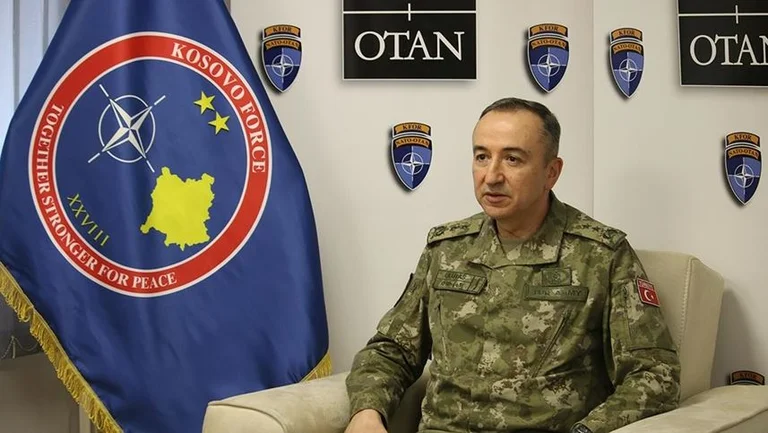
(5 months ago)Commander of the Peacekeeping Force KFOR, Major General ãozkan Ulitaş, said NATO continues to seek accountability for the Banjska case and for the perpetrators of attacks to be brought to justice. General Ulutaş said KFOR has not been involved in any alleged negotiations about removing attackers from Kosovo in 2023, but was [...]
Commander of the Peacekeeping Force KFOR, Major General ãozkan Ulitaş, said NATO continues to seek accountability for the Banjska case and for the perpetrators of attacks to be brought to justice.
General Ulutaş said KFOR has not been involved in any alleged negotiations about removing attackers from Kosovo in 2023, but was in his duty to restore security in the area. Commander I KFOR said KFOR will preserve its permanent presence on the main bridge on the Iber River by making regular patrols in surrounding areas as long as necessary. He said the KSF cannot enter Kosovo's north without its permission.
General, this is your second term in Kosovo. In the first term you came to Kosovo several weeks after the Banjska case and violence against KFOR soldiers. We've been entering the third year since it happened. Why is there still no accounting?
General Ulitaş: First, it is my privilege to lead NATO's longest and current largest mission, for the second time and to continue to ensure that through KFOR, NATO contributes to sustainable security in Kosovo and regional stability. KFOR is very focused on implementing its task based on UN Security Council Resolution 1244 in 1999 towards a safe and secure environment for all people living in Kosovo at any time and impartially. In close co-ordination with the Kosovo Police and the EU Law Rule Mission EULEX in their respective roles as security responseors following violence in 2023, NATO responded quickly by deploying approximately 1,000 additional troops to Kosovo and also increasing the position of forces in northern Kosovo. This was the biggest reinforcement of our mission in a decade. KFOR has no mandate for law enforcement. However, NATO remains concerned about increasing the rate of violence in Kosovo to 2023. And for more than two years, NATO has continued to seek accountability and for the perpetrators of these attacks to be brought to justice. Secretary - General NATO, Mark Rutte, recently reaffirmed the issue. He reaffirmed this in the margins of the NATO Defence Ministers' recent meeting in Brussels earlier this month. We count on Serbian authorities to play their role in this regard. We have noted the arrests carried out by institutions in Kosovo concerning the unreasonable and unacceptable violence committed to peacekeeping forces in 2023. We welcome every step to protect rule of law.
But dilemmas in Kosovo still remain, General: Who allowed the attackers to leave Kosovo?
General Ulitaş: As I have said, law enforcement is outside KFOR's mandate, so it is not NATO's responsibility to conduct criminal investigations. KFOR continues to operate under its long mandate of the UN in close co-operation with Kosovo Police and EULEX, again in their respective roles as security respondents. Let's be clear. KFOR was never involved in these alleged negotiations to facilitate the withdrawal of the armed group that attacked Kosovo police personnel in Banjska. Instead, KFOR was called on to strengthen its presence at the scene through KFOR co-ordination of all necessary actions with Kosovo Police and EULEX in order to restore security in the area.
General, the situation in the north is always a hot topic. Always. It has been described as stable but still fragile. Weapons and ammunition continue to be found here and there in the northern part of Kosovo and in different parts of it. Does this indicate any potential for passage?
General Ulitaş: The security situation in Kosovo is relatively stable, but we assess that it remains fragile due to unresolved issues. While we do not see signs of an imminent conflict, continuing discoveries of weapons and ammunition in some locations are cause for concern. Therefore, like KFOR, we remain vigilant. We maintain a visible and flexible presence throughout Kosovo. This allows us to be adequately positioned to cope with any significant developments that could affect security in Kosovo and regional stability. General presence of forces and daily activities creates room for political dialogue. Stability in the region ultimately depends on all sides. Well, the diplomacy of violence is preferred. The road to lasting security or stability is political. NATO continues to strongly support dialogue facilitated by the EU between Pristina and Belgrade as a framework to resolve all open issues by respecting the rights of all communities. And we expect Belgrade and Pristina to engage in trust. KFOR continues to offer its contribution to this important progress.
KFOR forces, as you said, have been added to the northern part of Kosovo. You also kept the main bridge over the Iber River closed. When you met Mr. President. Kurt, the prime minister at that time in 2017 in his efforts to open the bridge, what argument did you give him to withdraw from the decision?
General Ulitaş: According to our regular practice, I never reveal the details of my official commitments. By saying this, let me highlight three main points. Firstly, increasing the presence of forces in northern Kosovo is a precautionary move to ensure that our mission is well placed to continue implementing its long-term UN mandate. Second, immediate and uncoordinated actions, especially in northern Kosovo, increase the risk of violence, which undermines the security of all people in Kosovo and increases the risk facing KFOR troops. Therefore, securing effective and timely co-ordination with KFOR and the international community is vital. And we rely on institutions in Kosovo to do so as a NATO security partner. And point three. Third point. Excuse me, I'd like to point out the third point. KFOR will preserve it will maintain its permanent presence on the main bridge and will continue to conduct regular patrols in surrounding areas as long as necessary to preserve a safe and secure environment for the better of all.
You have insisted that the bridge is part of the dialogue. So far little has been done in dialogue on this issue, and it is estimated that there is little progress on other issues as well. So, may I ask, are you involved as NATO on these issues in the Brussels dialogue?
General Ulitaş: KFOR's role is to maintain a safe environment for all people living in Kosovo. KFOR will continue to do what is militarily possible, but again, a long-term solution is political. KFOR will continue to provide ... its contribution on the ground to create space for further political dialogue to move forward. This way. KFOR and NATO as a whole strongly support the EU-led dialogue on normalising relations between Belgrade and Pristina as a framework to resolve all outstanding issues, in the best interests of all.
But now there are two additional bridges in the northern part of Kosovo, which are built not far from the main. Do they increase the risk of security? Will you also place reinforcements and control on other bridges?
General Ulitaş: KFOR was not involved in building two new bridges over the Iber River. KFOR's role is to contribute to a safe environment for all people living in Kosovo, in accordance with its long term mandate. To that end, KFOR maintains a permanent and visible presence on the main bridge over the Iber River in Mitrovica and conducts regular patrols in surrounding areas. We will continue to monitor this situation and maintain a flexible attitude.
What is the assessment of KFOR's security commander in Kosovo? May I ask what are the threats to Kosovo's security today?
General Ulitaş: As I have said, the security situation throughout Kosovo is calm, but remains fragile for several reasons, including unresolved issues, non-helpable rhetoric and sometimes promotional rhetoric, as well as repetition of use of dezinformation. Challenges relate to the progress of the normalisation process of relations between Belgrade and Pristina. In this context, KFOR remains vigilant and keeps a visible and flexible presence throughout Kosovo. We maintain our operational readiness consistently, including through ongoing training and training. At the same time, we maintain regular and transparent communication with all of our key co- talks, including representatives of Kosovo security organisations. Or security organisations in Kosovo, as well as EULEX and the Armed Forces of Serbia. This approach allows us to have a better understanding of the most important security trends and also of any important indicators that can be revealed.
General, the Balkans and especially Kosovo have been mentioned many times as the hearth of a future security crisis. It's about Russian influence in this area. Is there an effort to destabilise in view of today's developments in the world?
General Ulitaş: The Western Balkans remain high in the NATO agenda. It is a region of strategic importance to the Alliance. NATO has supported peace and stability in the Western Balkans for more than two decades. Our commitments remain strong and will not allow any security vacuum to be created. Any external intervention in domestic democratic processes is unacceptable. This includes cyber attacks, threats, intimidation and other destabilizing activities. In this context, KFOR remains focused on implementing its mission and continues to represent a key pillar for regional stability.
General, this leads to a question: Kosovo's Security Force cannot enter the northern part of Kosovo without a permit from KFOR commander. Is it true?
General Ulitaş: Yeah, that's right. In line with existing agreements, the Kosovo Security Force can undertake missions in northern Kosovo only after the KFOR commander's preliminary approval. We welcome Kosovo's continued commitment to these agreements.
But Kosovo says it has begun to strengthen its security. He has bought weapons, allocated funds for the military, signed international agreements with both Croatia and Albania. So besides NATO's presence on the ground, Kosovo is building its defence capacities. What is your answer?
General Ulitaş: KFOR continues to fulfil its long-term UN mandate at any time and impartially, and that is KFOR's focus, currently. In fact, the initiative mentioned is a tripartite co-operation agreement between Albania, Croatia and institutions in Kosovo. We've got a note for him, but NATO as an organisation is not a party to it and has had no role in the consultation process. NATO membership does not prevent allies from concluding additional co-operation agreements. And by exploiting this case, I appreciate the long-standing contribution of Albania and Croatia to KFOR activities.
General, but Kosovo has said it will also build production capacities, for example the production of ammunition and fears. Will this help or hinder the peacekeeping force?
General Ulitaş: KFOR focuses on preserving a safe environment for all people living in Kosovo. We rely on all actors to act responsibly and contribute to regional stability in the best interests of all.
RTV21/Okay. There have been reports of a possible reduction of American troops in KFOR. If it happens, how difficult would this make the NATO mission in Kosovo, and what would be the impact on the overall security situation?
General Ulitaş: KFOR's composition and positioning are periodically revised and adjusted to developing circumstances so that the mission remains effective. Currently, there are no significant changes under consideration. KFOR continues to fulfil its mandate under UN Security Council Resolution 1244 to help preserve a safe environment for all people living in Kosovo, as well as freedom of movement. KFOR operates in close co-ordination with Kosovo Police and EULEX, in their role defined as security responsible. The US continues to play an fundamental role in supporting stable security throughout Kosovo and regional stability, including within the NATO-led mission KFOR. The United States has almost 600 troops deployed in KFOR. They lead the Regional East Command of our mission. Regional East Command contributes to KFOR's daily operations in many different ways, including patrols, training and training, engagement with local community representatives and support for reconstruction projects and economic development./Periscopi/