2 hours ago
Ferronikli after two decades of privatisation: 80 workers, zero production
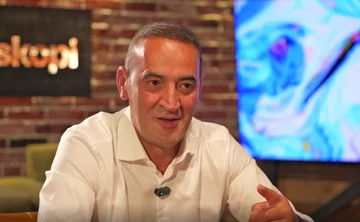
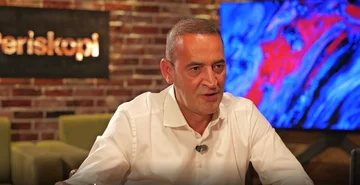
Periskopi(6 months ago)
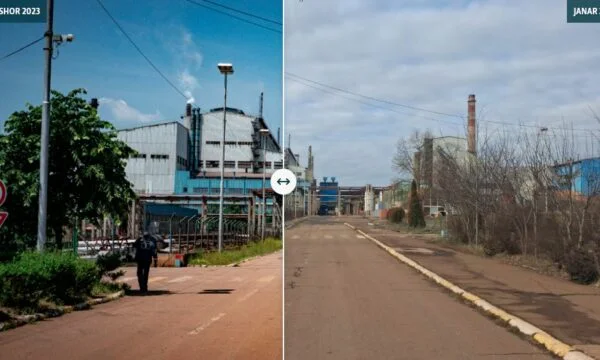
(6 months ago)Of the nearly 700 active workers, the company for the production and processing of nicotine and its products, Ferronikli, today numbers only 80 people employed in administration, while production machines are completely stopped now and so long. Once one of the main pillars of Kosovo's metallural industry and economy, the company that exported products in value [...]
Once one of the main pillars of Kosovo's metallural industry and economy, the company that exported products worth over 80m euros in 2020 alone faces a grim reality today: zero production, cut contracts and waiting for more favourable market conditions.
Since its privatisation, two decades have passed, but recovery continues to remain a challenge.
From Economic Symbol to Almost Empty Complex
Ferronikli, located in the town of Drenasis, was about 34km from Pristina for years symbol of Kosovo's industrial power.
Today, the industrial complex seems almost empty. Most workers are left without labour contracts, while production is completely halted.
Company officials say optimistic that machines will be turned on again, but when market conditions, they say, are more favourable.
They say the company remains committed to restoring production and that, even during the stoppage period, millions of euros in production technology and environmental protection have been realised to be ready at the moment of reopening.
Why did production stop?
According to Shpend Goodak, head of the office for community interconnection and public relations at the NewCo Ferrnikli Complex company, the main factors leading to the halting of production related to international markets, REL.
Over the past few years, the niel price on international stock exchanges and the price of electricity on European markets have been unfavourable for sustainable production at the” factory, he tells Radio Free Europe.
Consequently, the company has been forced to take drastic measures to reduce costs.
“One of the most important decisions was to shut down the electric furnace in March 2025, to ease the high cost of electricity”, Gudaki explains.
Ferrigonic spends up to 420 megavate-h of electricity a year.
Since 2017, energy is purchased directly from foreign markets, without being supplied from within Kosovo.
With current prices on the Hungarian stock exchange HUPEX over 140 euros per megawatt-hour annual energy costs, in case of production, would reach over 58m euros -- much that increases pressure on factory sustainability.
Entrance of contracts and a hopeful signal
At the end of 2025, the company faced an even more difficult decision - the collective break of labor contracts for over 600 workers, even though they had been paid for almost two years without active production.
The process has been implemented in line with the Labour Law, fulfilling all obligations to employees by November of last year”, Gudaki says.
I kept my family”
For Rexhep Ademi, over 50, Ferronikli was not just a job.
For 18 years he was the main source of economic security for his family. Hence, the moment it was announced for the break of the work contract remains one of the worst in his professional life.
"With Ferronikli's salary, I have maintained my family”," Ademi tells Radio Free Europe, remembering the years when the stability of the complex also guaranteed stability for hundreds of families in Drenas and beyond."
After the end of production, Ademi managed to find another job, but the desire for Ferronikli to resume work remains alive.
I would return only with better conditions and higher wages, not with what used to be”, he says.
According to Adem, the average salary for technical workers in Ferronikl has been over 550 euros, depending on the experience, working years and position they held.
Some media have reported earlier that when market conditions allow for the restart of production at Ferronikl, affected employees will have the priority of returning to their jobs.
And recent developments in world markets have brought a careful signal of hope.
Between mid-December 2025 and January 2026, the nikel price has increased from around $1,200 to $1,900 per tonne ʹ an increase that could affect reviewing production plans.
Ferronic History
Ferronikel was built in 1984, consisting of two production lines, two electric furnaces, and two rotating furnaces.
nikel's Xeheror is provided by the Chikatova and Glavica mines, as well as by Albania and other countries.
The fall of production began as early as the years of dealt with, following the establishment of distress measures by the then Serb regime.
Until then, the company was one of the leading niel producers in the region.
After the war in 2006, it was privatised by the Kosovar Trust Agency today, the Kosovo Privatisation Agency.
Initially, it was purchased by a London-based company for 30.5m euros, provided it employed up to 1,000 workers and invested 20m euros, according to contractual pledges.
A year after privatisation, production started under the name NewCo Ferrnikli.
After more than a decade of operation, in 2018 the company changed ownership, moving under the management of another British company, where part of the property structure was also a company from Albania.
In 2022, then Ferronikli passed into the hands of the current Turkish consortium Yildirim Group.
The production resumed in 2023, following an almost two-year break caused by the rapid rise in electricity prices in European markets but stopped again in November the same year and remained interrupted.
The production capacity of over the years reached as much as 6,000 tonnes of nickel a year, making Ferroonic one of the country's largest exporters.
During 2020 alone, the company realised exports worth over 80m euros.
The Kosovo Privatisation Agency has monitored the company's work until July 2009, and, as a result of meeting contractual commitments, has decided to free it from further monitoring and reporting, it is said in a response to this agency for Radio Free Europe.
Critical of Privatisation and Economic Consequences
Professor Izet Ibrahim from the University of <x0 University Faculty of Geoscies Isa Boletini” in South Mitrovica says state institutions should show more serious commitment and reconsider the privatisation process.
The process must be returned to the pre- privatisation point and the company reprivatised on clear and transparent bases”, he tells Radio Free Europe.
According to Ibrahimi, Ferronikel has contributed up to 10 percent of the local Bruto Product, while halting production has deepened the trade deficit and negatively affected the country's industrial chain.
“... because cutting production into the complex does not only affect workers' salaries, but also has direct consequences on the state budget and the country's overall economy“, Ibrahimi says.
By the company NewCo Ferronikli Complex, they say they have continued co-operation with central and local institutions and that, within legal frameworks, they have come to terms.
Our “Insist is that the company, although private, should be treated as national assets and strategic assets, as it is the largest exporter and one of the leading employers in Kosovo”, the company's statement said.
Goodaqi adds that they are open to co-operation with institutions, with the aim of finding solutions that would enable the return of production and workers to jobs.
Free Radio Europe asked the Government of Kosovo and the Ministry of Economy whether there has been any official request from Ferronikli for finding a solution and whether there are legal opportunities for the company of any measure.
The Ministry of Economy said the Government does not intervene in management of private companies and that they are unaware that the company in question has addressed any issues directly close to this institution.
The state-owned company, Trainkos, which offers railway transport services to Kosovo, in the Business Plan for 2025 had envisioned transportation for export and import of ore and final product of Ferronikli worth about a million euros dealt with or 430 million tons of xheheh.
In addition, even some private companies had active contracts to perform field work that were directly affected by the halting of production.
In Kosovo, the privatisation process was launched in 2003 by the Kosovo Trust Agency and continued by the Kosovo Privatisation Agency after 2008.
So far over 2,300 assets worth hundreds of millions of euros have been privatised.
However, the process has been criticised for several reasons, linked to efficiency, transparency and economic consequences.