14 minutes ago
Border blockade hits Kosovo businesses, boosts fears of higher prices
Periskopi(6 months ago)
(6 months ago)The Kosovo company “Relux”, which produces colors and facades, is experiencing immediate consequences from the deadlock of border points between some countries of the region and the EU: its products to Great Britain have not been able to start on schedule. Company leader Ramiz Gashi tells Radio Free Europe that he [...]
The Kosovo company “Relux”, which produces colors and facades, is experiencing immediate consequences from the deadlock of border points between some countries of the region and the EU: its products to Great Britain have not been able to start on schedule.
The company's leader, Ramiz Gashi, tells Radio Free Europe that he is a regular exporter and, under the agreement, products would have to reach their destination within this week. On the contrary, the contract risks violating, renegotiating, or failing altogether.
“We can lose this buyer, which is potentially the most important one we have”, Gashi tells Radio Free Europe.
He warns that delays could also damage contracts with other partners in Germany and Croatia, thus jeopardising investments made with bank loans that should be repaid within the set deadlines.
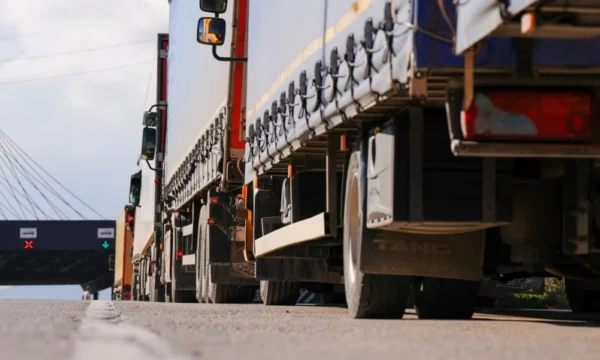
Transporters from Serbia, Northern Macedonia, Bosnia and Herzegovina and Montenegro blocked several border points since mid-January 26th, halting the flow of goods towards the European Union's Schengen area.
Their protest is against the new EU system for inflow control, known as EES.
This system envisions citizens outside Schengen to stay in this area at a peak of 90 days within 180 days, but according to protest carriers, this period is not enough especially for those traveling to more distant countries, including economic losses and the risk of deportations.
They demand that transport companies be excluded from this rule and warn that the blockade will last seven days unless a solution is found within this period.
Kosovo does not participate in the protest, but feels its consequences, as most of its imports and exports are accomplished through transfers across these countries.
Moreover, Kosovo drivers similarly touch the system EES.
The company's case “
Ruzhi Rexhaj from this company says the order of epoxide slides by an Austrian company, already paid and loaded, could be delayed or failed.
What do we tell our clients? We have already told them that the ordered items are loaded on January 27th and are due by the end of the week. Now, we don't know when it will get here, while we also have projects that we started, hoping in this material”, Rexaj tells Radio Free Europe.
According to him, any delay also damages the company's reputation and may bring fines according to contracts.
Risks of Trade and Prices
To address the situation, the Kosovo Chamber of Commerce and Industry addressed with a letter to European Commission President Ursula von der Leyen, warning that one week-long protests could cause further consequences for Kosovo companies including endangering contracts with European partners.
The director of this office, Kufi Ahmeti, tells Radio Free Europe that the longer the blockade lasts, the greater the damage for companies.
He warns that delays and barriers in the transitor strike not only businesses that export and import, but can also reflect on consumers.
“... can also affect the prices of products in Kosovo, because demand for to” increases, Ahmeti adds.
According to him, import of goods also means importing crises.
Whatever happens in countries from which you import, it automatically affects. This is extremely problematic”, he says.
Kosovo is importing nearly all products from food to construction and textile material.
According to Customs data, last year's imports seized the value of over 7 billion euros, while exports stood at around 942m euros a balance that made the country sensitive to any obstacles to the transit.
In view of this, economic knowledge, Berim Ramosaj, professor at Pristina University, also says border blockades create direct pressure on the local market.
“Reflex bad in the economy, reflects it also on consumers, because prices will likely increase”, he tells Radio Free Europe.
Import of Crisis
With heavy dependence on import, Kosovo has experienced the consequences of external crises earlier.
One of the most outstanding examples was the year 2022, when inflation reached about 14 percent as a result of disturbances in the global supply chain ʹ initially from the pandemic COVID-19 and later from war in Ukraine.
In the years that followed, inflation marked a trend of decline, but during the past year it returned to growth, reflecting continued pressures on the market.
According to Kosovo Statistics Agency data, production prices in the country, in the January-September 2025 period, compared to the same period in 2024, increased by 5.5 percent.
Amid import addiction and lack of protective mechanisms
Economy experts estimate that no country, including Kosovo, can completely avoid importing certain products.
However, according to them, the high level of dependence on import makes the country especially sensitive to external crises.
Ramosaj says Kosovo, as a small country with a weak trade balance and low level of European integration, will continue to be more consumer of crises than the factor that produces them.
We're so small that we're unable to export crises, but always get other people's bills. This is the nature of our position whether in terms of economic, political or reports we have with European Union countries”, Ramosaj says.
According to him, this reality should serve as a signal to the country's institutions to intensify efforts towards European integration and create more sustainable economic policies.
He emphasises that to ease the impact of imported crises, well-planned mechanisms are needed, which do not harm the free market economy.
He also mentions that many countries have found forms to protect local production, investors and consumers, whether through customs, tariffs or subsidies.
“We still don't have these policies properly regulated”, he estimates.
In the same line, Ahmeti, from the Kosovo Chamber of Commerce and Industry, stresses that the Government should consider concrete measures for the protection of local consumers and producers.
According to him, one of the options could be the temporary suspension of the State Value (TVSH) tax on essential products and daily consumption.
He points out that institutions should also stimulate local production of these products.
The local demand for essential products, which are necessary for each citizen, would have to be covered at least 50 per cent from local production”, he says, adding that producers need a clear support strategy through technology grants, investments and protection of their products in the market.
Free Europe Radio contacted Kosovo's incumbent Government on the issue of blocking borders since January 26th, but received no answers.
In some cases, it has shared subsidies for producers, but they have failed to generate significant domestic production growth.
The EU announced it is working on reliefs that would enable truck drivers and some other professionals to stay in the Schengen Zone.
Such a decision would directly benefit Kosovo citizens.
“ ... because companies are forced every three months to employ new drivers”, Free Europe Lulzim Rafuna, chairman of the Kosovo Economic Oade, told Radio Europe.