19 minutes ago
Chinese gunfight: Is Beijing testing his military technology in front of India-Pakisan?
Periskopi(a year ago)
(a year ago)China has spent billions developing its military technology, and it seems that the Indian-Pakisan conflict is a good opportunity to test them in real combat. The growing conflict between India and Pakistan can soon offer the world a real first-hand view of how advanced military technology works [...]
The growing conflict between India and Pakistan could soon offer the world a real first-hand view of how advanced Chinese military technology works against proven Western equipment.
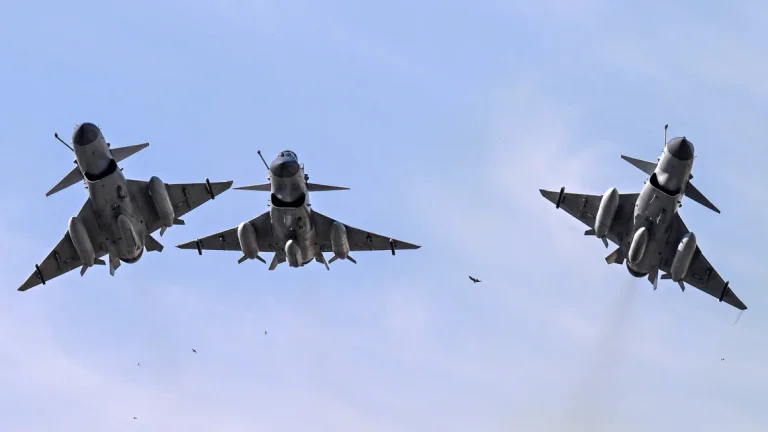
By CNN, only this week after Pakistan's claims that he used a J-10C fighter aircraft produced by Chinese AVIC to crash Indian warplanes including Rafale, the French production of this company's shares have increased by 40%.
Regarding these claims, India has not accepted any plane losses. On the other hand, an official from the Chinese Foreign Ministry has said there is no information when asked about the involvement of China's aircraft in the war.
However, since it is known that China is the main supplier of Pakistani weapons (81%), it is likely to continue monitoring this conflict to see how its weapons in real combat systems are functioning or can function, reports the report. CNNPeriscope broadcast.
Although a growing military superpower has spent more than four decades since China has had a major battle, but under the leadership of Xi Jinping, the country has begun to modernise the armed forces by investing too much in the sources for developing sophisticated weapons and more advanced technologies.
And of this modernisation effort, China has expanded it to Pakistan, which has long been named as the “Iron Brother”.
As for Pakistan's imports from China, according to reports, these include modern warplanes, rockets, radars and air defence systems, which experts say would play a key role in any military conflict between Pakistan and India. There are also several weapons manufactured in Pakistan, but they have developed jointly with Chinese firms or are built with Chinese technology and expertise.
Besides the weapons, Chinese and Pakistani armies have also engaged in more and more sophisticated air, sea and land exercises, including combat simulations and even crew exchange exercises.
And now growing Indian-Pakisan tensions, it seems that all underlines a broader geopolitical reorganisation in the region, where China appears as a major challenge to American influence.
We remember that India and Pakistan fought for Kashmir three times since their independence from Britain in 1947. During the peak of the Cold War, the Soviet Union supported India, while the United States and China supported Pakistan. Now, things have changed, and a new era of rivalry among the great powers is rising over the long-standing conflict between the armed neighbors of South Asia with nuclear weapons.
It is known that despite its traditional policy of non-announcement, India has drawn ever closer to the US, as successive US administrations have lured it as a strategic counterweight against China. India has increased arms purchases from America and its allies, including France and Israel, while steadily reducing its dependence on Russian weapons.
Meanwhile, Pakistan has deepened ties with China, becoming its “strategic partner of all time” and key participants in the Xi global infrastructure project, the “One Belt Initiative, a” road.