5 minutes ago
US threatens possible military response after Iran rejected nuclear talks
Periskopi(a year ago)
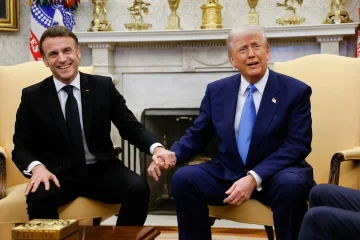
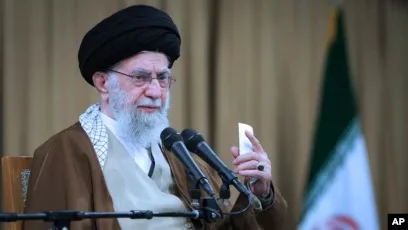
(a year ago)The White House again warned Tehran on Sunday that it would face military answers if it refused to accept an agreement on its nuclear programme. The previous day, Iran's Supreme Leader, Ayatolah Ali Khamenei, rejected the United States' request for talks. “We hope the regime of Iran [...]
The previous day, Iran's Supreme Leader, Ayatolah Ali Khamenei, rejected the United States' request for talks.
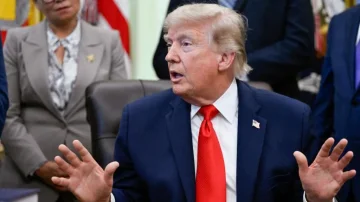
“We hope that the Iranian regime chooses its best interests and its people instead of terror”, White House National Security spokesman Brian Hughes said, in a communiqué Sunday, repeating President Donald Trump's statements, which said that <x2 if we are forced into military, would be terrible”.
In an interview with Fox Business, Trump said: “There are two ways to deal with Iran: militarily, or by making an agreement” to prevent Tehran from obtaining nuclear weapons.
I wrote a letter to them, where I said, I hope you will negotiate because, if we have to act militarily, it will be terrible'”, Trump said.
If I were in their position, I'd talk about a deal. I'm not sure everyone agrees with me, but we can reach an agreement that would be as good as a military victory”, he added.
But time is approaching. Something will happen one way or another”, he stressed.
Parts of the interview were broadcast on March 7th, but the full interview will be shown on March 9th, Fox said.
Meanwhile, Ali Khamenei said on March 8th during a speech to an Iranian official group not to mention Trump or the United States directly that their “conversations are not aimed at solving problems”.
They are about... Let's talk about imposing what we want on the other side that's sitting in front of us”, Khamenei said.
The insistence of some exciting governments for talks has no intention of resolving issues... The negotiations on them are a way to file new demands; they have nothing to do with Iran's nuclear issue... Iran will not meet their” expectations, Khamenei was quoted as saying by state media.
Iranian Foreign Minister Abbas Arghchi said on March 8th that Tehran has yet to accept any letter from Trump.
“We have heard of [the Trump's letter], but we have received nothing”, Arghchi said on state television.
The United States and Israel have long said they would never allow Tehran to take over nuclear weapons, while Iran continues to enrich uranium at levels near those used for nuclear weapons production.
Tehran has insisted that his programme is only for peaceful purposes.
During his first term, Trump withdrew the United States from the 2015 nuclear agreement between Iran and world powers and restored sanctions that had been lifted under its terms.
Trump argued that the terms of that agreement were not strong enough to prevent Iran from securing nuclear weapons, and also accused Tehran of inciting extremist violence in the region -- charges Iran has denied despite numerous evidence.
Last month, Khamenei claimed he opposed direct talks with Trump, arguing that he is not reliable after abandoning the 2015 agreement.
After returning to the White House in January, Trump restored the campaign of the maximum <x0pression” which was the cornerstone of his policy towards Iran during the first term, with the goal of lowering Iran's oil exports to “zero. ”
Experts say the United States will most likely not be able to fully ban oil sales from Iran, but will be able to limit them significantly. /REL