4 minutes ago
Warning from Albanians in the United States: US Relations at their lowest point in this century
Periskopi(a year ago)
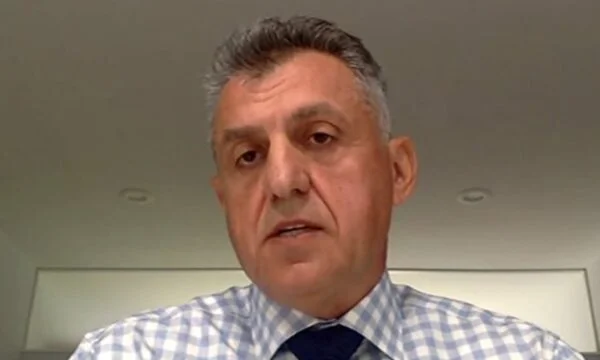
(a year ago)Martin Vulaj, director of the Albanian-American Relations Council, and one of the most prominent leaders of the Albanian community in America, has been expressed by <x0ndrond” with the level of relations between the American administration and the Kosovo government. He claims that the US urgently expect Kosovo “to change course” of clashes with the American administration. Vulaj has spoken [...]
Vulaj has spoken of the negative road chosen by the government Kurti in relations with former President Biden: “in a shocking way, rather than finding a pragmatic way to co-operation, Kosovo chose a challenging path. The derogatory insults and comments to Ambassador Greenrell were originally thought to be isolated incidents --exacted against Palmer, Chollet, Escobar, O'Brien and even against Secretary Blinken. ”
Such level of communication is continuing further, deeply endangering relations. Vulaj claims that Grenelli's statements should be taken very seriously: Greenelli's “coconments should be understood not only as a reflection of the current state of relations, but also as a warning that a change of approach to the United States is needed. Moreover, the fact that the president's son has publicly supported Yerenelli's statements is disturbing. Even more alarming is that Kosovo Friends at Capitol Hill are repeating the urgent call for Kosovo to change course. ”
Full interview with Martin Voulaj.
Express newspaper: There has been a growing debate and polarisation in Kosovo over relations between Kosovo and the United States, with Kosovo's prime minister stating that “relations have never been better”, while US envoy Rick Green says that “has never been worse”. You've been a leader of the Albanian-American community for decades. How do you assess today the state of relations between the United States and Kosovo?
Martin Vulaj: Let me begin by saying I strongly believe that the Albanian-American diaspora should remain non-party when it comes to domestic policy in Kosovo. Our only responsibility, as I see it, is to strengthen ties between the United States and the Albanian people, regardless of who is at the White House or the prime minister's office. In fact, this principle was the main reason why AARC was founded and remains our main guide.
I stress that because often statements by the diaspora are perceived through the prism of party politics. When I worked in Washington shortly after the war, I worked with every government and party official to support Kosovo, including the late Bajram Rexhepi, President Rugova, Mr. Thaci, Mr. Thaci. Haradinaj, Nexhat Daci and many others. Our role was to advise and help run both Washington and Pristina towards a road that addressed bilateral concerns and continued strengthening the partnership.
It is in this spirit that I accepted this interview, and in this very context my statements should be understood. As for relations between the US and Kosovo: I am surprised that the state of US relations is questionable. It's an open secret that, politically, relations between the two governments are tense possibly at their lowest point in this century.
When the government that emerged from the 2021 elections took power, Washington received it with what I would describe as careful optimism. While the Beden administration had concerns about some of the tactics used over the time in opposition, those that led to the injury of Ambassador Jacobson's unpretentious and overwhelming VVV victory signalled an opportunity for a new beginning. Many hoped that tensions between Pristina and the previous Trump administration in 2020 would remain in the past.
With Senator Biden taking over the presidency, a man widely considered a hero for Kosovo, the hospitality in Pristina was that the traditionally close relationship would be fully restored. Despite our contrasting warnings, the new Kosovo government expected a shift in American politics. Unfortunately, this expectation was not realized.
This became clear from the beginning when Secretary Blinken sent letters to the presidents of Kosovo and Serbia, which reflected President Trump's previous correspondence, reaffirming mutual recognition as the goal of dialogue. The Biden administration also quickly and fully backed the Washington Agreement. While the approach may have changed, politics itself remained stable.
Shockingly, instead of finding a pragmatic path to co-operation, Kosovo chose a challenging path. The derogatory insults and comments to Ambassador Greenrell were originally thought to be isolated incidents --exacted against Palmer, Chollet, Escobar, O'Brien and even against Secretary Blinken. While this rhetoric was not useful, it was not the main reason for the actual strain of relations. On the contrary, certain actions taken by the Kosovo government also led to Kosovo's long-term friends, as Assistant Secretary O'Brien, questioning the relationship for the first time.
These actions, which are now widely recognised and do not need to be repeated here, were described by Allies including the United States <x0) unilateral”, uncoordinated “and “destabilisation.” Whether these actions were justified or not, they clearly had a negative impact on Kosovo's relations with its allies. Meanwhile, Kosovo wrongly shifted its focus towards Europe for support, only to see that support fade on the global scene.
To be clear, I have always believed that the obvious favour of the United States towards Serbia is both wrong and counterproductive. However, I also believe the right response to this should be a greater approach to interest with Washington instead of his challenge. As a result of this approach, the prime minister who was expected in Washington at the beginning of his mandate has spent several years without an official reception, despite numerous US visits. This should not be a source of satisfaction even to its most harsh critics; rather, it highlights the level of frustration between the two governments.
Despite these challenges, I want to be clear: while difficulties in political relations are obvious, the strategic partnership between the United States and Kosovo remains strong. However, as we have seen, the current administration applies a different set of criteria when praising partnerships, and it is clear that the principle of the Kosovo government for a “approach, but don't cut off” not only will it not work with this administration but it will also not be tolerated, and an immediate change of approach is necessary.
Express newspaper: There are a number of deputies, advisers and analysts, mostly backers of the current government, who declare that Grenelli is not someone who has any responsibility to discuss Kosovo and that his views “do not represent the American government.” Is that true? Can the statements of a presidential envoy be so easily ignored?
Martin Vulaj: Let's stop for a moment and stop first at what Ambassador Green represents for this administration beyond any official role he may have. We know he's one of President Trump's closest men. Trump appointed him as Acting Director of National Intelligence. A position he was later offered permanently, but he refused and entrusted him with the task of sending a direct message to President Maduro of Venezuela to ensure the release of American hostages. Clearly, Yerenelli enjoys the full trust of the president, has direct access and wields great influence. For this reason, his statements should be taken seriously, and any response to them should be carefully weighed.
Moreover, it is important to ask if someone so close to the president would publicly defend a stance that Trump himself does not support. That sounds very unlikely.
However, when analysed in the context of current relations between the two governments, Yerenelli's statements take on an even clearer significance. While diplomacy often functions with indirect shades and signals, this president and his administration see things more white and black. Where a traditional diplomat could describe the relationship as “not fully harmonised,” this administration is much more direct. I believe Yerenelli's comments should be understood not only as a reflection of the current state of relations, but also as a warning that a change of approach to the United States is necessary.
Moreover, the fact that the president's son has publicly supported Yerenelli's statements is disturbing. Even more alarming is that Kosovo Friends at Capitol Hill are repeating the urgent call for Kosovo to change course. As one of our most powerful supporters told our secretary: “We are looking for a strong and co-operative partner in the Balkans. If it's not you, this administration will continue to find him elsewhere. ”
Express newspaper: In 2020, relations between the Kosovo government and Kurt reached a high point of tension with US senators, as well as the president's son, who threatened to close Bondstheel. Four years later, we have serious warnings from senior members of the American administration. Do you think these are existential security threats to the Republic of Kosovo?
Martin Vulaj: The world has changed dramatically since 2020, and we have to assess Kosovo's position in light of these tectonic movements. Global order created by the United States after World War II is being dissolved and reformed. At that time, the U.S. provided protection to its allies even non-alitate states in exchange for access to their markets. Where once states had to engage military escorts to protect their merchant ships, the American Navy claimed responsibility to secure global trade routes, allowing economic prosperity. Many countries benefited from this, and China, in particular, moved from a feudal economy to a global superpower.
Now, however, the United States is dismantling that system, cutting down trade and consolidating their resources. As part of this change, troops are withdrawing, security agreements like NATO are being revised, and alliances are being re-evaluated and reformed. It is exactly in this context that we should analyse Kosovo's strategic position.
In 2020, statements on the possible closure of Camp Bondsteel and the withdrawal of American troops were disturbing. Today, they represent an existential threat. Do I believe this will happen? No. But for the first time, this is within the realm of opportunity. If this administration is willing to propose a radical change in its approach to Gaza, regardless of whether it does it or not, then the closure of a single military base in a country perceived as uncommunicative would not be a second opinion.
Canada, Mexico, Panama, Greenland, Denmark and other countries are reshaping their relations with the United States. The lines are drawing. This administration is asking: “Jeni inside or outside? ” as it re-assigns itself, its sources and allies to confront China in an already launched economic and technological struggle. There is no “option inside, but...”
I believe Kosovo has been at its most critical moment since the war. The decisions that will be made in the following months if no sooner shape the future for generations to come.
Express newspaper: How can we improve the situation? What are some immediate steps Kosovo must take to improve its position in Washington, D.C.?
Martin Vulaj: Kosovo's lack of investments in Washington, D.C. It reminds me of this saying: The United States is, without a doubt, Kosovo's most important strategic partner. For this reason, Kosovo must ensure a strong presence and a strong voice in D.C. This requires:
Significant increases in the Embassy's budget and staff in D.C. This expansion should focus not only on strengthening engagement with the State Department and the Pentagon, but also on other key agencies such as Departments of Agriculture, Health and Energy. Proper relations in these areas can open up investment opportunities. More investments bring more interest, and more interest translates into more influence.
The engagement of at least two lobbie firms. Although this administration may be less sensitive to lobbies than those before, strategic lobbies remain a powerful tool to shape opinion over time.
Active engagement with research institutions, sponsoring conferences and supporting policy studies by third parties. Politics are shaped, in part, by public opinion, which in turn is influenced by facts. Kosovo's Narativa is largely lost in Washington. In the absence of a clear message, alternative narrativas gain ground. Serbia, in particular, has been extremely effective in promoting its version of events before uninformed and unprepared audiences.
Effective diaspora exploitation. Successive governments in Pristina have made the mistake of dividing diaspora into good “camps” and bad “” Those who are “on” and those who are “against us”. This has been a critical mistake, repeated also by the current administration, and has brought the bypasses of a powerful influence network, which took decades to build. Except for some dedicated individuals, mainly the Albanian community in Dallas has remained steadily engaged. However, they do not have institutional support and strategic guidelines needed to maximize their impact. The wider Albanian-American community must mobilise and establish a structured co-operation to ensure a continuing flow of information. It is essential to influence politics on both sides of the Atlantic and to strengthen relations between the United States and Kosovo.