4 minutes ago
Syria brings Iran out
Periskopi(a year ago)
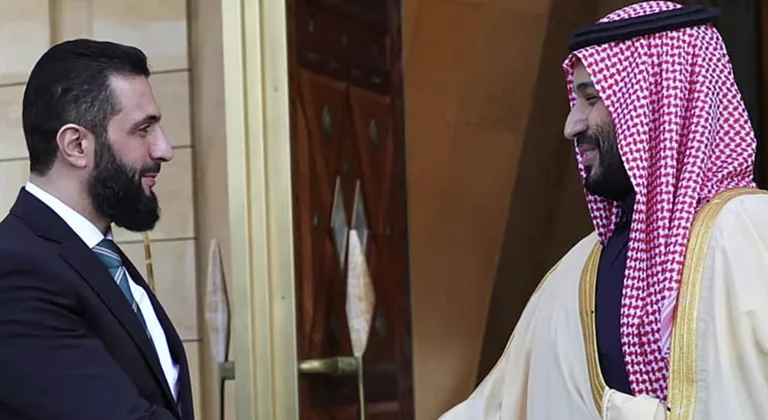
(a year ago)The rebellion, transformed into Syria's ruler, Ahmed al-Sahara, has welcomed dozens of foreign delegations since taking power in Damascus in December, but none of them were Iranians. And to give another stronger message, Shara paid visits to Iran's regional rivals, Saudi Arabia and Turkey, which he showed [...]
And, to give even a stronger message, Sharia paid visits to Iran's regional rivals, Saudi Arabia and Turkey, which he showed were priorities after being declared acting president of Syria.
Iran's game by Syria's new rulers is no surprise: after all, Tehran spent billions of dollars, sent military advisers and established co-operative networks in Syria to help President Bashar al-Assad suppress the dissident and fight against rebel forces opposing his Government when civil war began in 2011.
After tens of thousands of people were killed by Iran, his allies and his associates in Syria, there is no love for them, and there is not much urgency for reapproximation”, said Phillip Smyth, Middle East development expert and Iranian collaborators.
“Locked door” for Tehran
Even Iranian conservative media see Shara's visit to Saudi Arabia as a signal to Iran that Damascus has left Tehran's orbit.
I can't see how it can't be interpreted as a message to Tehran, given that Saudis are one of their biggest regional enemies”, Smyth said.
The leader of the Hayat Tarhir al-Sham (HTS) group, proclaimed terrorist organisation by the United States, has long attempted to change its public image. Sharia has publicly cut off relations with Al-Qaeda and has attempted to present herself as a pragmatist and tolerant leader.
He gave up using the nickname of war, Abu Muhammad al-Jolan, after overthrowing Assad Government and aiming to lift sanctions imposed on Syria and rebuild the state after more than a decade of civil war.
Masoud Aflak, political analyst in the United Arab Emirates, said Sharia's visit to Saudi Arabia was “a significant step towards lifting Western sanctions, receiving funds for Syria reconstruction and establishing security in the era after Assad's fall.
“The interim president is aware that to remove sanctions, Syria needs a state to be its voice on the world stage”, he told Radio Farda Free Europe Radio.
The opening of Saudi Arabia for Shara is important, as Riyadh views Islamist movements as a existential threat.
The Saudi Arabia sees an opportunity based on pragmatism when it interacts with Syria”, Smyth said. “Now, Saudis along with other states [including European states] are testing the waters. They are trying to see what the new chapter in Damascus will be, and they are more likely to influence than in the past”.
Aflak said the main concern for Saudis is to make sure there is no power vacuum in Syria, which extremist groups and Iranian-backed collaborators could use.
“Peacekeeping in Syria cannot be stopped only in Syria and will spread to other states”, Alpha said.
Sharia's visit carries another message, directed by regional Sunnies, Smyth said.
“is opening the doors for competitive actors with their regional geopolitical problems”, he said. “Cathar and Saudis come to mind. There is already a relationship with Turkey. Iran has closed its door to”.
Russia too gets approval
The only other Assad ally state was Russia, which has helped the former Syrian leader to retain power throughout his entire rule specifically in the years following its great military intervention in 2015, and housed him when he fell from power.
Unlike Iran, Russia seems to have had little success in forming ties with the young rulers of Syria. Moscow has kept in touch with Damascus and has even sent a delegation to negotiate with Shara last week, hoping to save its military bases in Syria.
“Irani tried to change Syria substantially and was open to this. In nature was sectarian and ideological”, Smyth said. “Russia, despite the use of violence against civilians, was still more pragmatic”.
Smyth added that Russia <x0] represents a better counterweight” for Western powers that are carefully seeking to establish reports with Damascus.
However, while building over the past few years his allies' network and regional collaborators, Iran has little to offer Syria.
“Even their oil does not matter much when ties to the Gulf have been restored”, Smyth said.
Negotiation space?
Syria under Assad's regime served as an important part of the land corridor connecting Iran with Levant, considered a logistical pillar of its regional network made up of state and non-state actors. Hence, Assad's loss has dealt a great blow to the so - called axes of resistance.
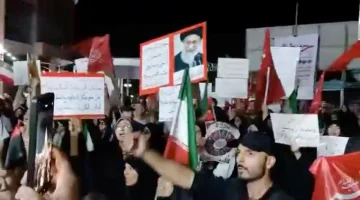
The Iranian government has not ruled out the possibility of placing reports with the Shara government, while Iranian Foreign Minister Abbas Aracchi has said Iran supports any government elected by the Syrian people.
But this message is contrary to statements made by Iranian Supreme Leader Ali Khamenei, who last month offered support for the Syrian “rinia” to rise against Sharia.
Shara doesn't seem interested in making reports with Tehran. It has prevented the Israelis and Iranians from entering Syria and is reportedly seeking compensation from the Islamic Republic for the damages inflicted during the civil war.
This practically leaves Iran with an option: Use reports of religious violence under the new provisional government to support the Shiite armed militia in order to challenge Shara.
“They may try to provide support for violence within Syria. Instability and its creation have always been an option for Iran”, Smyth said.
But given the many challenges Iran faces both inside and abroad, this is easier said than done. /Radio Europe Free