a minute ago
Knowings that never came: Who closed Kosovo's doors?
Periskopi(a year ago)
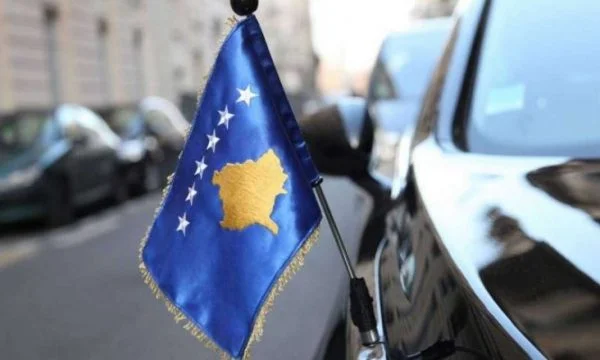
(a year ago)Seventeen years after the declaration of independence, Kosovo is in diplomatic oblivion known by many states, but outside some of the most important international organisations. With quick geopolitical dynamics, observers say Kosovo risks losing even some influential countries' support. The year Kosovo declared independence, in 2008, the then prime minister [...]
In the year when Kosovo declared independence, in 2008, the country's then prime minister, Hashim Thaci, promised recognition from 193 states, which played all member states of the United Nations organisation plus one, reports Radio Free Europe.
I confirm again that the state of Kosovo will be recognised, not by 100, but by 193 states. If they compare Kosovo's recognitions with other republics emerging from the former Yugoslavia, the miracle has occurred to us”, Thaci said.
He did. these comments at a Kosovo Assembly session in mid-July 2008, five months after declaring independence.
Despite Serbia's objections, the country, then, was recognised by 43 countries in the world, including the US and the major European powers.
Two years later, the International Court of Justice replied to Serbia's request for opinion '%s' declared the validity of Kosovo's declaration of independence, saying it did not conflict with international law.
For authorities in Kosovo at the time, this was also an incentive for the world's newest democracy to be internationally recognised.
“... because, at last, the International Court of Justice... a valued justice institution... confirmed that the people of Kosovo did the right thing, declaring their independence on February 17th 2008”, said then Minister of Foreign Affairs Skender Hyseni, following the JND decision.
Seventeen years later, on list which has published the Ministry of Foreign Affairs and Diaspora in Kosovo on its website, figure 117 countries that recognise Kosovo still far from the promised 193 figure.
The last country he recognized was Israel in 2021. That recognition was part of the Washington Agreement between Kosovo and Serbia. Before her, the last country to recognize her was Barbados in 2018. But the intensity of recognition began to decline since 2015.
In this decade, only nine countries recognised Kosovo. The country continues not to be recognised by two Western Balkan states -- Serbia and Bosnia and Herzegovina -- as well as five European Union states Greece, Spain, Romania, Slovakia and Cyprus.
Free Europe radio contacted the Ministry of Foreign Affairs and Diaspora in Kosovo since 10 February, to ask her about its lobbying activities, but received no response.
Quoted by the media in Pristina last October, Foreign Minister Donika Grovalla said that “recognitions do not depend solely on Kosovo, but also on many other consultations”.
Aida Hehir, from Westminster University in London, numbers several reasons for the stagnation of recognitions: under one, pro-Western states are already exhausted and most of them have recognised Kosovo, and under two countries that are lined up with Russia and China, or kind towards Serbia, cannot easily comply.
Hehir says Kosovo's lobby has also been centralised.
“Unfortunately, Kosovo governments since 2008 have been very, very obsessed with the United States and have not made sufficient efforts to cultivate relations with countries outside the scope of US influence. Here I think especially in the Arab world, in the Middle East, where there are some predominantly Muslim states that still do not recognise Kosovo”, Hehir says of the programme Expose Radio Free Europe.
Hehir admits that the impact also had on Serbia's recognition campaign. Authorities in this country say they have managed to convince some countries to attract Kosovo recognitions among them: Suriname, Burundi, Liberia, Solomon Islands, Madagascar, Ghana and others, although authorities in Kosovo do not confirm any recognition.
For international relations expert Hehir, the stagnation of recent years reflects, too, the world in which we live.
“Fuchia is moving from the West to Russia and China. These countries now have greater influence. They offer small countries military or financial assistance, conditioning us to assume it by five things, one of which is the annulment of the recognition of Kosovo”.
“in 2008/9/10, the United States has told small countries otherwise: we will give you money if you do these five things, including recognition of Kosovo. So Kosovo is hit hard by winds of change”, Hehir says.
Gezim Krasniqi of the University of Edinburgh cites another disturbing fact about Kosovo. He says there are some states within the EU that have recognised the country relatively early, but that today have a skeptical attitude for its independence.
I think of Hungary, a state that has a proserb position in relation to Kosovo's membership in international organisations. It is a state that has recognised Kosovo, but it is not a state that supports Kosovo's advancement in the international sphere, due to the close reports it has conducted with the Serbian state”, Krasniqi says of Expose.
Krasniqi stresses that beyond the numeric aspect of recognitions, Kosovo should take care to maintain the support of major international states.
Here, he cites the case of Kosovo's application for membership in the Council of Europe last year, when there were numbers, but not even support for becoming part of this organisation.
Unfortunately, in recent years, we have seen a cooling of Kosovo's reports with some of its top allies. We have all heard the statements of officials in either the US, Germany or other countries, which say it is impossible to actively engage in increasing the number of recognitions or Kosovo membership in international organisations, because they are unhappy with the steps the Kosovo Government has made in the direction of implementing the Brussels Agreement [for normalising relations with Serbia]”, Krasniqi says.
He stresses that both recognitions and Kosovo membership in international organisations go exclusively through normalising relations with Serbia.
This is also a condition that the EU has formally established both Pristina and Belgrade if they want to advance on the path to European integration.
REL contacted the foreign ministries in all five EU non-recognising states to ask whether they are considering changing the position of Kosovo.
The answer was received only by the Slovak Foreign Ministry, which said this country has not changed its stance as far as Kosovo's “unilateral independence”.
Krasniqi, legalist of Nationalism and Political Sociology, says that anyone to form Kosovo's new government will not have much maneuvering opportunities outside normalisation of relations with Serbia.
He notes that in Pristina, currently, there is no great mood for making concessions on behalf of normalisation, but, despite that, he says it should not remain in the stalemate.
It is important that the Government of Kosovo intensify the reports with cognitive or unrecognizable states, with which there are common interests, but also economic exchanges, and strengthen economic and cultural diplomacy. In current circumstances, I believe there is much room for deepening co-operation without actual recognition, even though actual recognition would be very desirable for Kosovo”, Krasniqi says.
Even Hehir, from Westminster University, says the new government of Kosovo -- whoever forms it -- will have to activate more, initially introducing Kosovo as the solution to Balkan conflicts.
Even Kosovo embassies in Western countries, according to him, should understand once and for all that they compete with Serbia's embassies and be more active.
“If Kosovo continues to be unknown and if some recognise it, such a thing will help three Serbian nationalists, it will encourage them to continue trying to review the boundaries of the former Yugoslavia, not only in Kosovo, but also in Bosnia”.
“You can see that in the last ten years, rhetoric by the Government of Serbia and rhetoric by the Government of Republika Srpska within Bosnia has become much more aggressive, much more combatary”, Hehir says.
Kosovo, since 2011, has been engaged in a dialogue on normalising relations with Serbia, but few of the agreements reached have been implemented.
Kosovo says the process should end with mutual recognition, but Serbia ʹ enjoys Russia's support in the international arena.
In 17 years of independence, Kosovo has managed to become part of several international organisations, such as the World Bank, International Monetary Fund, European Bank for Reconstruction and Development, but has failed in U. NESTO, Interpol of the Council of Europe.
In an interview given last week to Albanian television Top Channel, Kosovo Prime Minister Albin Kurti has acknowledged that in the past four years, there has been no new recognition, but has said he has not promised it.
And when Thaci promised him 17 years ago, he probably did not expect the geopolitical landscape to change dramatically both inside and outside Kosovo.
Today, Kosovo is under EU punitive measures and at odds with allies, due to tensions in the north. The world, meanwhile, does not know where to strike from wars in Ukraine and the Middle East to the disturbing growth of China.