a minute ago
International media report on elections in Kosovo, from BBC to Euroactiv: Kurt leads, but makes government without a coalition
Periskopi(a year ago)
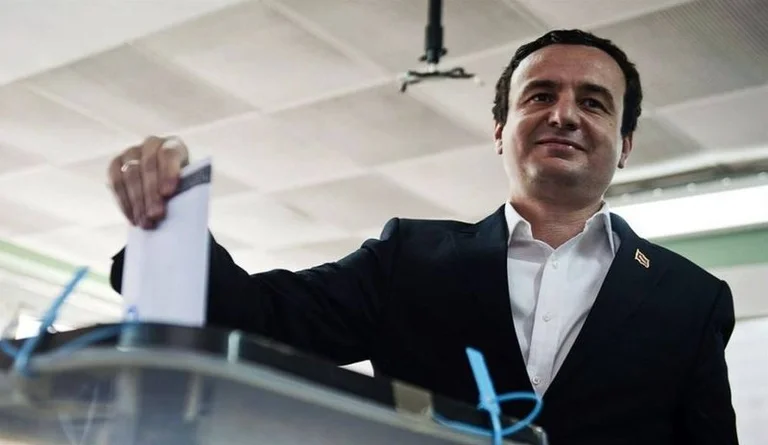
(a year ago)Foreign media have reported Kosovo elections this Sunday! Reuters writes that Kosovo's ruling “party Vetevendosje is on track to get the first in parliamentary elections Sunday, but will have to negotiate a coalition with other parties to form a government, a poll [...] indicated.
Foreign media have reported Kosovo elections this Sunday!
Reuters writes that Kosovo's ruling <x0). Vetevendosje party is on track to make the first appearance in parliamentary elections Sunday, but will have to negotiate a coalition with other parties to form a government, an exit poll indicated.
The election result would be a decline by more than 50% that Prime Minister Albin Kurti's party won in 2021. But he puts it in the position to lead the future government in a country whose policy is dominated by relations with neighbouring Serbia and Serbs within its borders”.
BBC says: Kosovo's ruling party is on track to win the largest number of votes in Sunday's parliamentary elections, but does not have the majority of seats, envisions an exit pop”.
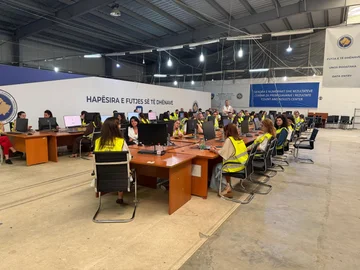
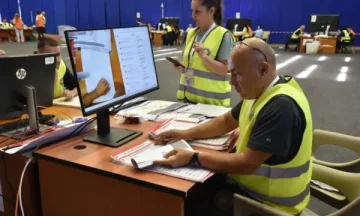
Associated Press says: Kosovars cast their votes Sunday in parliamentary elections considered a key test for Prime Minister Albin Kurti, as talks on normalising relations with rival Serbia remain blocked and foreign financing for one of Europe's poorest countries is in question. The vote ended at 7: 00 p.m. with no problems that could violate his integrity”, according to Central Election Commission official Valmir Elezi. Results are expected before midnight.
Interactive says: Following Sunday's elections, stalled Kosovo normalisation talks with neighbouring Serbia can see a revival, but no easier.
Exit Poles showed Prime Minister Albin Kurti's Vetevendosje party in first place, with 38.2% of Sunday's vote, losing ground from 50% to 2021.
Kurti, one Albanian left and nationalist from Kosovo, entered Sunday's election as leader but was not expected to win a full majority in the 120-seat national assembly.
Vetevendosje, on its way out first, will have to negotiate with potential coalition partners to form the next government.
Among the main opposition parties, the Democratic Party of Kosovo, which belongs to the family of the liberal party and whose leading leaders are accused of war crimes at The Hague tribunal, will come in second with 22.4% of the vote.
The centre-right Democratic League of Kosovo, which has campaigned to restore ties with the US and the EU, was surveyed with 20.1%.
Belgrade-Pristina Resurrection?
Kurti's first term was the first in Kosovo's history to end a full government cycle. It was marked by increased tensions between Serbs and ethnic Albanians in the country's north.
Tensions rose after EU and US-backed peace talks between Pristina and Belgrade failed temporarily in March 2023, most of which opponents blamed Kurti's hardline approach.
This also led to Western sanctions on Kosovo in July 2023.
Despite some achievements under previous EU leadership, dialogue was largely turned into a trialog of separate meetings.
Former EU diplomat Josep Borrell and bloc Special Representative Miroslav Lajčák were forced to meet separately with Kurti and Serbia's President Aleksandar Vucic after both refused to sit down together.
The EU had urged Kosovo to establish an association of Serb municipalities to allow greater self-government for Serbs. But out of fear of secession, Kurti has rejected the proposal and has largely moved to further limit the autonomy of Serbs in the country's north.
As the new EU top diplomat, Kallas, met with the two leaders in December, EU officials said the first official round of talks within the EU-brokered dialogue was postponed until after the elections in Kosovo.
A date for a new round of talks has not been set yet.
EU diplomats, however, hope that Kallas and the bloc's new special representative for the Belgrade-Pristina dialogue, Peter Sørensen, will be able to break the current stalemate. Sérensen, a Danish diplomat, has three decades of work experience in the Western Balkans.
“Special Mission”
The real wild card will be the way the new US administration will be positioned in the Western Balkans, as Kurt's relations with the first Trump administration were not in their best interests.
This time around, they are likely to deteriorate after the new US president appointed Richard Green, a former US member of the Belgrade-Pristina dialogue, as his new presidential envoy for special missions.
Greenell, who in his earlier role was accused of pressuring Kurt to accept a favourable peace agreement for Serbia, has already indicated that his line to Kosovo has not changed.
“Like Republicans and Democrats have repeatedly criticised Kurti for undertaking unilateral actions that destabilise the region. So did the EU and NATO,” wrote Green recently on X.
Tensions in the region could also increase as Green believes former Kosovo President Hashim Thaci, who is in custody in The Hague pending a war crimes sentence in the fight for Kosovo's independence against Serbia, is a “political prisoner”.