2 minutes ago
Prelec: Normalising Kosovo-Serbia relations pending
Periskopi(a year ago)
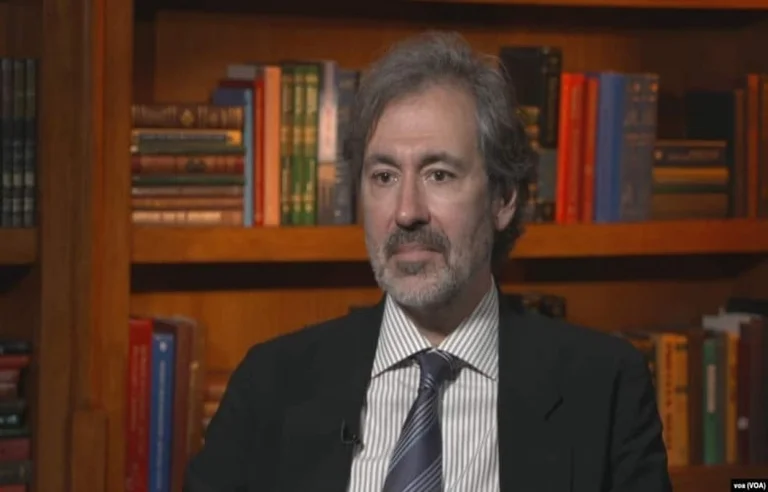
(a year ago)International Crisis Group expert Marko Prelec declared for the Balkans RTK that it is necessary to work on improving Kosovo-Serbia relations on daily issues, while the political part of normalisation, related to de facto recognition, has not progressed. According to him, the Ohrid Agreement, designed as a step towards improvement [...]
International Crisis Group expert Marko Prelec declared for the Balkans RTK that it is necessary to work on improving Kosovo-Serbia relations on daily issues, while the political part of normalisation, related to de facto recognition, has not progressed. According to him, the Ohrid Agreement, designed as a step towards improving relations, is facing obstacles due to failure to implement key obligations, such as forming the Serbian Majority Commission Association.
International Crisis Group expert Marko Prelec estimates that the dialogue process between Serbia and Kosovo is currently pending. According to him, relations between the two countries need a small normalisation and a major normalisation.
“Majorisation is de facto recognition, a step that would enable European countries that have not recognised Kosovo to take steps towards recognition. But the odds are very small. It is more realistic to hope for a small normalisation, improved everyday relations, cheaper trade and understanding of the concrete problems citizens face. This is not guaranteed either, but it is possible,” explains Prelec.
Speaking of de facto recognition, Prelec says this should be accomplished through the Ohrid Agreement.
This phase envisioned that the Ohrid Agreement and its implementation should pave the way for recognition of Kosovo by the five EU nations that still do not recognise it, or at least improve relations with it. For Serbia, this would imply treating Kosovo as a sovereign and independent state, but without formal recognition,” he emphasises.
Prelec adds that the year 2025 begins with anticipation for US President Donald Trump's stance, while remaining to be seen how dialogue under EU mediation will develop and what impact elections will have on Kosovo in February.
It is clear that dialogue between Pristina and Belgrade must continue. The positions of both sides are known, and the scope for compromise is small. There is not much hope for a big success, but the talks must continue, even though with lower expectations of major transformations. As for the implementation of the Ohrid Agreement, this appears to be an attempt by the EU to provide an optimistic image of a very complicated issue,” stresses Prelec.
Asked why an already agreed agreement is not being implemented, Prelec stresses that there is a text on paper, but also a key to what has been negotiated.
The Agreement is unusual. It was never signed; it was Borrell's statement that declared it accepted. The point of the agreement includes a series of concessions on both sides. Belgrade should take steps towards recognition of de facto, while Pristina should secure greater autonomy for the Serb community,” he emphasises.
“Since reaching the agreement, the Kosovo government has made autonomy meaningless, not fully, but in many ways, placing authority over Kosovo's north. Establishing the Association of Serb-based municipalities already matters less than when the agreement was reached. For this reason, I think Belgrade will continue to delay implementation, while Pristina is already delaying the creation of association,” stresses Prelec.
Commenting on whether the future Kosovo government will have to establish association, Prelec adds: “It is difficult to predict. But the most important issue remains that of the rights of the Serb community and how rights will be secured and respected for Serb citizens living in Kosovo. ”