13 minutes ago
What is expected from this year's EU from Ukraine to Kosovo-Serbia reports?
Periskopi(a year ago)
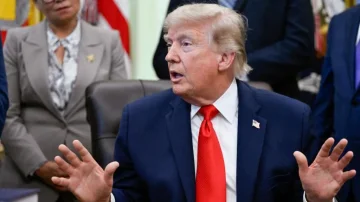
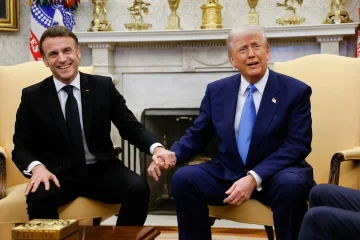
(a year ago)It is difficult to bypass American President Donald Trump's inauguration on January 20th when the European Union's 2025 policy is forecast. Radio Free Europe has talked with several officials in the European bloc in recent weeks, and everyone seems to be waiting for how to react to many different challenges [...]
Free Europe Radio has talked with several officials in the European bloc in recent weeks, and all appear to be waiting for how to respond to the many different challenges the new US administration can present for the bloc. This unpredictableness, which at first seems to make them nervous, was finally involved in Trump's interest in Greenland, Danish territory.
But there are other issues European officials are preparing for. One of them will be tariffs, believing that Trump's election promise of a universal fee of 10 per cent to 20 per cent on imports could happen, and that would be manageable, although afraid certain products would be hit at higher rates. Another issue concerns the demand for greater defence expenditures, with the future president who has recently suggested that 5 per cent of Bruto local production be dedicated to the military, while most European NATO members are struggling to meet the previous target of 2 per cent.
Ukraine
Ukraine's future will certainly be the focus of attention, separately if any peace or ceasefire agreements can occur during 2025. Again, in Brussels it seems to be Trump and not Europeans who will have to pay attention to the issue. In many ways, the goal for them is to at least ensure a “ult on the table” which is not entirely safe. The fact is that Europeans are running out of ideas and initiatives when it comes to Kiev.
The final proposal made by Ukrainian President Voldymyr Zelensky, who has demanded that Russian frozen assets in the West, worth billions of dollars, be given to Ukraine to buy American weapons. This is the perfect example of avoiding Europe in several ways. First because the money would go to the US budget instead of European states, and second because most Russian money is in the EU. This means that it would potentially undermine the Eurozone as a good place for investment from third states. The EU has used these frozen assets as guarantees for Ukraine's latest G7 loan, which will cover Kiev's expenses for at least 2025. And that's the most Europe is willing to do right now.
Sanctions Against Russia
What is certain is that the EU will aim to cause Russia more pain through sanctions. During Hungary's presidency of the EU Council, in the second half of last year, Brussels adopted the worst measures in order not to clash with Budapest, which is critical of any restrictive measures against Moscow.
Now, with Poland taking over the presidency leadership, in Brussels there is hope for a new package that will be ready on the 3rd anniversary of the start of the invasion of Ukraine on 24 February. There are different ideas, such as targeting liquid Russian natural gas and these ideas will be pushed forward by several states, but there is little chance that there will be reconciliation among the 27 member states, reconciliation required for the package to be approved.
But there are other aspects in this matter. Hungary has not yet given up opposition to current EU economic sanctions on Russia. The deadline for granting approval is until 31 January, and diplomats he has talked to The REL said Budapest has demanded that Trump's inauguration occur first before the bloc makes any decisions. They also said Hungary has not yet given signals that any aspect of sanctions should be eased or if Budapest wants some frozen EU funds given, in order to say yes to sanctions. However, this issue could be resolved during the foreign ministers' meeting in Brussels on 27 January, or at any emergency summit later this week.
Kosovo reports- Serbia
Dialogue on normalisation of reports between Kosovo and Serbia, mediated by the EU since 2011, will continue to be key to the region.
There will be efforts to revive talks at the highest level following the February 9th parliamentary elections in Kosovo.
After the elections, the new EU foreign policy chief, Kaya Kallas, is expected to complete its first tour of the Western Balkan region. The question is whether it can achieve any results, given that Kosovo's current prime minister, Albin Kurti, and Serbia's president, Aleksandar Vuciq, have so far demonstrated little will for the talks to succeed. To get help, she will likely choose Danish, career diplomat and former EU special representative for Bosnia and Herzegovina, Peter Sorensen, to mediate dialogue. He is expected to have the role former Slovak Foreign Minister Miroslav Lajcak has exercised in the past five years, when European diplomacy led Josep Borrell.
Meanwhile, among the Western Balkan states aspiring to the EU, Albania will continue towards membership, opening other negotiating chapters, while in the second half of 2024 it opened seven.
Northern Macedonia and Bosnia and Herzegovina will likely continue to be blocked on the road to the EU due to lack of reforms, meanwhile Montenegro -- which has only opened all chapters -- aims to get closer to the bloc. So far, the state has managed to wrap up talks on about a fifth of them and has the will in Brussels for the state to become the bloc's 28th member by the end of the decade, evidence that EU enlargement is still possible. Therefore, new Enlargement Commissioner Marta Kos will likely have Podgorica's first destination during the visit to the region, which will take place at the beginning of this year.
Moldova, Serbia, Ukraine closer to EU
Part of the expansion is other countries. For Ukraine and Moldova, there is expected to be a historic decision to open some of the 33 enlargement chapters during the Polish Presidency. But that does not mean that the work will be done. In order for all states to continue integration, reconciliation of all, including skeptics like Hungary and Slovakia, are increasingly critical of Kiev's EU integration.
It is likely that Serbia will also open new chapters, for the first time since the launch of the Russian invasion of Ukraine. Opposing states, such as those in Baltic, Poland, and even the Netherlands, must agree on this, even though they have expressed their anger at Belgrade's proximity to Russia and the return of rule of law.
However, Georgia will remain in the deadlock. In the EU, there is still no stance on how to deal with Tbilisi, while the executive there has taken a series of controversial decisions that have been criticised by the West. For sanctions on persons linked to the ruling Georgian Dream party, as the US ruled, there is no consensus, but the EU is likely to suspend visa liberalisation.
In Brussels, they think Georgia will now be in the same position as Turkey, officially a candidate for EU membership, but its de facto path to membership will be blocked.
Situation in Other States
Europe, politically speaking, is increasingly surrounded by populist forces that are gaining ground all over the continent.
In 2025, some major EU states will obviously be weaker. Germany will begin the year with the election period, as on February 23rd it will hold parliamentary elections. As long as a coalition between centre-right, CDU, and centre left, The SPD, likely to form after the elections, the far-right party, AfD, likely will win 20 per cent of the vote that would be the best result reached at the national level.
In France, the situation is more unstable because of the unstable government, which has silent support from the far right until new elections are held in July.
Governments in Spain and the Netherlands are wavering and may fall during this year. Farther east, Czech billionaire, populist Andrey Babes will likely win the elections in October, bringing Prague politically closer to Hungary and Slovakia. Meanwhile, in Austria, The far right FPO finally received for the first time the mandate for forming the government, which could potentially list Vienna in the Central European populist bloc.
As for Poland, there is a feeling that its leader, pro-Western Donald Tusk, is now the strongest politician in the EU. He is also assisted by the EU Presidency leadership, has good relations with Washington, and has been the largest military supplier in terms of Bruto's percentage of local production in NATO.
But Varshava will also be distracted by the election, as she will hold presidential elections on May 18th and the second round on June 1st.
Tusk's ally, Warsaw Mayor Rafal Trzaskowski, is considered the favourite in this election and if he wins, Tusk would consolidate power in the country. But conservative candidate Carol Newrocki is expected to be his counter-Candidate, and the election campaign will receive the country's attention during the spring. /Radio Europe Free