8 minutes ago
von der Leyen's focus on enlargement: 2030 can be a real deadline
Periskopi(2 years ago)
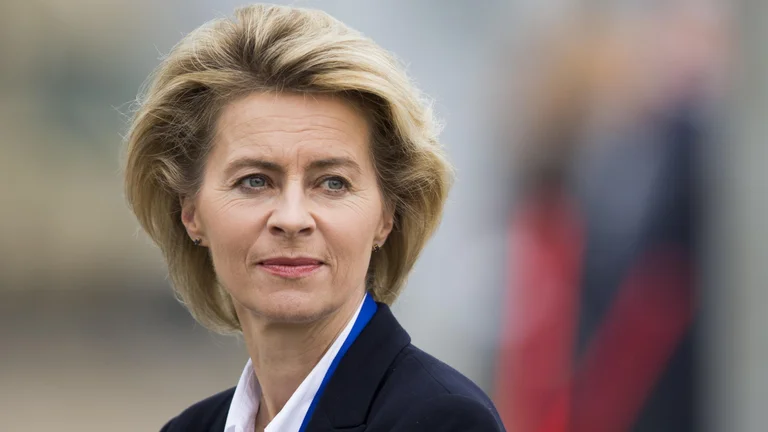
(2 years ago)The European Commission's re-elected president, Ursula von der Leeyen, has warned that on her new team with a five-year mandate there will be a commissioner for expansion. She has said this to show that the enlargement process will be given special importance and care. Even in the up - to - date compositions of [...]
The European Commission's re-elected president, Ursula von der Leeyen, has warned that on her new team with a five-year mandate there will be a commissioner for expansion.
She has said this to show that the enlargement process will be given special importance and care.
Even in the European Commission's destinies, there have been commissioners for expansion, but he has also been responsible for the EU's neighbourly policy. The expansion has only taken part, as its resort has had responsibilities for countries in the EU's neighbourhood from the east of Europe to North African countries.
The last time the European Commission has had commissioners only for enlargement, it has been during the first European Commission mandate, led by Jose Manuel Barroso from 2004 to 2009. At the time, commissionor Olli Rehn had this role. Then, for three consecutive mandates of the Commission, the enlargement commissioner has also been engaged in policy towards neighbours.
The Directorate for Enlargement has also been transformed into the general director of neighbourhood and enlargement. Her brief was NEAR, from English close. This is explained by the fact that only a few countries have been in the enlargement process and most of them in the initial phase.
Now, with the involvement of three Eastern European countries in the process of expanding Ukraine, Moldova and Georgia, along with six Western Balkan countries of Montenegro, Serbia, Albania, Northern Macedonia, Bosnia and Herzegovina and Kosovo, as well as Turkey, the number of countries in the enlargement process has risen to ten.
All except for Kosovo, they have formally the status of candidate country for EU membership.
Kosovo has applied for membership in this bloc since December 2022, but its application has so far not been reviewed.
In the EU, meanwhile, support for the enlargement process has grown and is expected to accelerate.
The outgoing president of the European Council, Charles Michel, mentioned 2030 as a deadline until both the EU and candidate countries should be ready for expansion.
Other EU leaders have also called on both sides, both candidate countries and the European Union, to carry out their part of the job, to enable the goal of the enlargement process to be achieved, respectively, the formal accession of EU candidate countries.
Montenegro, as a country that has advanced mostly in the process of membership negotiations, is even more ambitious.
His president, Jakov Milatovic, has voiced confidence that Montenegro could become an EU member by 2028.
In the EU, however, they say that the date cannot be set when and which country can join because it depends on the individual merits of candidates and their results in meeting the membership criteria.
Diplomats in the EU agree that if there is political will on both sides, then even the deadlines of 2030 to accept new members of the EU can be real.
Candidate countries must speed up in the reform process, while EU countries must agree on opening and closing the fastest chapters in the membership negotiations process.
Von der Leyen has pledged to have the priority of enlargement, but, as stated by EU Enlargement spokeswoman Anna Pisonero, she has so far had this process among her priorities.
The EU's “enlargement was a priority during President von der Leenen's first term. She has suggested that, in the future, she will have a strategic priority, advancing her goal to have a commissioner for enlargement in the future, says Pisonro for Radio Free Europe.
And Jana Jurova, an expert on expansion from the Institute for European Policy, E UROPEUPM, thinks there is a real political will to accept new members in the bloc now.
“I believe we have a certain political will within the EU that enlargement priority should be given. We haven't seen that will in the last decade. If a candidate country proves convincing progress in meeting membership criteria, it is possible to see expansion by 2030, or at least the conclusion of membership negotiations and the launch of the ratification process of the Membership Treaty”, Jurova tells Radio Free Europe.
Diplomats in Brussels agree that both the EU and the Western Balkan region, but Ukraine, Moldova and Georgia need concrete evidence that EU enlargement is real and possible.
And that, as they say, can be best witnessed through the admission of a new member country.
For years, besides mentioning enlargement as priority, there has been no visible result in this process. The last country to have joined the EU has been Croatia in 2013.
Since the establishment of the European Union, it has not been possible to spend so many years without expansion. Moreover, the EU, meanwhile, has contracted from 28 members to 27, as Great Britain has emerged from it.
Now, despite the European Commission's readiness for enlargement, the fate of this process depends on member states, as decisions in the Council are approved with the reconciliation of the 27 countries. / REL/