23 minutes ago
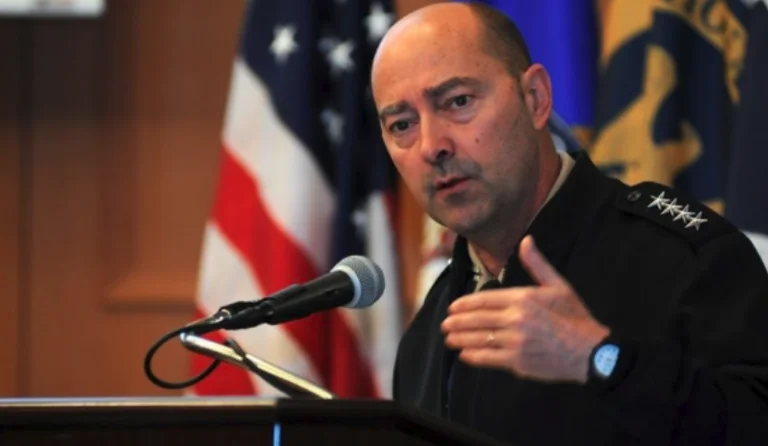
Former NATO Commander: No wonder there are tensions in Kosovo, Hill man needed to draw Serbia to the West
Periskopi(2 years ago)
(2 years ago)“How to keep Putin and Xi out of the Balkans” This is the title of a Bloomberg municipality author James Stavridis, former NATO Supreme Commander for Europe. At first, Stavridis explains the history of enmity between Kosovo and Serbia. “Balkan is complicated. And the tendency is always to ignore those nations until they explode, as [...]
At first, Stavridis explains the history of enmity between Kosovo and Serbia.
“Balkan is complicated. And the tendency is always to ignore those nations until they explode, as they have done faithfully over the past decades”, writes Stavridis.
It shows how NATO had 15,000 troops helping to maintain a peace between Kosovo and Serbia when he was the supreme commander.
At the beginning of 2010, when I was the supreme commander of NATO, we had 15,000 troops from 20 countries helping maintain an unpleasant peace between Serbia and Kosovo -- the latter, a region that is cut off from the first one the US recognises as a sovereign state. The hostility stemmed from centuries-old conflict between Serbian Christians and Muslim Kosovars dating back to the fall of the Byzantine Empire and the establishment of Ottoman Turkey. I felt deep - seated hatred every time I visited the region, which I did dozens of times. “Many stories”, a Kosovo leader” told me, writes Stavridis.
Former Commander NATO says that “is not surprising” that “Balkan readout remains full of tensions, especially at the Serbia-Kosovo border and in Bosnia”.
“A much smaller mission NATO there helps keep the lid (Unfortunately, nearly 100 of those peacekeepers were injured in riots by ethnic Serbs in Kosovo last year)”, Stavridis writes.
He stresses that today “is not only Russia, but increasingly China, which views Serbia as an appropriate strategic entry point in Southeast Europe”. For this, Stavridis says that “The democratic world must be extremely concerned”.
Serbia is the most conflicting country in the region. On the one hand, Serbs have significant cultural and historical definitions with Russia of Vladimir Putin. They share a strong religious link through the Russian and Serbian Orthodox churches and are important trade partners. And in May, President Xi Jinping of China made a high profile trip to sign a trade agreement with Belgrade”, he relates.
Former Commander NATO also mentions French President Emmanuel Macron's visit to Belgrade last month and approval of the sale of aircraft “Rafale”.
“Serbs have also seen several Balkan countries that have achieved NATO membership (Albania, Northern Macedonia, Croatia, Slovenia and Montenegro) and the EU (Croatia and Slovenia). This promotes the idea that Serbia, essentially the heir of old Yugoslavia, comes towards the West”, he writes.
Stavridis says the “cellist may be Serbia's president, Aleksandar Vuciq”.
“I met Vuciq (meaning “ukik” in Serbian) during my time in NATO and remained impressed”, he writes, showing that he speaks excellent English.
“After we exceeded the mandatory NATO crash (the alliance issued a number of Tomahawk missiles in Belgrade during the Balkan wars), Vuciq named me smart, strategic, and an effective communicator”, Stavridis recalled.
According to him, Washington is doing well in reporting with Serbia. Here he mentions the “delivery of one of her most experienced career ambassadors, Chris Hill, to Belgrade”.
Hill, according to Stavridis, is the right “to pull Serbia gently towards the West”.
As the US ambassador to Serbia says recently, Serbia is definitely helping” on the Ukrainian issue.
“NATO throughout the Balkans would be a smart way to confront Serbs. This should include vigorous exercises led by Balkan NATO members such as Greece and Bulgaria; more Western military technology sales across the region, including better artillery; sending American officers to Serbian war colleges and their senior officers to our colleges; and bringing Serbs closer to participating in NATO missions outside the Balkans, especially including cyber defence and special forces in the fight against narcotics <x>, Stavridis writes.
He sees Belgrade as “pragmaticist” under Vuciqi's leadership. The former NATO commander says that in time Serbia's NATO membership is possible, “and wise”.
This would further calm a troubled peninsula and help block a significant part of Putin's plans at a strategic corner of Europe”, Stavridis concludes.