10 minutes ago
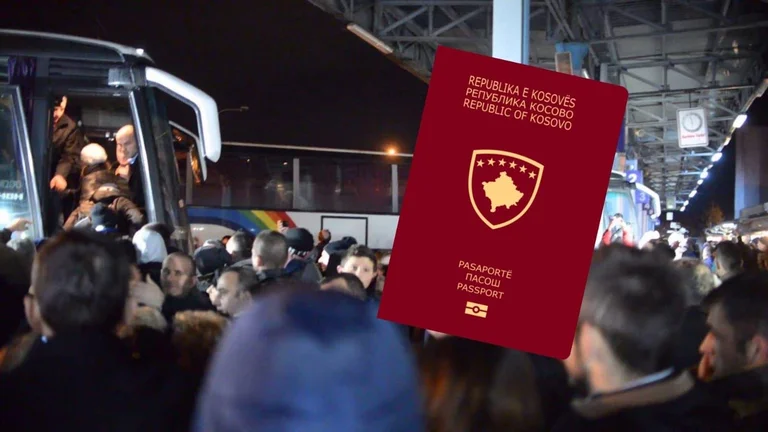
Is Kosovo empty? About 6700 buses travelling from Pristina for 9 months have gone to Europe
Periskopi(2 years ago)
(2 years ago)For nine months, no fewer than 6700 buses have been circulated by passengers from Kosovo to Europe only from the bus station in Pristina. These statistics have informed them of the “FrontOnline” official bus station in Pristina, confirming the increase in the number of departures by over 25 percent [...]
For nine months, no fewer than 6700 buses have been circulated by passengers from Kosovo to Europe only from the bus station in Pristina. These statistics have informed them of the “FrontOnline” official bus station in Pristina, confirming the increase in the number of departures for over 25 percent of buses from Pristina to various European states, mainly in Germany, Austria and Slovenia.
“From January to September 2024 for various Western European destinations, we have been passing total 6,698 buses. Destinations with the most departures are: Germany, Austria and Slovenia. Compared to 2023, this year the number of departures for different Western European destinations has increased by 25.3% or 1,649 departures more than last year”, The bus station in Pristina is said to be responding to FrontOnline portal.
Based on the statistics of the bus station in Pristina, about 750 bus buses are launched every month for Europe, or 25 buses a day.
Even in statistics published by Pristina International Airport “Adem Jashar” it is said that compared to the January-June 2023 period, in the same 2024 time period the number of passengers has increased to 20.46%.
While the number of flights from 10,460 has gone to 11,948, which percentaged the gap to 14.2.3% growth.
Private sector chief union: Over 250 thousand Jaaan workers fled Kosovo
Increasing the number of travellers to Europe after visa liberalisation, head of the Private Sector Union, Yusuf Azemi is linking it to the employment of Kosovars abroad.
He tells “Front Online” that over 250 thousand workers have left work to be employed outside Kosovo.
We did an analysis after New Year's Eve in Merdare and some 22% were released for the first time. Over 250 thousand people who have come out for work outside Kosovo”, Anemia for FrontOnline.
Azemi says the government is not giving hope to the workers' power to work in Kosovo.
According to him, their departure is taking place because of wages and working conditions.
The “has filled with legal violations, where laws arise in the court of Parliament that 10 days are workers on strike due to wages and conditions. They're gone because of their salaries, the government is giving hope for them, “Front Online”
Rafuna: Government urgently draft a strategy for preventing Kosovo's youth departure
The chairman of the Kosovo Economic Ode, Lulzim Rafuna, has asked the Government to draft a strategy for preventing youth from leaving Kosovo.
He says about “Front Online” that there has yet to be any movement on the issue.
According to him, even citizens abroad must return for investment in their country.
We should have a strategy for preventing young people from leaving Kosovo, but also for the return of those who are abroad to return to investors, but we still do not have such a strategy, but rather later than nothing. We urgently request that the executive draft a strategy that prevents the arrival of young people and the return of those who are to invest here”, Rafuna said.
Former Minister of Diaspora: Citizens are moving, just like we wanted free movement.
Former Diaspora Minister Ibrahim Makolli spoke of “Front Online” regarding the removal of citizens from Kosovo after visa liberalisation.
Malcolm says the way we wanted free movement, that's what's going on.
This is visa liberalisation and people are moving and we've wanted free movement”, short for “Front Online Makolli.
Otherwise, Kosovo has a long history of leaving its citizens; a story that has gone through different stages. The first phase of migration began in the 1960s, for economic reasons.
The second stage of migration ( 1981-89) contained more political traces, though serious economic conditions continued to play a key role in migration from Kosovo. The third phase simultaneously, the most dramatic phase of mass population shift, occurred in 1998-99, during the war in Kosovo. The fourth phase of migration includes post-war years until 2015, where Kosovo citizens migrated to Western countries for economic reasons, political pessimism, and social reasons.