20 minutes ago
Taliban celebrate anniversary of taking power in Afghanistan
Periskopi(2 years ago)
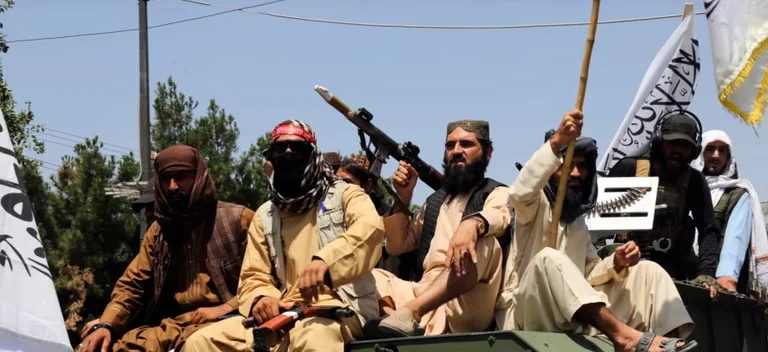
(2 years ago)The Taliban have marked the third anniversary of the rise in power in Afghanistan through a military parade, despite international aid groups estimate that there is one of the most complex humanitarian crises in this state. The Taliban have taken control of Afghanistan's capital, Kabul, on August 15, 2021, after the fall of the supported government [...]
The Taliban have taken over Afghanistan's capital, Kabul, on August 15, 2021, after the collapse of the United States-backed government and the departure of leaders from the country.
The Taliban government continues to be unknown to no country in the world.
Restrictions imposed on women are one of the most problematic points that the United Nations considers “apartid gender”.
The rise of the ruling Taliban is marked in mid-August, the period of Kabul's fall, but also in late August, when the last international troops left Afghanistan.
The departure of international troops in 2021, under an agreement reached between the United States and the Taliban on February 29, 2020, has enabled the Taliban to return to power after 20 years.
The Taliban have collapsed from power in Afghanistan following the September 11th 2001 terrorist attacks in the United States.
The August 14th military parade has been held at Bagram Air Base, some 25 miles [40 km] from Kabul, where American military forces have once been accommodated.
Part of the audience was about 10,000 men and no women.
Soldiers are seen with military equipment abandoned by US and NATO forces: obue and tanks.
Mohammad Hassan Akhund, who holds the position of prime minister, has commended the Taliban, as it has said, the mayoral authorities' victory over the Western “invaders”.
According to a statement issued by his office, he has said that the Taliban Government “has the responsibility for implementing Islamic law, preserving property, living people and respecting our nation”.
However, international aid organisations believe that millions of Afghans face “one of the largest and most complex humanitarian crises in the world, three years after the change of the” regime.
According to them, 23.7 million people need help in Afghanistan with 40 million inhabitants.
More than 6.3 million people are displaced within Afghanistan, while unemployment figures are alarming.
Women are estimated to suffer most from this regime.
Since the arrival of the Taliban in power, women have been reduced in public life by many jobs, parks, and gyms, as well as being banned from going to school after the sixth grade. /rel