3 minutes ago
Schmitt: Sultan Halted Albanian and Officialed Serbian

Periskopi(2 years ago)
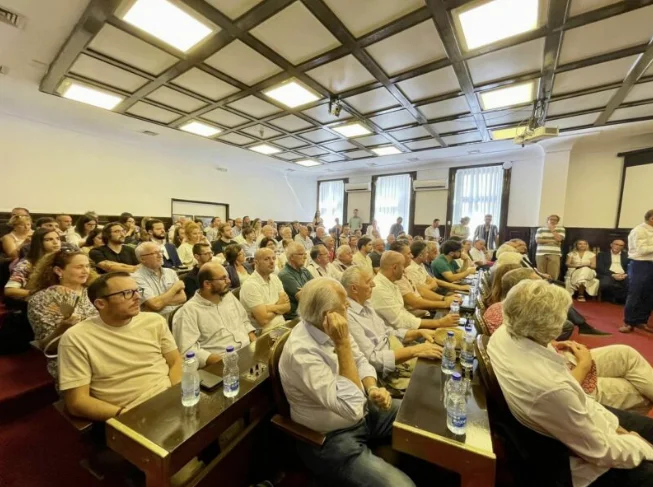
(2 years ago)Renowned international historian Oliver Jens Schmitt was a guest Monday at the International Ministry for Albanian Language, Literature and Culture. In a lecture titled “Pristina and Kosovo in the late Ottoman period ʹ the view of Austro-Hungarian diplomats”, held in the packed hall at the University of Pristina Rectorate, Schmitt spoke of Ottomanisation [...]
In a lecture titled “Pristina and Kosovo in the late Ottoman period ʹ the view of Austro-Hungarian diplomats”, held in the packed hall at the University of Pristina Rectorate, Schmitt spoke of the Ottomanisation of the Albanian people on this side.
Schmittt spoke of living Kosovo Albanians in the Ottoman occupation period, showing that they have left almost no evidence written by that period. Therefore, he said important sources for this remain Austria-Hungary diplomats since then was the great power to pursue its interests in the Balkans.
The historian showed how the Kosovo Albanians were not allowed Albanian by Ottoman government officials and how the then population there was no one among them to testify to a perspective for that period.
“The Albanians, who were mostly Muslim Sunnies, were forbidden to develop their written culture and all that should be in the Ottoman Ottoman province”, Schmitt said.
He said the only official newspaper at the time was published in Prizren in Ottoman Turkish and Serbian, not in Albanian.
Schmittt said Ottoman leaders knew Albanian, the language of the citizens they ruled.
This, according to him, is one of the reasons why Ottoman resources for living that time are the limited “” and that “for many decades there is no local or regional perspective on social and political issues in Kosovo at the time”.
Schmitt told a decline in Albanian culture in Kosovo in that period.
He said European diplomats created “contents of local infomorators, often from the ranks of the Catholic community” to “andanise the beliefs of residents on various issues”.
The academy said Vienna had helped form Albanian national consciousness.
The “here in Kosovo had a very special Albanian national identity because the Christian factor” was missing, Schmitt said.
The idea of statehood was “a success of national importance”, he said. At the time, Schmitt said that Albanian trains were divided and that the <x2texts captive for the national movement were published by intellectuals, Christians, Bektashs”. That, he said, “left the impression that others did not play any role, that others did not write”. However, he said that heotirans should also study their actions.