a minute ago
Russell for KFOR operation on August 9, 1999: There were blood stains on the floor and we found ammo.
Periskopi(2 years ago)
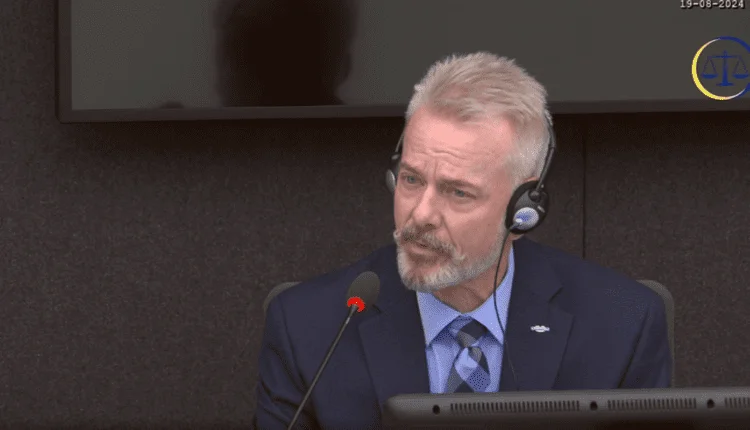
(2 years ago)During his testimony at The Hague, witness Steven Russell was questioned about a KFOR operation that had occurred on 9 August 1999 in Kosovo at a hotel used by the KLA. I remember getting into the basement, on the right was a place where it was like a part of [...]
I remember when we walked into the basement, on the right was a place where it was like a piece of a chair and some sharp instruments. There were blood stains on the floor. So it was all in an isolated part in a corner. (The blood stains with the chair) All these were close to one another”, Russell said, adding that it did not appear to be a great bloodshed and that it seemed to be fresh”, the witness said.
The witness said that when the operation began they expected to find nothing because KLA members were told to check but would not find anything, reports “Justice Vow”.
When we started the operation we expected to find nothing there, we were told whatever you wanted to find nothing, and of course we found a lot there”, Russell said, adding that they gave no explanation for what was found and that American soldiers had the impression that members of the KLA were trying to make time.
The witness was later presented with a report by the Multinational Brigade of the East saying that dozens of pistols, grenades, explosive devices and hundreds of sequentised ammunition had been found in a barracks. Prosecutor Halling said KLA uniforms and illegal documents have also been confiscated.
According to the witness, at the moment of the operation, three holders of Yugoslav Army cards were present; Adrian Mehmeti, Abdurrahman Ramadani and Shaqir Shaqiri are found there.
Two O documents were then released to the witness The SEU, which one of them was a weekly report of August 11th-17th 1999 in which it said that daily clashes were not stopped in Gjilan following the raid and control of the barracks used by the KLA and finding out what has been described as the torture and ammunition chamber.
According to this document, KFOR troops were surrounded by an angry body and that only nine of the 30 people who were intended to be arrested were arrested by KFOR and that next day other Albanian protests against peacekeepers were organised in an effort to free those who were detained.
Russell said there were ten people arrested. He said he does not remember anything concrete, and when asked whether the KLA had taken measures for crimes KFOR had uncovered.
After that, a document allegedly issued to Military Police Commander Fatmir Mehmeti in the Karadaku Operative Zone was presented to the witness.
We knew they were unhappy about the raids that had occurred”, Russell said.
According to Halling, the document describes that according to Mehmet, KFOR had conducted operations with Military Police, and soldiers had inadequate behaviour towards members of the KLA found in the facility, destroyed all data and documentation.
He said that in the document, Mehmet had written that, as a result, a protest came of soldiers joining citizens. Ten KLA soldiers were reportedly arrested.
This was not an official object. There was no authorized military police officer. There's no one behind authorized barracks or collection points and that's why we closed it. As far as the conduct is concerned, the military police under the direction of... running the military unit he was responsible for the raid that took place. They did police control in all rooms to get documents and weapons and they found a couple of eyes. As for the violations mentioned here, I don't know what they're trying to say here. And We gave them water forbidden. Nobody lost their feelings. We had been ordered by the headquarters of our brigade that we would act as fast as we could to shut down the environment and actually extend more than we should have, and for that they were not satisfied. But anyway, we decided to free the persons who were banned, give them water, it was hot, it was August, and take some breath, and we took these people into the shade and showed them a lot of human”, he said, adding that what it says was not right.
The Witness was asked to explain the role behind US KFOR to prosecute and prosecute crimes that occurred during the actual period...
You have to understand, the military unit of size that we had and we had a lot of resources that are a line between the investigation and... we also had a kind of standard functioning nature and we also had military police units that were trained for legal cases for police and investigations and we also had Staff or the judges departments that had qualified lawyers, named in the military, and these were inter-connected institutions. Our responsibility in the infantry unit was that as we faced things of a more police nature, we should use the resources we had available. In our forces as I recall, we had a military police battalion and we had companies that were assigned to different sectors”, the witness said, adding that they had a lot of police resources in terms of this period.
He was also asked that during the US KFOR investigations, they had made investigations into charges of crimes by all sides equally.
“Yes. As we entered the operating area, few American soldiers had little knowledge of Albanian and Serbo-Croatian as the languages or cultures of these countries. So we've seen things the way we've seen it in the first instance of events or events, and we've appreciated whether they were right or wrong”, Russell said.
Russell was also asked that the KLA leaders had referred to him with any investigation.
“As a infantry operations officer, they report immediately, for example, if 1244 were to take action in terms of illegal acts. While we listened to the villagers, we heard former officials or people say they wanted to take leadership positions, we heard them, heard their opinions, or people who had influence over mosques or villages. However, as far as co-operation with the former institutions is concerned or in terms of illegal aspects has not been so”, Russell said.
Concretically, Russell was asked whether there were investigations into crimes allegedly committed by the KLA, which the witness confirmed.
From June to September 99, the witness claimed he remembered there were after the presence of the International Criminal Tribunal in Kosovo, namely TPNJ.