7 minutes ago
American experts: Kosovo, led by a prime minister no one wants to work with
Periskopi(2 years ago)
(2 years ago)In recent months, Serbia has committed itself to the two main states of the European Union for achieving strategic agreements. Some experts have interpreted the Western countries' readiness to co-operate with Serbia as an example of efforts to lure it away from Russia's orbit. But two American professors, expert developments between Kosovo and [...]
In recent months, Serbia has committed itself to the two main states of the European Union for achieving strategic agreements. Some experts have interpreted the Western countries' readiness to co-operate with Serbia as an example of efforts to lure it away from Russia's orbit.
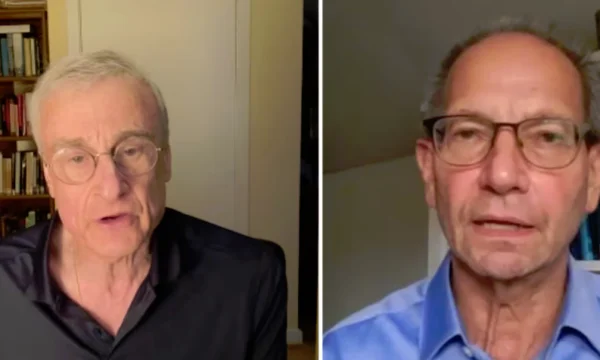
But two American professors, connoisseurs of developments between Kosovo and Serbia, Charles Kupchan and David Khan, told the Voice of America that Serbia's recent agreements with the West, although they improve Serbia's position in front of Kosovo, should not be interpreted as its deployment to the West. Mr. Kupchan and Mr. Kanin were declared enthralled in the process of dialogue, the positions of Kosovo Prime Minister Albin Kurti and Serbia's President Aleksandar Vucic, and the impact the United States elections for the region may have.
During a visit to Belgrade last month, German Chancellor Olaf Scholtz signed an agreement on the rare litium mineral, of vital importance for the production of electric vehicles. In April, during a visit to France, Serbian President Vucic sought to buy 12 combat planes from France.
Some world experts and media have interpreted these intensified Western commitments to Serbia as an example of efforts to lure Serbia away from Russia's orbit.
For connoisseurs of developments in Serbia and Kosovo, professors Charles Kupchan from Georgetown University and David Khan from the University, Johns Hopkins, these agreements do not signal Serbia's alignment with the West.
Serbia has been successful, but this should not be interpreted as a sign that Serbia has chosen the West. He didn't pick the West. Vucic balances Russia, the European Union, Americans, Chinese and Turkish, and all the others he needs or wants to face, and he does so very skillfully... He plays with the Russians, with the Americans. The Russians understand this, but Americans don't. We behave like he has chosen the West, while Russia does not come out with statements saying Serbia has chosen the West”, Says Professor Kan.
For Georgetown University professor Kupchan the latest relations are a continuation of the policy that Mr. Vucic is pursuing with all states against current geopolitical divisions, which have placed the West and the East on diametrically opposite axiss.
I don't see this as a turning point or a sign that Mr. Vucic is turning his back on his ties with Russia and China and that he is pushing his feet in the West. Mr. Vucic is able to engage with both sides. He has reached agreement with Berlin and Paris recently. But I believe it will do the same with Moscow and Beijing in the near future”He says.
In addition to these deals with Europeans, Jared Kouchner, former president's son-in-law and current Republican candidate for president Donald Trump, has expressed interest in a hundreds of millions of dollars investment in Belgrade to return the former defence ministry building, bombed in 1999 by NATO, to the hotel.
Serbia, which in recent years under President Vucic's leadership has slipped towards autocratic, according to human rights organisations, has followed a policy of closer relations with the West while continuing close ties with Russia and China. Serbia is the only EU candidate state that has not imposed sanctions on Russia for aggression against Ukraine. But Belgrade sells weapons to the Ukrainian Army through third parties.
But the two experts differ on their assessments of what impact this Western stance on Serbia will have on dialogue with Kosovo.
Serbia has again become the most important state in the region, which has good relations with all. Kosovo, on the other hand, is led by a prime minister with whom no one seems to want to work. And that gives Serbia advantage... Twenty-five years ago, when NATO carried out the bomber campaign, Serbia looked like an isolated loser. Now Serbia is everything else than a loser, it is not isolated at all, and it has marked numerous successes in diplomacy that is pursuing”, Says Mr. Kan.
Mr. Kanin, former analyst with the US intelligence agency CIA for the Balkans, says these successes will enable Mr. Vucic to continue insisting on the creation of association, which, according to him, has become a “obsion” for Western diplomats.
Mr. Kanin says the “assessment that the association will integrate Kosovo Serbs into Kosovo institutions is wrong” and that Serbia is in a very good position for “with patience, but with persistence putting pressure on it”.
Kosovo is ahead of a very difficult situation, with a prime minister who is unpopular outside Kosovo, but it is clear that establishing association will undermine Kosovo's sovereignty”, He adds.
Professor Kupchan, senior analyst with the Council for Foreign Relations, believes that the European Union will continue to focus on dialogue between Kosovo and Serbia, but does not think Serbia will benefit from increased Western attention.
“Western attention, I don't believe it strengthens Serbia's diplomatic burden. I think the European Union will continue to promote dialogue between Kosovo and Serbia as it finds necessary. Their efforts are focused on completing this process. Will the most powerful economic relations between France, Germany and Serbia have a positive impact on the overall relationship? Yes, because the most frequent contacts and the biggest economic ties are better than the least, but I wouldn't consider these agreements to be changing,” Says Mr. Kupchan.
He says he shares concerns that the “process of dialogue has entered the road without a head-to-head” and that both sides are responsible for it.
Mr. Kurti's “Masses, although they can stay politically and legally, were unnecessary in a strategic way because they were unnecessary provocative. For example, the deployment of mayors in the north that were elected by a negligible percentage of votes; this was followed by car plates and later by the dinar issue,” Says Mr. Kupchan.
All these actions are justified, because Kosovo is trying to extend its full sovereignty, but they were not useful in relations with Serbia. Belgrade, in turn, mobilised forces along the border with Kosovo. We had a violent episode in Banjska and the one who pleaded guilty to this act of terrorism still walks free in Serbia. We then had a letter from the Serbian prime minister, which expressed reservations about the agreement, in which he said we would never recognise Kosovo. These are steps back and therefore we can say that the normalisation process is stuck,”He adds.
Last month, the US government announced that it appointed diplomat Alexander Kasanoff as special envoy for the Western Balkans after the end of diplomat Gabriel Escobar's mandate. Early next year, the European Union is expected to appoint a new mediator to replace Slovak diplomat Miroslav Lajcak.
Mr. Kupchan, who worked in the two US administration that President Clinton and President Obama, as director for Europe at the Council for National Security, expects the pressure on Pristina and Belgrade to return after a pause because of elections in the European Union and the United States, and remains optimistic about an epilogue of this process.
I think playing with the Russian, Chinese card is not an option in the long run because of the geographic location. The Balkans are part of a larger European space. People in the region should feel blessed, fortunate. Those who live in Central Asia, Armenia, Azerbaijan, near Russia, near China, live in an uncertain area in an endless future. The Balkans are not such an area, it is in Europe, and therefore I think this process will come to a positive end,” He says.
But Mr. Kanin considers dialogue to be a process that has failed to produce results, and over the past 30 years it has been a hostage to the rotation of Western diplomats, who have failed to move the process forward. According to him, there is no will to move and as such a dialogue that was initially failed as a process.
The Serbs know that. Kosovars know it too. Vucic buys time through the advantages he has obtained through regional diplomacy and contacts with international leaders, while Kurti insists on winning the next election and keeping Serbs away from”, He says.
According to Mr. Khan, Washington and Brussels should review their entire approach to the region and leave it up to the parties to reach agreement based on their preferences, even when solutions may include plans such as the one between former President Thaci and President Vucic in 2018.
“We will not be able to impose a liberal, multiethnic, transparent and Western democracy in the region. We will not be able to impose peace and end of conflict. We've failed to do this for the last three decades. I think we should challenge the locals to find ways to work together,” Says Mr. Kan.
Even Mr. Kupchan thinks that the end of the conflict between Kosovo and Serbia will be in the hands of leaders of both countries and their tendency to make difficult decisions.
Playing with the nationalism card is the easiest thing to do. But convincing the public that it is time to put ethnic nationalism aside and look towards the future is the most courageous thing they can do. We're not here yet, but I think it's a matter of time. These obstacles will be overcome when leaders are ready to take bold steps,” He adds.
Will American elections influence unresolved issues between Kosovo and Serbia?
According to Mr. Kupchan, in this election cycle, the United States is very focused on internal plan and foreign policy, dominated by Ukraine and the war in Gaza, will not be a priority, but still expects new energy in the process of dialogue after the US elections and the consolidation of senior officials in the EU.
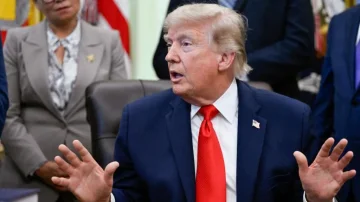
For Mr. Kan, the impact will depend on the winner of the election. According to him, President Trump has shown that he is unpredictable in his approach and that he changes his attitude, while, in his opinion, the expected democratic candidate and current Vice President Kamala Harris, who says he doesn't know much about the Balkans, will most likely continue the same policy towards the region.