a few seconds ago
Is Russia seeking to destabilise Kosovo through Serbia?
Periskopi(2 years ago)
(2 years ago)Authorities in Kosovo have recently been frequenting warnings of a potential danger that could threaten the state from its northern neighbour, Serbia. But whenever they speak of such a threat, they do not leave out the ally of Belgrade, Russia, which they say is interested in destabilising the north of [...]
Authorities in Kosovo have recently been frequenting warnings of a potential danger that could threaten the state from its northern neighbour, Serbia. But whenever they speak of such a threat, they do not leave out the ally of Belgrade, Russia, which they say is interested in destabilising the north of Kosovo and the region.
According to Kosovo Prime Minister Albin Kurti, Belgrade and Moscow have one in common: they want enlargement.
For President Vjosa Osmani, Serbia is Russia's “extended handover”, which is trying to play the “games of [Russian president Vladimir] Putin, opening a new front against the West”.
And, according to Chief Parliamentary Glauk Konjufca, Belgrade is preparing for an eventual attack or provocation against Kosovo, as was carried out in September against the Kosovo Police in Banjska.
But, Serbian Prime Minister Milos Vuchevic has named “Mediadrama” warnings that Kosovo is threatened, saying such a “is nothing but a fog for its Western sponsors”.
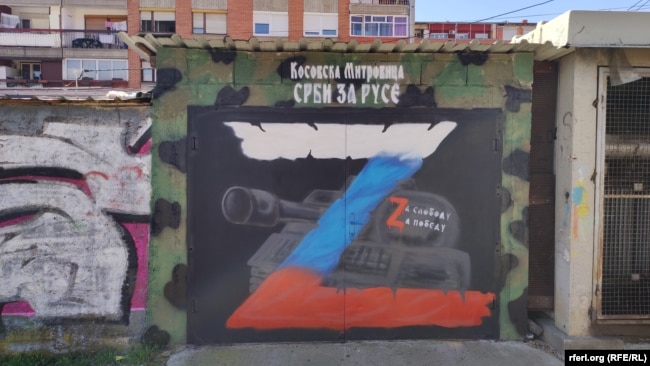
Distraction From War to Ukraine
The threat of a possible escalation in northern Kosovo “is large and true”, estimates Ivana Stradner, senior researcher at the Washington-based Foundation for the Protection of Democracy.
She tells Radio Free Europe that it stands, as Russia ʹ does not recognise Kosovo's independence is seeking to distract attention from the war in Ukraine, where, according to her, it is not performing well.
For this, according to Stradner, Russia is looking for non-intangible “pika in the West and the most vulnerable point currently in Europe is the Balkans: Bosnia and Herzegovina and Kosovo”.
The very north of Kosovo and the secession threats of a part of Bosnia were named by the United States as the main security risks in the region, where access to force to resolve issues should be ruled out.
Even Adrian Steun, Washington-based foreign policy and security expert and associate of the International Centre for Counter-Terrorism in The Hague, does not rule out the possibility of violent incidents in Kosovo, as he says, there are circles in Serbia aimed at destabilisation.
In a proposal for Radio Free Europe, Steun says that, according to indicators on the ground, the likelihood of an escalation has not increased compared to three or six months ago.
Another aspect in the matter, according to Steun, is that Serbia's president, Aleksandar Vuciq, has received a clear message from Washington that “whatever violent aggression against Kosovo and KFOR peacekeeping forces will be unacceptable”.
Steun shares the same opinion as Stradner that, any new case of crisis, or the re-animation of old sites in the Western Balkans, “would fit Russia's interests, as it would distract the attention of NATO countries and other partners who have sided with Ukraine”.
Stradner, meanwhile, does not believe that there will be a large-scale conflict in the Western Balkans, like the one in Ukraine. However, it claims that there are activities in the Balkans that can be considered cross-border war “”.
The use of force may also be involved because, according to Russia's military strategy, hybrid warfare is not only deinformation, cyber security, sabotage and others, but includes things like the use of force”, it warns.
Stradner expresses concern about the forces that are pushing ahead of Russia that allegedly the West is aiming to open a new front, and that President Putin wants to say to the West that, “if he does not want the Balkans to escalate, then you must negotiate with me”.
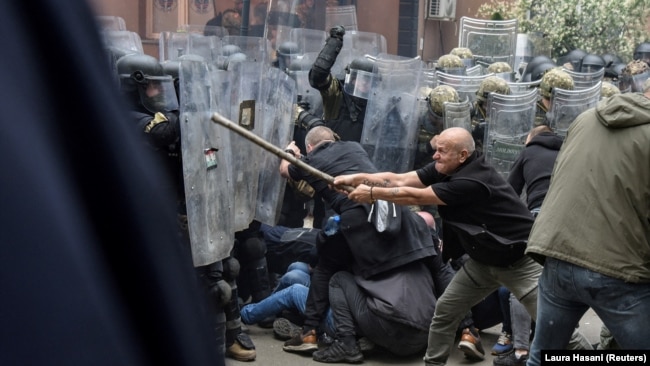
KFOR, sanctions role
But, Kosovo's prime minister, in a scripture published in the New York Times, said opening a new front in the Balkans would serve Russia and Serbia, “after Serbia could attempt to gain territory through aggression, and Russia could strengthen control over Serbia as its satellite, and distract the world from its war in Ukraine”
Stradner and State agree that Serbia could have territorial goals towards Kosovo. Steun advises co-ordination with KFOR and with Kosovo strategic partners for preventing any escalation, while Stradner says the West should send clear signal to Belgrade that if it acts in Kosovo, KFOR will act.
Western military alliances tell Radio Free Europe that the disposal of 1,000 additional troops in Kosovo last year was among the steps taken to ensure that “K FOR has the strength and capacities to meet its” mandate.
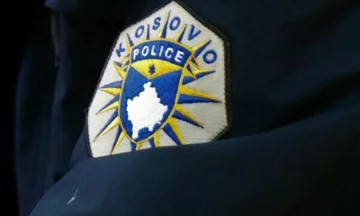
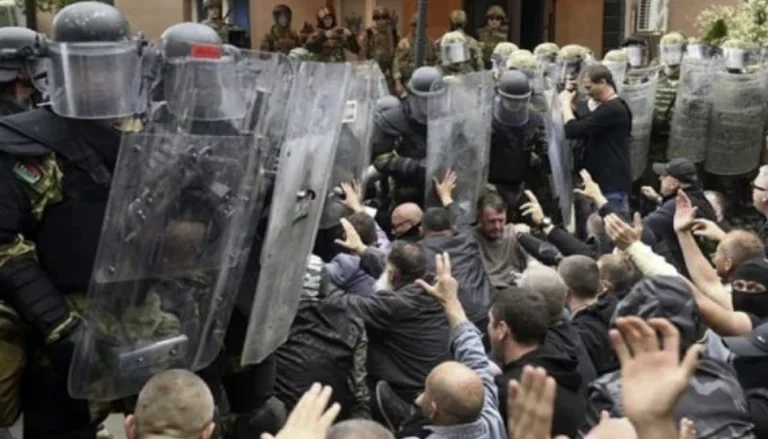
Last year, Kosovo's north faced high tensions: Serb protests against Albanian leaders, who culminated in clashes with KFOR members, were followed months later by the armed attack on Kosovo Police by a group of Serbs.
Following the attack on Zvecan Banjska, which Pristina blames Belgrade, authorities in Kosovo also said they were investigating possible Russian ties with this attack.
Officials in Kosovo have demanded that Serbia be sanctioned for the attack on Banjska, warning that, on the contrary, such an attack could be repeated.
Stradner agrees that sanctions against specific people would be a good form to prevent future eventual threats. /Radio Europe Free