10 minutes ago
North City Hall Droja: Less Residents, Less Budget
Periskopi(2 years ago)
(2 years ago)Due to the small number of registered population, Serb-run municipalities in northern Kosovo ♫ North Mitrovica, Zubin Potok, Leposaviq and Zvecan can receive a much smaller annual budget than before. This concern, at least, expresses municipal officials in northern Mitrovica and in [...]
That concern, at least, is expressed by municipal officials in northern Mitrovica and Zubin Potok.
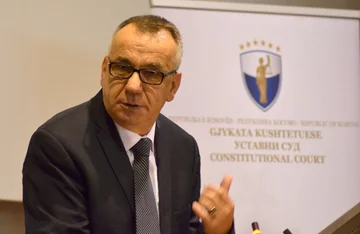
“Of course the number of residents will reflect on the budget. [From the central level] they'll tell us: you, the municipalities, find yourselves for projects and settlements, if you think you have something”, says Free Europe Radio Katarina Axanciq, deputy head of the North Mitrovica municipality.
The number of population in the municipality is a factor in determining their budget by the Government of Kosovo.
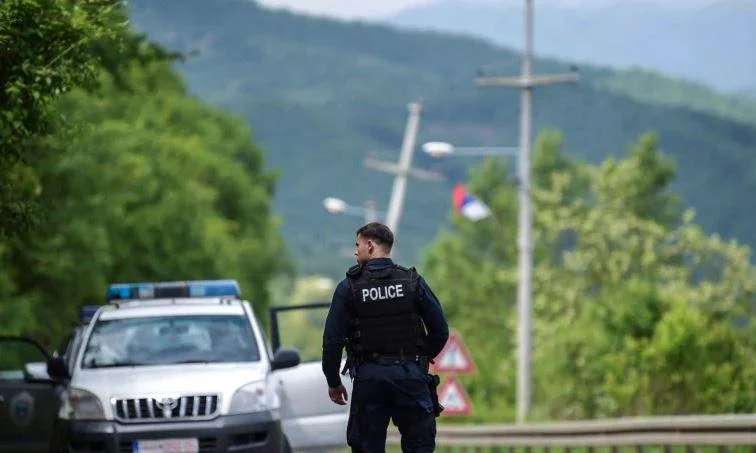
The Serbs of four municipalities in the north, mainly boycotted the census that was conducted by the Kosovo Statistics Agency in the spring, at the request of the Serbian List, which opposes the authority of Kosovo institutions.
According to AKS preliminary data, published on July 12th, only about 6,500 people in the area responded to the census, while tens of thousands are believed to live there.
Wide Effects
“This boycott of registration [by local Serbs] may also have implications on budget sharing, but also on economic development”, says Zubin Potok municipality chairman Izmir Zeqiri, for Radio Free Europe.
In this municipality, according to the AKS preliminary data, 758 inhabitants have been registered.
The figure is much lower than the last estimate of the population in Kosovo, made by the AK in 2022.
According to that assessment, 6,628 people live in Zubin Potok.
Major differences are observed in the other three municipalities in the north.
In North Mitrovica, according to the ASS's up-to-date data, 2,346 inhabitants have been registered, while according to the assessment of 2022, 11.912 people live there.
At Leposaviq, 3,204 people were registered, while there were 12,883, and 435 registered in Zvecan, while 7.165.
Four municipalities in the north have largely boycotted the pre-skirt census in 2011, while the budgets for them are divided on the population's assessment.
Municipal officials in northern Mitrovica and Zubin Potok hope that central institutions will keep in mind that the number of citizens registered in northern municipalities does not represent the real population number there.
For 2024, North Mitrovica has had a budget of around 6.3m euros.
Mayor Axanciq, hopes that the municipal budget for next year will at least be the same this year.
I pray to God for this, so they can leave us as much”, says Axanciq.
“must find a solution. Now I don't know... Surely the government [of Kosovo] will keep in mind what solution can be made”, Zeqiri says.
This year's municipality budget he runs is around 3.4m euros.
Regarding these concerns, Free Europe Radio addressed the Government of Kosovo, but its officials were unwilling to specify how the solution will be found.
According to them, “must be expected and analysed the figures and then set for municipal budgets”.
About half of the annual municipal budget depends on the general grants, which separate the Government of Kosovo from the country's overall budget, which this year was about 3.3 billion euros.
About 90% of the total grant to municipalities is divided based on the number of the respective municipality's population.
Bekim Salihu, from the Kosovar Institute for Advanced Studies GAP, tells Radio Free Europe that non-participating citizens in the census process in the north will produce negative effects for themselves.
The less resident means less budget. That's the first effect, but not the only one, because even the number of asmblastists in municipal municipalities is determined by the population of”, Salihu says.
According to him, when a municipality does not know the population number and its expansion, nor the level of education, citizens' professions, and other demographic issues, it has trouble designing even sustainable studies and plans.
Boban Simi, from the Centre for Affirmative Social Action CHASA in Kosovo, agrees that low turnout in the census in municipalities in the north does not only hit municipal institutions, but also citizens themselves.
When municipal revenues are smaller, it makes municipal services and capital investments less. With this fact, the population in general has less potential for development”, he says of Radio Free Europe.
General population assessment as alternative approaches
In cases where citizens' participation in the registration process is low in specific municipalities, there are ways to determine the estimated number, estimated by the Kosovo Statistics Agency.
The director of this agency, Avni Kastrati, mentions the population's assessment, which, according to him, is international.
He says the AKK has enough resources to make a general assessment of the population in the country's northern municipalities.
“We've done a mini-registering before and we have the number of homes, houses, how habitable and uninhabitable...”, says Kastrati for Radio Free Europe.
He adds that work on the overall population assessment in northern municipalities in the country has not begun, but that the labour teams are ready.
By the end of the year, the ASS will be able to come up with the results of this assessment, which, according to Kastrat, will be more than 90 percent close to the real population there.
Is the assessment actually real?
Since 2011's early population census, The AKS has repeatedly published annual population rating reports.
Each year, it has estimated that the population is larger than that it registered in 2011, based on history figures, mortality and migration.
But from the advance data of the AKS shows that the population in 2024 is significantly smaller than in 2011, 1.8 million people, compared to about 1.7 million respectively.
Representatives of nongovernmental organisations also have differing views as to whether the overall assessment can approach the real population of the respective municipalities.
Salihu, from the GAP Institute, says this KSF approach does not offer accurate results.
The population's assessment, according to him, is based on a basic census, followed by data from the number of deaths, birth rates, and the number of migrations.
He says that for all this, the ASS does not have complete data.
The first “, the 2011 census, has not been complete, nor has it been. The second dimension is that these municipalities [in the north] have not reported in regular and complete form regarding births and deaths. They don't even have data on migration”, Salihu points out.
But, enemies from the CASA organisation believe there are some indications that the general population assessment in municipalities in the north is approaching the real number of the population there.
According to him, the AKS could refer to the number of new-registered students in schools in the four northern municipalities, while, according to units that estimate the cost of electricity, it also exists in the environment.
However, for the final census data in Kosovo, which took place from 5 April to 24 May, it will have to be expected by the end of the year, according to the AK.
The budget for the following year is also approved. /Radio Europe Free