3 minutes ago
Government statements for new attacks from Serbia -- investors, Rafuna: As soon as mutual recognition between Kosovo and Serbia is achieved
Periskopi(2 years ago)
(2 years ago)The ongoing statements by our heads of state that Serbia is preparing new attacks on Kosovo are negatively affecting economically. Kosovo Economic Ode Chairman Lulzim Rafuna urges the Kosovo government and the country's leaders to be more cautious, as he says, with messages being conveyed to representatives [...]
The ongoing statements by our heads of state that Serbia is preparing new attacks on Kosovo are negatively affecting economically.
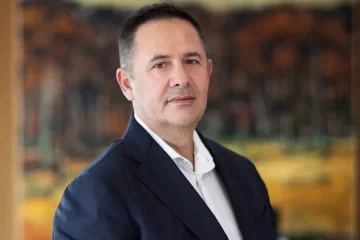
The chairman of the Kosovo Economic Ode, Lulzim Rafuna, urges the Kosovo government and the country's leaders to be more cautious, as he says, with messages being conveyed to foreign representatives. These statements of uncertainty and warnings of any new attack are, according to him, imperiling foreign investment in the country.
Rafuna says that despite the topics with Serbia being open, this issue, according to him, should not be an obstacle for the state to work harder to bring foreign investment to Kosovo and to prove that the country is a stable and friendly state.
OEK head Rafuna in an interview for Kosovo Press has also talked about co-operation with Albania and has sought to deepen even more.
Speaking of the country's economic development, Rafuna estimates that state representatives should deliver as many positive messages as possible that Kosovo is the quiet and stable country of doing business.
Among the obstacles foreign investment does not come to Kosovo are messages being conveyed. Our requirement is to be very careful with messages. We need to convey messages that Kosovo is a very stable country, a friendly country of doing business, an open country to absorb foreign investments that secures foreign investments in Kosovo. As for the open points we have with Serbia as soon as we close, it is better for Kosovo and the entire region.
Thus, our demand has always been that as soon as we get to a final agreement with Serbia, with mutual recognition between Kosovo and Serbia and offer a greater opportunity, a greater security for foreign investors to come to invest here. However, again, despite having them open with Serbia, it is not an obstacle for us to work, to lobby to bring foreign investment to Kosovo by witnessing to investors, that Kosovo is a stable and friendly state”, Rafuna claims.
As for economic co-operation with Tirana, Rafuna says the OEK proposal is that at the Kosovo- Albania is passed on a unique value-added system and goods are not subject to customs procedures.
“We have raised the voice that has a lot of space and opportunity for Albania to ease procedures. We still have many administrative procedures that not only have material costs in the sense that it is spending on business, but it also takes time to complete procedures. It could have simplified and removed many administrative barriers. We have proposed that Albania-Kosovo be passed on a unique system of value-added tax and goods not subject to customs procedures, but that a TVS bill circulates between the two countries, and that would also save business time but also the cost of doing business between our two countries”, Rafuna notes.
Rafuna remonstrates that with visa liberalisation, business circulation has declined.
The most sensitive “Many young people have the opportunity to visit Europe's capitals, and for a weekend they make a very large expense and then that reflects inside because demand contracts. But our expectations are that until September this situation will stabilise. The lack of workers, the failure of fiscal policies, administrative and non-administration measures we have, especially the challenges with the countries of the region surrounding us”, he says.
However, he says despite liberalisation, expectations are to have an influx of diaspora and in that direction increase financial circulation in businesses.
The expectations are that there will be an influx of diaspora, but the other side also has visa liberalisation, where many Kosovars have gone to their families abroad, and this will have an impact. But expectations are that there will be fellow countrymen and there will be a greater circulation during these summer months, especially in gastronomial, and tourism”, Rafuna says.
Speaking of business challenges, Rafuna wishes to change the government's approach to the private sector, and any decision affecting businesses to ask for their opinion.
We have no movement in fiscal policies, we have laws that are not taken based on business opinions. We have many international agreements made without business knowledge or consulting business. There's plenty of room to improve the business environment.
Now it's finally started, we have two meetings of the National Council for Economic Development and Investment, our expectations are that at least this methodology can be changed and taken based on private sector opinion, because it doesn't require anything outside the law, it doesn't require something that doesn't have the business of the region or of the EU, it just requires good correct and sincere treatment to increase activity”, Rafuna concludes. / KP/