9 minutes ago
Europeans Seek to Protect NATO, amid concerns over US election outcome
Periskopi(2 years ago)
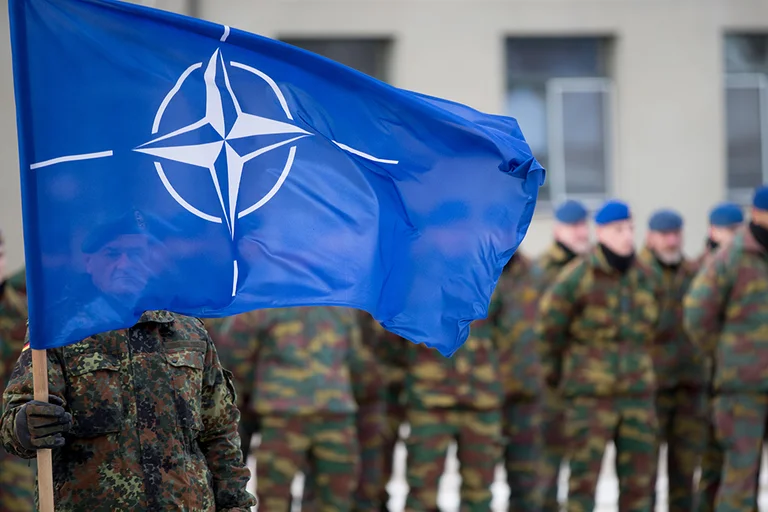
(2 years ago)NATO allies gather in Washington for a summit held from July 9th to 11th. The prospect of regaining power, of Donald Trump, the biggest critic of the military alliance, is dominate the discussion among the allies. NATO made up of 32 European and American countries [...]
NATO made up of 32 European and North American countries committed to protecting each other from armed attacks will stress force through solidarity, while celebrating the 75th anniversary of its establishment, during the meeting that begins Tuesday.
Joe Biden, who turned out to draw allies into a global network to help Ukraine fight Russian aggression, has called the alliance more unified than ever.
But in the background, a dominant topic will be preparing for possible division, in terms of an increase in far-right, not friendly parties with NATO, both in the US and other countries, including France. Such a thing has raised concerns about how strong support will be for the alliance and the military assistance NATO member states send to Ukraine.
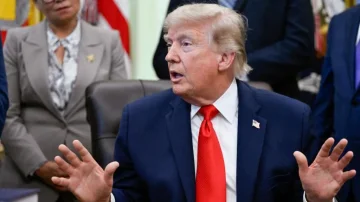
During the first presidential debate, Mr. Biden asked Mr. Trump if he would stay in NATO or withdraw from it. Mr. Trump's answer was with gestures creating uncertainty or indifference.
President Biden's poor performance during the debate prompted numerous concerns and questions whether the 81-year-old is capable of the post or should withdraw from the presidential race.
Even before the debate, European governments have been in constant consultations on what they can do to ensure that NATO, Western support for Ukraine, as well as security for any individual coalition country, survives, even if Mr. Trump wins the November elections.
So are discussions on a potential reduction of the American contribution to the alliance.
Some Americans and Europeans have called this effort “NATO ineffable from Trump” or “from the future” when it comes to impacting the alliance, an increase in other political blocs of the far-right in Europe.
This week's meeting, held in the town where the bilateral defence alliance was established in 1949, was expected to be a holiday on NATO stability. Already, said a European official, this perspective looks like the grim “”.
And there are two reasons for this: Russia's progress in the field of battle in the months when Republicans in Congress, allies of Mr. Trump, delayed the arms and financing of Ukraine, as well as the possibility of coming to power of far-right, not friendly with NATO.
The official spoke to reporters last week under condition of anonymity.
Rachel Rizzo, a senior member of the Atlantic Council's non-party institute, gives that a firm message to Europeans: “freeka from a second term of Trump doesn't help anyone”.
For allies at the meeting, she said, the key will be resistance to the temptation to stop at the details of the unprecedented events in US politics and to lower their heads in proportion to the preparation of Western military aid to Ukraine or a reduction of US support.
Mr. Trump, who both before and after his presidency has spoken with admiration to Russian President Vladimir Putin and harsh for NATO often focuses its complaints on the costs of the alliance and what the US pays.
The collapse of the Soviet Union in 1991 prompted the West to think that the Russian threat had been neutralised, leading to cuts in military spending. NATO allies are already strengthening their troops against any broader aggression by Mr. Putin and a record 23 NATO countries are meeting defence spending targets.
Former Mr. Trump's adviser to national security, John Bolton, said the former president, in a second term, would work to get the US out of NATO. Congress passed a law last year, making this thing more difficult, but a president could simply halt co-operation with some or all NATO missions.
Elections in France, too, appear to bring the far-right party to greater power against NATO under the leadership of Marine Le Pen. The extreme right forces are also gaining ground in Germany.
Some European officials and analysts say this is simply an indication of the decline in voter loyalty to democracy, which NATO has faced before.
They take as an example Poland, where a right-wing party lost power last year and its supporters had been among NATO's most ardent supporters. They also stress Italy's case, where right-wing populist Prime Minister Giorgia Melon has won praise as an ally.
Europeans say they want to <x0-institute” support for Ukraine within NATO, reducing dependence on the US.
European allies also failed to get enough weapons for Ukraine during the delay in a US foreign aid package, the Secretary General acknowledged. Outgoing NATO Jens Stoltenberg on a visit to Washington last month.
This is one of the reasons why I believe we should have a stronger role in NATO”, Mr. Stoltenberg told reporters.
An initiative that is likely to be based on the meeting is that NATO assumes more responsibility for co-ordinating military and financial training and assistance for Ukraine's forces instead of the US. Europeans are also talking about giving Ukrainians a greater presence within NATO's organs, although there is still no consensus for Ukraine to join the alliance.
Europeans say NATO countries are coordinating statements for Ukraine to make clear, for example, that another escalation from Russia would face sanctions and other strong penalties from the West, and that even if the United States under a new Trump administration would not act.
Mr. Trump's campaign officials did not immediately respond to an email for comments.
The possibility of a less dependent US partner under Mr. Trump as president is promoting discussions on a greater role of Europeans in NATO's nuclear risk prevention programme, according to the Poland-based Centre for Studies on Security. The US currently play a defining role in nuclear weapons deployed in Europe.
But European countries and Canada, with their smaller military budgets and economies, are years away from meeting any major NATO gap that the US could create.
If an American president comes in and says: We're done with these ( NATO, there will surely be will in Europe to fulfill the American role”, said John Danny, a senior security associate at the Atlantic Council. “Britianics would take over this”
But “and they will also acknowledge that they do not have the capacity or capacity and that they cannot do it at the speed and scale that the United States at” can, he adds.
“Concept that we are doing NATO's impermeable from Trump or from developments in the future, I think this is largely fantasy”. / VOA