17 minutes ago
Decan hydropower operation sent to Constitution
Periskopi(2 years ago)
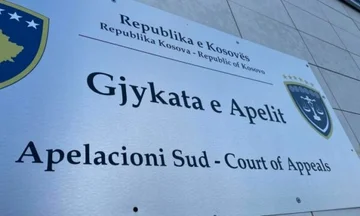
(2 years ago)The issue of hydro-power operation on the river flow to the Decani municipality has gone to the Constitutional Court of Kosovo. The Group for Juridical and Political Studies, Pishtars and several Decani citizens have submitted to the Constitutional requirements for assessing the constitutionality of a Supreme Court act on March 5, 2024. Through this [...]
The Group for Juridical and Political Studies, Pishtars and several Decani citizens have submitted to the Constitutional requirements for assessing the constitutionality of a Supreme Court act on March 5, 2024.
Through this act, the procedures and decisions for providing water and environmental permits were deemed legitimate for hydro- and environmental plants “Belay”, “Decani” and “River 2” These organisations and a group of citizens from Decani estimate that the Supreme Act is contrary to some provisions of the Kosovo Constitution.
Representatives of these organisations estimate that in previous decisions, the Court of Appeals and the Supreme Court of Kosovo have made wrong interpretations of the Law on the waters, and claim environmental damage has been ignored, the REL reports.
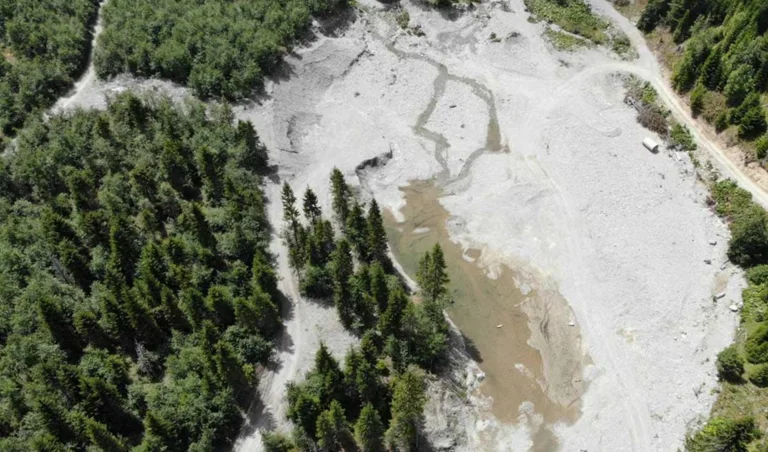
Environmental damage caused by the construction of these hydropower plants on the river flow was also ascertained by the Kosovo Ministry of Environment and Space Planning (MMPH).
The operation of these plants was suspended on several occasions by the Environment Ministry's decision and Spatial Planning Ministry and other court rulings.
In the Supreme Court's recent ruling, it was said that this court has no authority to act against the MMPH's inaction to prevent environmental damage.
In 2021 the Ministry of Environment and Spatial Planning published a concept of rehabilitation of environmental damage caused in the mouth of Decani.
But the way rehabilitation was envisioned was opposed by environmental activists and by one of the largest organisations in Europe struggling to protect rivers from destruction, “Riverwatch”.
On the river route to this city are four hydropower plants owned by the Austrian company Kelkos. Since the start of the plant construction in 2014, activists and local residents have raised their voices about the damage caused by the river and the surrounding area.
They say Kelkos, during the works, has damaged the riverbed and the attractive parts for tourism.
Kelkos was also accused of using more water for electricity production than is permitted by leaving the river without water for much of the year.