4 minutes ago
Croatia announces unwanted three politicians from Montenegro
Periskopi(2 years ago)
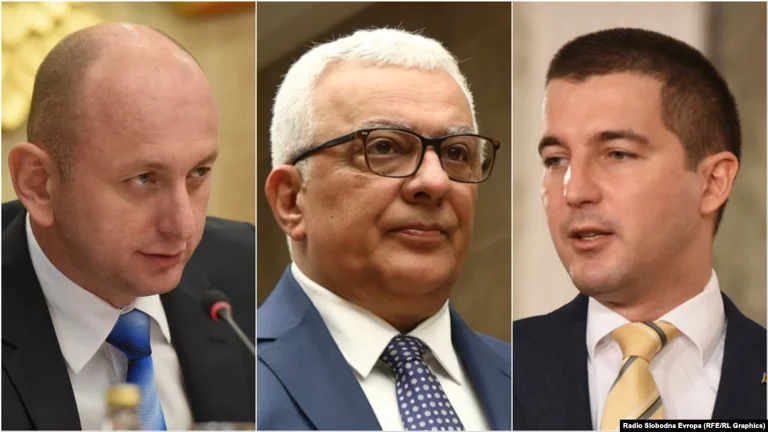
(2 years ago)Croatia's Ministry of Foreign and European Affairs has announced today Montenegro through a note to Montenegro's Embassy in Zagreb that Zagreb has declared Montenegrin Parliament Speaker Andrija Ma persecuted, MP Milan Knezevic and Deputy Prime Minister Alexa Beciq, undesirable people. Persecut me and Knezevic lead two parties of the former Democratic Front [...]
Croatia's Ministry of Foreign and European Affairs has announced today Montenegro through a note to Montenegro's Embassy in Zagreb that Zagreb has declared Montenegrin Parliament Speaker Andrija Ma persecuted, MP Milan Knezevic and Deputy Prime Minister Alexa Beciq, undesirable people.
I was persecuted and Knezevic led two parties of the former Democratic Prorus Front, meanwhile Beciq is leader of the Democrats.
Earlier this week, the Democratic Front became part of the Montenegrin government, which is led by Prime Minister Milojko Spajic.
Zagreb said that this decision was made because these politicians have committed continued actions to undermine good neighbourly relations and, as it were, abuse of Croatia for domestic political purposes.
The Ministry of Foreign Affairs expresses regret that the majority in Montenegro's Parliament decided to ignore the Republic of Croatia's continued calls not to take moves that could negatively affect our bilateral relations and on Montenegro's European path. In this context, the actions of the cited political officials, who cannot be considered benevolent and neighbourly in relation to the Republic of Croatia, are highlighted, nor are they in line with Montenegro's stated goal of membership in the European Union”, the announcement said.
According to the Croatian Ministry, good neighbouring is one of the key elements of the enlargement process and that of stabilising association “and one of the main criteria for assessing progress in Montenegro's EU membership process” in the European Union.
Croatia said it supports Montenegro's EU membership.
Croatia's “Republic expects Montenegro to behave in line with European values and the European spirit, and that it will focus its efforts on further meeting the conditions and criteria in the membership process”, the report said.
I was persecuted and Knezevic led two parties of the former Democratic Prorus Front, meanwhile Beciq is leader of the Democrats.
Earlier this week, the Democratic Front became part of the Montenegrin government, which is led by Prime Minister Milojko Spajic.
US concerned after pro-government parties enter Montenegro's government
The entrance to the Democratic Front and Bosniaks' Party's executive entry by the US Embassy in Podgorica was met with concern, as Washington said the executives have entered parties that do not condemn Russian aggression against Ukraine and oppose European Union sanctions against Russia.
The Democratic Front policy is in conflict with Montenegro's official policy, which is the most serious candidate for membership in the European Union.
Montenegro's Foreign Ministry has not yet commented on the Croatian authorities' decision to three Montenegrin politicians. Reactions still do not come from the persecution, Beciq and Knezevic.
The announcement of three politicians as unwanted comes as, at the initiative of Andrija Mandiqi and Milan Knezevqi, on June 28th the parliamentary majority in Montenegro adopted Resolution for genocide in Jasenovac.
Jasenovac ʹ 70km east of Croatia's capital, Zagreb has been known for the mass killings of Jews, Serbs, Roma and anti-fascist Croats during World War II.
The estimates of the death toll there vary, but independent historians say it behaves between 80,000 and 100,000.
The Croatian government considers events there a World War II crime.
Prior to the adoption of this resolution, Croatia sent a protest note to Montenegro. In spite of that, the resolution was adopted in the Parliament with the support of an MP from Europe now, Milloko Spajich.
In addition to Mandiqi's prorus and Knezevqi coalition parties, the resolution was backed by Alexe Beciqi's Democrats and the prosebe Socialist People's Party.
On the day the resolution was adopted in Montenegro, Croatia said the move does not contribute to building a culture of commemoration, but that it is “instrumentalisation of Jasenovac victims” for daily policy purposes.
The resolution on Jasenovac was a political response by the proserbe forces in Montenegro to the Montenegrin government's support for the UN resolution of genocide in Srebrenica, which was adopted in late May.
The resolution on Srebrenica was rejected by the pro-Serb officials of Montenegro, including by Parliament Speaker Andrija Ma persecuted. /rel