2 minutes ago
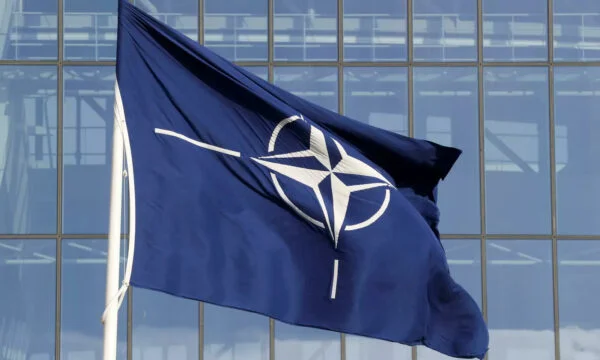
Artificial intelligence, one of NATO's priorities for collective protection of alliance
Periskopi(2 years ago)
(2 years ago)NATO is a security structure consisting of different countries, focused on protecting their territory and collective solidarity. At a time when security threats are different and advanced, Artificial Intelligence (AI) has established its profile as one of the major technologies that can boost NATO's ability [...]
At a time when security threats are different and advanced, Artificial Intelligence (AI) has raised its profile as one of the major technologies that could increase NATO's ability to prevent, detect and react to potential threats.
He has become the next major domain in “the battle's” and NATO allies have made him a top priority, while seeking to strengthen the alliance's collective defence.
It also offers extraordinary potential to improve the understanding and management of strategic information. Based on complex algorithms and machinery, He can identify models, signs and threats that are not easily exposed by traditional methods.
This makes AI a critical partner in NATO's strategic decision-making.
The alliance's upcoming summit in Washington will not only commemorate its 75th anniversary but also focus on NATO protection in an increasingly hostile geopolitical sphere.
The essence of how NATO is seeking to defend itself in challenging times is change in technology with AI.
Fear support increased dramatically since the beginning of Ukraine's 2022 Russian occupation, promoting a competition for AI and the need to develop offensive and defence strategies.
“The US has the ability to build effective offensive and protective systems to prevent, and, if necessary, to overcome opposing actions”, said Mark Montgomery, a senior associate at the Foundation for the Protection of Democracy.
In the area of collective protection, AI can also be used to monitor and analyse information from NATO's information networks, identifying warning signs and improving the length of operational responses.
At the same time, the use of the AI in the context of collective protection requires special attention in the ethics and data security. The Alliance has stressed the importance of protecting data and information security, stressing that using new technologies is in line with international laws and regulations.
It becomes known that in March, NATO presented a technological programme called DANA, who works with public and private companies to develop new technologies and address the challenge of the alliance.
Under DIANA, in 28 of the 32 NATO member states, there will be testing centres in a movement to support innovation throughout the alliance, writes yahoonews, photograph Telegrafi.
But great expansion of capabilities with the AI means that NATO is also seeking to impose safeguard clauses, especially in wartime.
And as people integrate into fear, there is a need for a comparable level of Allah that should be involved in the fight against UAS”, former assistant secretary general said NATO for Defense Investments, Marshall Billingslea.
Billingslea stressed that He is already being used effectively by the US when it comes to intelligence, surveillance and intelligence, but that is now expanding throughout NATO.
As reported, the alliance aims to boost its collective defence, and its AI initiatives are aimed not only at collecting security data but also at more efficient use of it.
Otherwise, the war in Ukraine has highlighted NATO's need to protect its members and partner nations, especially non-member NATO countries in Europe and in areas like Indo-Peacekeeping, from threats stemming from AI technologies.
Finally, Artificial Intelligence represents a great opportunity for NATO to improve its capabilities in collective defence and face the security challenges of the XXI century.