7 minutes ago
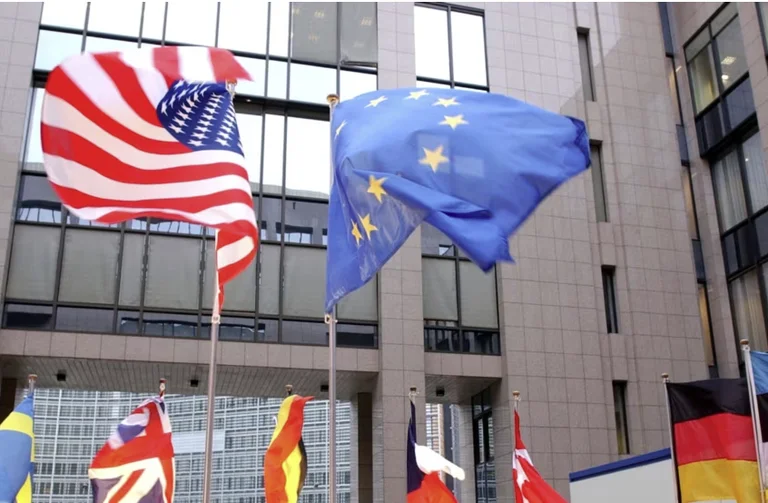
Allies in action: EU, NATO “engage jointly” for Kosovo
Periskopi(2 years ago)
(2 years ago)In 2013, when Kosovo and Serbia reached the first agreement on normalising relations, expectations were to bring new breath between the two hostile countries, address ethnic divisions in Kosovo and pave the way for greater international integration of the state at the time of only 5 years. The negotiating leaders were Hashim Thaci, prime minister [...]
What brought them down to the table and reached out to represent the positions between them after six months of talks was Catherine Ashton, then chief foreign policy of the European Union.
“The negotiations are over. The text [of the agreement] was signed by both prime ministers. I want to congratulate them on their determination during these months and on the courage they have”, Ashton said in April 2013.
The agreement was never implemented entirely by neither parties and they repeatedly blamed each other for failures.
Who prevents lasting peace between Kosovo and Serbia?
Ashton was replaced in 2014 by Federica Moghrini, who mediated several negotiation rounds between Kosovo and Serbia, but also witnessed new waves of tensions between them.
In 2019, EU foreign policy chief Josep Borrell's position took over, under whose mandate Kosovo and Serbia reached an agreement to normalise relations in 2023, but was equally not implemented.
Despite efforts last week, Borrell failed to sit down with Kosovo Prime Minister Albin Kurti at the table, and Serbia's President Aleksandar Vuciq, because, as he said, some conditions Kurt and Vuchy refused.
For both countries, normalising relations is a condition to progress on the road to EU membership. Currently, both are at a halt: Kosovo has received no answer for membership application, made since the end of 2022, while Serbia, by 2021, has not opened a chapter of accession negotiations.
Among them, by autumn, will be Kaya Kallas, who will be confirmed in the position of EU foreign policy chief for the next five years. Kallas, currently the prime minister of Estonia, has expressed itself in favour of Kosovo's European integration and has stressed, as well, need to improve of relations with Serbia, saying a safe Western Balkans “is in the interest of all of Europe”.
For observers of Kosovo-Serbia dialogue, Kallas would have to change the tactic of mediation between the two countries. Condition with only European integration has not worked, says programme Expose Radio Free Europe Maya Pishqevic, Atlantic Council.
The powerful financial infrastructure would be one of the ways to stop financial support from the European Union, which is very important for all Western Balkan countries. Although they complain that it is not enough, it would be too heavy for each of the countries if it were to be left without”, says Pishqevic.
The European Union plans to allocate a 6 billion-euro fund to Western Balkan countries for the period 2024-2027, aimed at accelerating their European integration.
During a visit to Pristina and Belgrade, on 18 June and 19 June, EU special envoy for Kosovo-Serbia dialogue Miroslav Lajcak, who will also be replaced in the coming months, warned that Kosovo and Serbia must prove constructive approaches to dialogue to have access to this fund.
Pesqevic says that this is necessary to apply in practice as soon as possible.
Whoever replaces Lajcak should have other instruments to run the process. If it does not, it will end up like Lajcak [without convincing the parties to implement the agreements]. I'm not optimistic that it will change anything if only [the mediators'] names change”, says Pishqevic.
Taking into account the fragile “quo quo” in Kosovo, Pishqevic adds that the EU would have to be co-ordinated even with international partners, such as NATO, to support the process of dialogue between Kosovo and Serbia.
NATO, with its KFOR peacekeeping mission, has been present in Kosovo since the end of the war in 1999. Under its observation, an armed attack took place last September in the village of Banjsk é northern Kosovo where armed Serb groups attacked Kosovo police, killing a police officer and raising concerns for regional security.
Just a few months before that attack, yes, in northern Kosovo, Serb groups clashed with KFOR members, in protests against Albanian mayors in majority Serb municipalities.
Last week, at the helm of the military alliance, new Secretary General Mark Rutte was appointed. Rutte, who for 14 years served as prime minister of the Netherlands, is closely reported on the situation in Kosovo.
He held several meetings with current leaders last with President Vjosa Osmani June 17th, in the margin of a summit for Ukraine.
Last summer, he was Personally in Kosovo, to call for lowering tensions, following several incidents in the Serb-dominated north.
Jamie Shea, former deputy deputy of NATO's deputy secretary-general, tells of the Expo that the first thing Rutte would have to do in Kosovo, is to strengthen KFOR's mission on its border with Serbia.
After the incident in Banjska last year, when Serb paramilitaries have infiltrated Kosovo and caused chaos, a lack of security at the border has been seen. It's been easy for them to deploy guns and personnel. KFOR has then been strengthened with soldiers from Turkey, Britain, Germany... but must be even more visible in the north and patrol at the” border, says Shea.
He expresses conviction that Rutte, as chief of NATO will keep Kosovo high in the agenda, precisely because of the fragile security situation, but, according to him, it would have to boost diplomatic engagement with the European Union.
I'd like to see Rutten working closer to the president of the European Commission who is still expected to be Ursula von der Leyen in the way former Secretary General NATO, George Robertson, with former senior EU representative Javier Solana to avoid fighting in Macedonia [in the early 2000s]. With joint missions conveying the same message, I think we can see faster progress”, Shea says.
Another thing that, according to him, is the time to happen, is strengthening the partnership between NATO and Kosovo.
After the outbreak of war in Ukraine, authorities in Kosovo have called for accelerated NATO membership, but, given that in its ranks there are four states that do not recognise Kosovo -- Greece, Spain, Romania and Slovakia -- and the decision on enlargement must be taken unanimously, that requirement has not moved forward.
NATO Deputy Acting Chief Jens Stoltenberg, the coalition's Parliamentary Assembly approved last month the advance of Kosovo's status from a member observer to an associate member.
Shea says she would like to see Rutten on “buyar” towards Kosovo when it comes to joint activities.
Kosovo has several partnership activities with NATO like exercise, training, procurement advice but has no access to the full menu of all co-operative activities within the Partnership for Peace, mainly because the four allies continue not to recognise it”.
“In view of Kosovo's apparent interest in becoming a NATO member day, Rutte must try to persuade allies to give Kosovo greater opportunities to approach and interact with NATO. I think this would be a positive signal”, Shea says.
Radio Free Europe asked the Government of Kosovo, as well as the Office for Kosovo in Serbia's Government what they expect from new EU and NATO leaders, but received no answers.
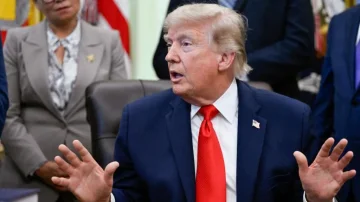
What is certain is that their challenges, even on the global front, will not be a little bit from the war in Ukraine to Donald Trump's possible return to the White House, which has opened up to question NATO unity.
So their work doesn't seem to be boring.