7 minutes ago
Weber: Serbia has a continuation of the failed “peace policy” under Vuciki's regime, this was seen in Banjska example
Periskopi(2 years ago)
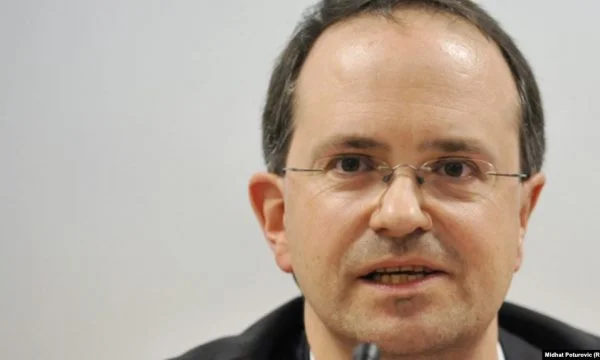
(2 years ago)Increasing the power of rightist parties with the continuation of centrist forces and the decline of liberals and greens are the shortest results of the European Parliament elections. However, Bodo Weber, an expert on the Western Balkans, tells N1 that right-wing growth is lower than predicted in the poll [...]
However, Bodo Weber, an expert on the Western Balkans, tells N1 that the growth of the right is lower than anticipated in the public opinion survey and estimates that the current EU policy will continue.
Bodo Weber, who is also a senior associate with the Council for Democratic Policy in Berlin, says one of the aspects that left the biggest impression in the European Parliament elections is the issue of the ultra-right increase. According to him, this has been the main topic and fear of the past months, but stresses that the growth of these forces is more or less within the given framework.
“In the political and public framework, there was little exaggeration without a broader context, but in public opinion polls it was always clear that the centralist coalition that had run so far would preserve the majority. When we look at the results, the rising ultra-right is lower than the projected”, he points out and adds that when you look at the results in member states, it is much more alive than expected.
As another significant factor, Weber mentions the growth of right in France, Germany, Austria...
The key when the national level is seen is the very negative result for the French president and the weak result of the ruling coalition in Germany”, he says in N1.
Therefore, as he says, elections were announced in France. However, when it comes to Germany, he believes early elections will not be made.
European elections were an expression of citizens' discontent with authorities in individual countries. In Germany we see the ruling coalition crisis. This achieved result fits the broader crisis of this coalition, which consists of three parties, but I believe it will survive because next year we have parliamentary elections”, says Weber.
Asked how the European Parliament's election results will affect the current EU policy, Weber thinks it will continue.
The growth of the right should be seen in the context of several global crises in the past five years from the Covid pandemic, the war in Ukraine, the climate crisis...”, he says.
He adds that further raising of the right will depend on these factors, but also on the civil parties' response to the right rise.
The civil parties generally react defensively and if they continue on that path, there will continue to be a recipe for failing to limit the ultra-right impact,” explains.
When it comes to EU policy on EU enlargement, especially towards Serbia, Weber stresses that it has been declared one of the highest priorities, but that the European Union does not have that capacity and has not found the strength to make a change.
“We have a continuation of failed policy, “peace policy” according to Alexander Vuciqi's regime. We saw it failed and that the EU has no answers, because it is not ready for a substantial strategic change, which we saw in the example of Banjska and election theft in December. We will see the continuation of that false policy of the new priority of the new revival of enlargement and the continuation of support for the Vuciqi regime”, says Weber.
He adds that Vuciq is viewed as partner by ultra-rights like Orban and Melon.
The question here is not that Aleksandar Vuciqi's regime has the support of most important EU actors. The problem isn't in right-wing growth and their support, but in most actors who don't have the strength to turn around behind Banjska. However, neither the IPP can pass several red lines, this we saw in the example of election thefts in December and not accept at the end that the EU is stuck for Serbia under such authoritarian rule”, he explains.
Weber also adds that the fact that the IPP, which belongs to the majority in the European Parliament, has a good view of the regime in Belgrade, will not suffice to overcome Serbia's stalemate on the road to the EU.