23 minutes ago
Long term extension of KFOR soldiers in Kosovo, Bundestag set next week
Periskopi(2 years ago)
(2 years ago)The German government has decided to extend for another year the Bundeswehr stance in KFOR's peacekeeping mission to ensure peace and security in the region. As before, as many as 400 German soldiers and soldiers can be sent for this mission. Government spokesman Stephen Hebestreet said: “now 25 years old, Bundeswehr is actively contributing to [...]
The German government has decided to extend for another year the Bundeswehr stance in KFOR's peacekeeping mission to ensure peace and security in the region. As before, as many as 400 German soldiers and soldiers can be sent for this mission.
Government spokesman Steffen Hebestreet said: “currently aged 25, Bundeswehr is actively contributing to the stabilisation and security of peace in Kosovo.” He stressed that KFOR's contribution is needed for stabilising security and is considered a key pillar of stability in the region. ”
Defence Ministry spokesman Arne Müller said the mandate remains unchanged. “We act according to the existing mandate. The German company in NATO is on alert and has received additional competencies, such as crowd control and unrest.” Asked about an exit strategy from Kosovo, Müller added: “Operations of this size are discussed and always approved by parliament. We implement this mandate until it is decided that it is no longer necessary. ”
The decision must be approved by the German Parliament
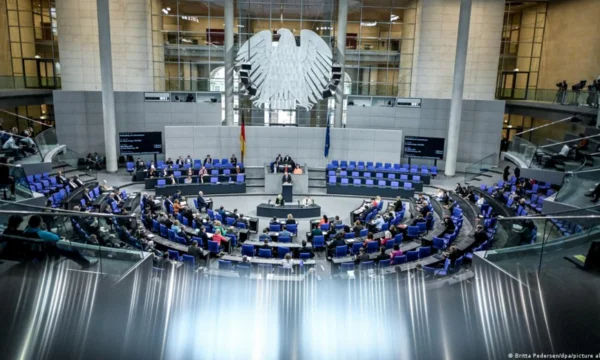
Bundestag will address this government decision on June 6, 2024, with a 40-minute debate. After the debate, the request will be passed on for further review to relevant commissions, headed by the Foreign Commission. The decision, as well as previous years, is expected to be approved by overwhelming majority of votes by the three centre-left coalition parties, the SPD, the FDP and the green and the largest opposition group, the CSU/CSU.
Since 1999, Bundeswehr is part of KFOR, making this operation the longest in German Army history. The German government presents the mandate each year for review and approval in parliament to ensure a democratic and transparent process. The cost of the mission for a year is estimated to be around 21.8m euros. In April, the German government temporarily strengthened its contribution to KFOR with an additional company due to tensions in northern Kosovo.
The north security situation remains fragile
The security situation in northern Kosovo has deteriorated since 2022, with violent clashes in Zvecan and a paramilitary attack on Banjska. Political tensions continued early in 2024, including possible elections in northern municipalities and financial adjustments between Serbia and Kosovo.
Taking into account tensions, stabilisation through KFOR and the presence of Bundeswehr in Kosovo remain essential. In the long term, Germany is aimed at passing security responsibility to Kosovo institutions. Until then, KFOR's presence remains needed to prevent conflicts and short-term escalations, the German government's request to parliament said.
KFOR Remains Guaranteed for Security in region
KFOR is designed to ensure security in Kosovo and supervision of professional, democratic and multiethnic structures. Bundeswehr's involvement includes supporting the development of the Kosovo Security Forces (KSF) and other actors within security sector reform.
UN Security Council Resolution 1244 (1999) remains the basis for KFOR, which both countries want to continue. German government policies target a stable normalisation of relations between Kosovo and Serbia, as well as support of Kosovo's political, judicial and economic stability. / DW