a minute ago
UN report: Israel and Hamas committed war crimes in Gaza
Periskopi(2 years ago)
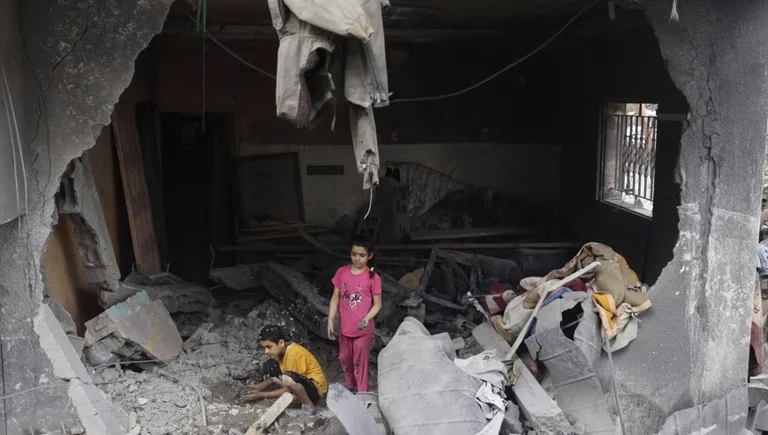
(2 years ago)Both Israel and the Palestinian armed groups in the Gaza Strip have committed war crimes since its start on 7 October last year, according to a report by the United Nations Organisation's Council (OKB) on Human Rights on 12 June. Israel's war crimes include hunger [...]
Israel's war crimes include population hunger as a means of war, deliberate attacks on civilians and civilian objects, sexual violence, torture and inhumane treatment, the report said.
The commission lists attacks on civilians, torture, inhuman and cruel treatment and taking hostages as war crimes committed by seven Palestinian armed groups, mostly by Hamas ʹ the group declared terrorist by the United States and the European Union.
“It is imperative that all those who committed crimes be held accountable”, said Human Rights Council Commission Chairman Navi Pillay.
Pillay called on Israel to end his military action at the Gaza Strip.
It also called for the halting of attacks by Palestinian armed groups and for the release of all hostages.
The taking of hostages constitutes a war crime”, Pillay said.
Israel began the war in Gaza in response to an attack by Hamas in southern Israel on October 7, where 1,200 people, mainly civilians, were killed and some 250 others were kidnapped.
Israel says more than 100 hostages are still being held in Gaza, along with the lifeless bodies of about 30 others.
Since then, Israeli war in Gaza has killed more than 36,000 Palestinians, half of whom children and women, according to Palestinian health officials.
The UN Security Council approved a resolution Monday to support the United States proposal, with 14 votes to and none against it. Russia abstained.
American President Joe Biden's proposal includes three phases to end the war in the Gaza Strip.
The first phase includes a six-week ceasefire, during which Israeli forces would withdraw from “all the residential areas“of Gaza, some elderly hostages and women dealt with relief in exchange for the release of hundreds of Palestinian prisoners; Palestinian civilians would return to their homes in Gaza; and 600 trucks would daily send humanitarian aid to the ruined enclave.
In the second phase, all living hostages, including soldiers, would be exchanged; Israeli forces would withdraw from Gaza and the permanent ceasefire would begin.
The third phase envisions a major reconstruction plan for Gaza, as well as the return of the latest “future hostages to their families. /rel/