5 minutes ago
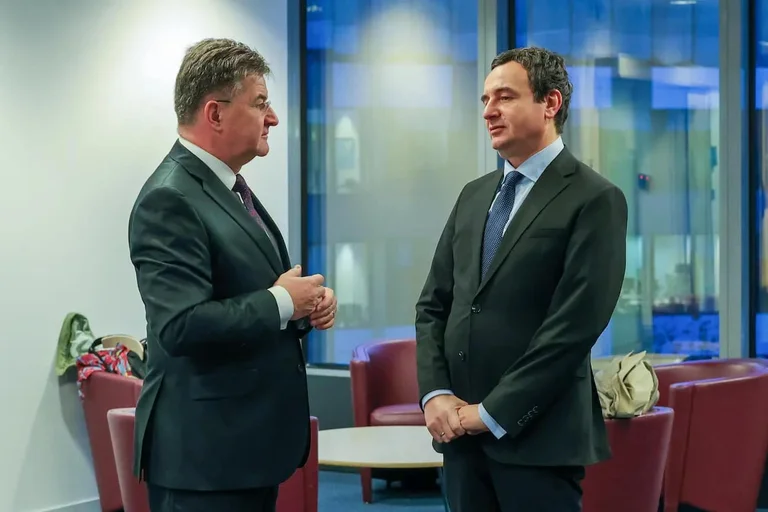
Kurti's request for the signing and drying of Brnabyq's letter, Lajcak: We're wasting time on non-relevant things.
Periskopi(2 years ago)
(2 years ago)European Union emissary Miroslav Lajcak has been asked yesterday about former Serbian Prime Minister Anna Brnabiq's letter to the European Foreign Action Service (EEAS), which has written that the “normalisation agreement does not represent a legal treaty under international law”. German journalist Michael Martens has asked emissar saying that “if Serbia has [...]
German journalist Michael Martens has asked emissar saying that “if Serbia has such a position then what the EU is negotiating”.
Prime Minister Kurti has rejected a meeting with Serbia's president, Aleksandar Vuciq, for this very reason he has asked Serbia to withdraw Brnabiq's letter, sign the agreement and hand over terrorist Milan Radojic to move towards implementation. Lajcak, responding to these issues, has said that the EU repeatedly repeats it at meetings that Radojic has immunity and that it must render an account. He has then more detailedly addressed Kurt's requests for the formalisation of the agreement and Brnabyk's letter.
“As an EU representative, it can provide a definition of what normalisation means, as it is in the EU document, which is to fall, facilitate and help Kosovo and Serbia sign legally binding agreements that will normalise their reports and resolve the open issues between them. It is up to the parties, Kosovo and Serbia to define what normalisation means, but when we say legally binding agreement that says a lot”, he has said.
“Secon second, the agreement we reached last year February/Marchs in Brussels and then in Ohrid, is legally binding agreement on its whole. The parties were told and agreed to this during our meeting in Ohrid that it was made in line with the Vienna Convention on Traffic Law that says the agreement can be shaped by the signature or other way the parties agree on, in this case it is formalised by the statement of High Representative Borell”, he noted.
According to the diplomat who by January is expected to facilitate Kosovo-Serbia dialogue, the EU has said many times that the agreement is legally binding in its entirety and, above all, the projections of this agreement have become part of chapter 35 for Serbia, part of formal relations between Serbia and the EU.
So we're wasting a lot of time discussing something that's really not relevant. What's relevant is that we've made very little progress or no progress in implementing this agreement. This is the key issue”, he added.
I don't think we should retreat to a legal discussion. We made it clear that it was legal and we said it many times. When you look at this from political perspective and from logical perspective Kosovo and Serbia must normalise reports otherwise make progress on the European road and the agreement we have reached in Ohrid is the way to normalisation”, Lajcak stressed.