18 minutes ago
Kupchan: Kurt needs to talk. There's no solution to ultimatum.
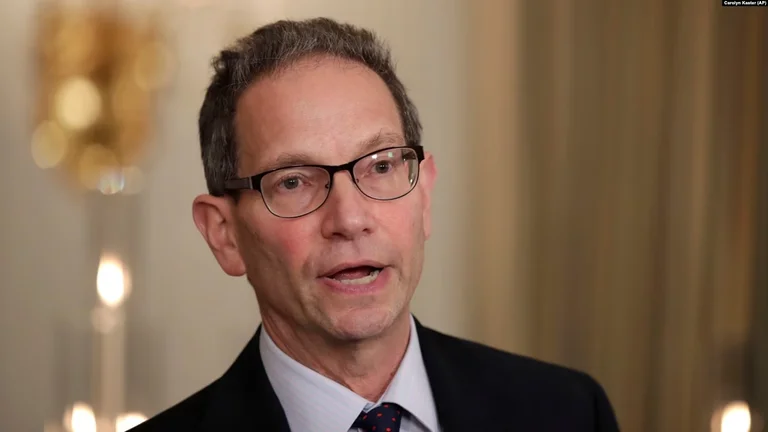
Periskopi(2 years ago)
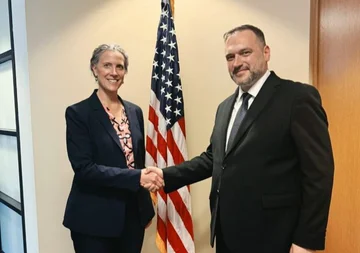
(2 years ago)Charles Kupchan, former director of European affairs at the US National Security Council, says Kosovo Prime Minister Albin Kurti should not refuse to negotiate with Serbia's president, Aleksandar Vuciq, at the meeting called by the European Union on June 26th. Such a thing, according to him, “does not benefit Kurti”. [...]
Charles Kupchan, former director of European affairs at the US National Security Council, says Kosovo Prime Minister Albin Kurti should not refuse to negotiate with Serbia's president, Aleksandar Vuciq, at the meeting called by the European Union on June 26th.
Such a thing, according to him, “does not benefit Kurti”.
“ ... because, under one, Kosovo portrays it as the most stubborn side and, below two, long-term disputes are never resolved with ultimatum”, says Kupchan for Radio Free Europe.
EU foreign policy chief Josep Borrell said Wednesday that Kurti conditioned the continuation of dialogue on normalising relations with three requirements: signing agreement on the road normalizing relations, withdrawing the letter Serbia officially refused to implement the agreement with Kosovo and handing over to Kosovo Milan Radojicic and his group, suspected of armed attack on Banjska.
Borrell said Vuciq was not ready to fully accept Kosovo's conditions.
Kupchan, now professor at Georgetown University, says the leaders of the two countries, sooner or later, will have to make a difficult “compromising” and explaining what they are.
Radio Free Europe: Despite efforts, the European Union failed to meet with Kosovo Prime Minister Albin Kurti, and Serbia's president, Aleksandar Vuciq. EU foreign policy chief Josep Borrell said Kurt issued some conditions Vuciq rejected. Can we view this situation as an impasse?
Charles Kupchan: This round of negotiations is certainly a deadlock. The fact that the talks continue is a good sign, but they have certainly become extremely difficult. There has been very little progress since the verbal agreement [for normalising relations], which has become known as The Ohrid Agreement.
I think it's not for Kurt's benefit to refuse to sit at the negotiating table, because, under one, it portrays Kosovo as a more stubborn party and, under two, long-term disputes are never resolved when one party gives ultimatums or refuses to talk. The sides must sit face to face and resolve the issues on the table.
I think it'd be better if Kurt had talked to Vucinqi and brought his concerns to the table.
But taking preconditions and leaving the table, because those preconditions haven't been met, I don't think it's a constructive attitude.
Radio Free Europe: How do you assess his preconditions?
Charles Kupchan: I think two of them are reasonable. One must be considered. Reasonable is the request [for the surrender of] Radojciki, who has admitted to having participated in the bloodshed in Banjska. Whether Kosovo's legal authority acts, or Serbia's legal authority, he is an individual who must be brought to justice.
The second reasonable request concerns [former Serbian prime minister Anna Brnabyq's] letter. I think that letter is provocative, unnecessaryly, because the Ohrid Agreement does not specify recognition, does not specify that Serbia should accept Kosovo as an independent state, but focuses on normalisation. We know normalisation is a step towards eventual recognition, but it is not productive for Serbia to issue such a black and white statement.
As for the Ascent of the Qur'an as it stands, Sign AgreementI think this is a weaker argument. Because, in my opinion, Vucic rightly believes that Kosovo should establish the Association of Serb majority municipalities before formalising the agreement.
Radio Free Europe: But nine months have passed since the attack on Banjska, and Radojic is still at large. Who should be held responsible for this?
Charles Kupchan: Given that Radojic has pleaded guilty, primarily the Government of Serbia, Serbia's courts have the duty to act. So far, they have failed to hold him responsible. And I think Kurt is right when he says this is unacceptable.
Charles Kupchan: In the recent past, both the United States and the EU have taken a much tougher attitude towards Kosovo. This is understandable to me, because Kurti has taken provocative steps, such as for car plates or the deployment of Albanian mayors [in Serb majority municipalities in the north]. I don't think this has been a productive strategy.
Until the past few years, I think the United States and Europeans have seen Serbia more as the problem and, as a result, the pressure has had to be done on Belgrade. It has been the government of Serbia that has refused to do things, but now there is the perception that Pristina also refuses and that Pristina holds part of the responsibility for paralysis. I don't think this is in Kosovo's interest.
Radio Free Europe: But, at least, as far as car plates are concerned, Kurt may say he has succeeded because cars with Serbian illegal license plates no longer circulate in northern Kosovo...
Charles Kupchan: If this achievement comes at the expense of Kosovo, of its relations with key supporters in Europe and the United States, of normalising relations with Belgrade, I am not sure it is worth it.
Radio Free Europe: So, what's the way out?
Charles Kupchan: Follow the course of normalization. I think United States and the EU have brought renewed energy and determination on this issue. I don't think they're gonna leave Kurt and Vuchy alone. I think they're gonna put pressure on both of us. And, sooner or later, we will reach the finish line. The point is when Kurti and Vucinq é, or anyone who comes after them, if it doesn't happen during their mandate, they will see it politically favourable to make difficult compromises.
Radio Free Europe: And those tough compromises are?
Charles Kupchan: For Kosovo, it is agreed to ensure Serbs living in Kosovo a level of autonomy, with which many Kosovars may be uncomfortable.
For Serbia to accept the reality that it has lost Kosovo forever and that, at the end of the day, Serbia will be better.
But, as I said, these are difficult and painful decisions political leaders must make.
Radio Free Europe: Given that this may have been Borrell's last attempt to mediate a meeting between Kurt and Vuciqi, since his mandate is towards the end, how would you assess Borrell's commitment over the past five years?
Charles Kupchan: Borrell deserves high marks as high representative. I think he's done a great job in a position that's hard. Because, [EU] member states, in some way, are uncomfortable with a high profile European foreign minister, as they fear it goes at the expense of their foreign ministers. So the person in this position has a difficult way to go. And I think Borrell did well.
Radio Free Europe: What are your expectations from the new EU leadership regarding the Kosovo-Serbia dialogue?
Charles Kupchan: I do not foresee any significant change in course or loss of enthusiasm.
Radio Free Europe: Is the strategy going to work?
Charles Kupchan: Once upon a time, yes. The question is, Will you and I be alive when it works?