13 minutes ago
EU leaders still without agreement for key posts
Periskopi(2 years ago)
(2 years ago)European Union leaders (BE) disagreed on the appointment of new leaders of European institutions at their meeting on 17 June. The lack of agreement was confirmed by the outgoing president of the European Council, Charles Michel. “It is our duty to agree to candidates for key positions by the end of June [...]
European Union leaders (BE) disagreed on the appointment of new leaders of European institutions at their meeting on 17 June.
The lack of agreement was confirmed by the outgoing president of the European Council, Charles Michel.
It is our duty to agree by the end of June to candidates for key EU positions and strategic agenda”, Michel said at the end of the European leaders' work dinner.
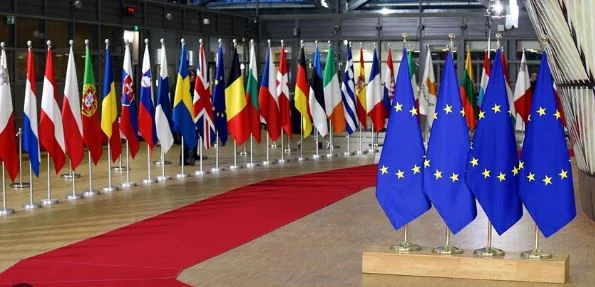
Leaders gathered Monday evening in Brussels in the first attempt to reach an agreement on the new names of EU institutions, the European Commission, the European Council, and the new name in the position of EU High Representative for Foreign Policy and Security.
EU chief Ursula von der Leyeen's candidacy is sure, but now the bloc's leaders are looking for new names for positions that Charles Michel and Josep Borrell have held.
Names that have the greatest chances for these posts, according to unofficial information, are former Portugal Prime Minister Antonio Costa, for the position of European Council President and Estonia Prime Minister Kaya Kallas for the position of EU top diplomat.
It was the first meeting of European leaders, following elections held in EU member states on June 6th-9th and was thought to be among the easiest summits in the EU.
The heads of state and government should have agreed in principle to the names for which there was already an informal agreement.
Everything changed when leaders of those countries or governments coming from the popular European bloc sought a part in the post of European Council president.
The president of the European Council is elected by EU leaders for a period of two and a half years, and the mandate can only be renewed once.
The role of the European Council president is to chair meetings at the level of EU leaders and improve the work of the European Council.
Since the European Council presidential institution exists, each has spent two full mandates of five years at the helm of the institution.
According to some sources from the meeting, the European People's Party has demanded that the mandate of the European Council president be divided into two and a half years, where the People's Party would receive one of the mandates.
This seemed to be the main obstacle and was the reason the leaders disagreed.
The EU's High Representative for Foreign Policy and Security has a double role.
The official holding that position is one of the European Commission's deputy chairmans and has the role of head of European diplomacy.
This person manages the EU's common foreign and security policy.
He also works to create consensus between EU member states and their respective priorities, including the chairmanship of meetings between EU foreign ministers, defence ministers, trade ministers and development.
Leaders will continue discussions at the end of next week when the EU regular summit is held on 27 June and 28 June. /rel