4 minutes ago
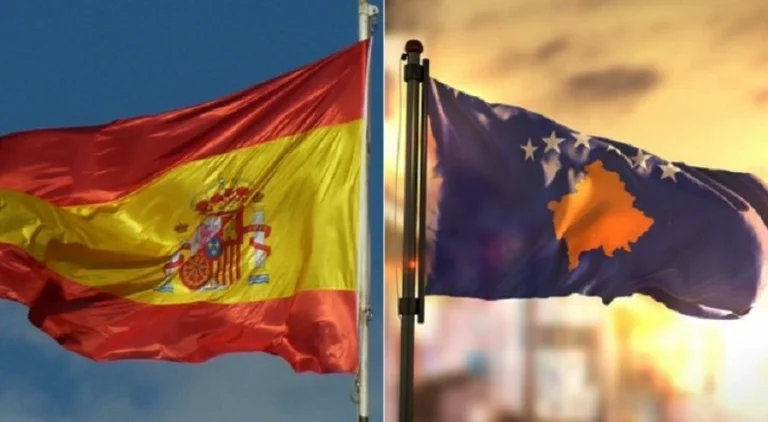
Why don't Spain recognise Kosovo as a state?
Periskopi(2 years ago)
(2 years ago)With a view to contributing to the accomplishment of peace between the Israelis and Palestinians, Spain has officially recognised the Palestinian state. Norway and Ireland did the same. In that decision they joined more than 140 states from 193 UN member states. As Spanish Prime Minister Pedro Sanchez said Tuesday, “State recognition [...]
With a view to contributing to the accomplishment of peace between the Israelis and Palestinians, Spain has officially recognised the Palestinian state.
Norway and Ireland did the same. In that decision they joined more than 140 states from 193 UN member states.
As Spanish Prime Minister Pedro Sanchez said Tuesday, the “recognition of the state of Palestine is not only a matter of historical justice, with legitimate aspirations of the Palestinian people, but is also an incentive to achieve peace”.
“It is the only way to realise the solution that we all know as the only possible to achieve the future of peace a Palestinian state that co-exists with the state of Israel in peace and security”, Sanchez said.
With this movement of the Spanish government, but with its reasoning, is the question of why Spain is reluctant to recognise Kosovo, a majority Albanian state that declared independence from Serbia in 2008, after the war and NATO bombings on Serbia in 1999?
While more than 110 states have recognised Kosovo's citizenship, among which most from the EU, as well as the US, Serbia refuses to recognise it, along with Russia and China. Spain, Greece, Cyprus, Romania and Slovakia have not yet done so.
The Spanish government did not answer Radio Free Europe's question if recognition of Kosovo could follow the recognition of the Palestinian state.
However, the issue of Kosovo's recognition by Spain emerged during the discussion of the foreign ministers' meeting in Brussels on May 27th, in light of Spain's decision to recognise the state of Palestine.
Sources told Radio Free Europe that there has been an open row between parties from Germany and Spain for this.
While Germany was a very convincing “” for Kosovo recognition, “Spain was on defense, arguing that Kosovo was not in the agenda”.
Spain's former ambassador to Belgrade, Raul Bartholomew Molina, had declared during 2023 that his country's stance is clear: Spain does not recognise Kosovo's independence, while supporting EU efforts to normalise relations between Kosovo and Serbia.
This stance has not changed, nor will it change, and all our allies know this very well”, Bartholomew said on June 30th, a day before Spain takes over the presidency of the European Union leadership.
Why don't Spain recognise Kosovo as a state?
The main reason in this regard is believed to be Spain's stance regarding the aspirations of its northeast region, Catalonia, to be independent.
This region has had some unsuccessful efforts to separate from Spain, while official Madrid has strongly opposed the move.
“Crazy, Spain does not want to recognise Kosovo, because it would have to admit that the provinces of a state have the right to divide... They don't want to give Catalonia more ammunition or arguments for separation”, Eran Frankel tells Radio Free Europe.
Now based in the US, Frankel had lived for several years in Spain, where he had worked with Barcelona's Centre for Foreign Affairs as an expert for the Balkan region.
It has some publications on the Balkans and this region's relations with the European Union.
Commenting on Spain's recent move on recognition of the Palestinian state, Frankel says he sees the issue separated from the possible recognition of Kosovo.
The historical and political conditions in Kosovo and Palestine are very different that they are not really comparable”, he says.
What risks Spain from recognising Palestine or Kosovo?
Although he says he can give some sort of impetus to the Palestinian cause, Frankel believes that the governments of states that recognise the state of Palestine, “acknowledge that it is in principle (gest) symbolic”.
The decision may be well meant that the states want to recognise Palestinians' right to self-rule (state), which all agree on in principle. But, no one can agree on how to do that in practice and as long as there are unresolved issues between Israel and Palestine, then the operational (practice) issue for Palestinian citizenship will be continually postponed”, he says.
He believes there are several major obstacles in terms of two-state settlement.
The Palestinian state's <x0... recognition is dependent on not having a war, which unfortunately I'm pessimistic about might happen. So let there be no war and there be Palestinian reconciliation over what kind of government they want and where it will be”, Frankel explains.
In addition, Franenken believes that the recognition of the Palestinian state will not cause Spain or other states any major impact on their position in international politics.
Even if you create some waves or some bad feeling between Israel and the states that are recognising Palestinian citizenship, I don't think it's something that can't be overcome”, he says.
Meanwhile, since Spain sees Kosovo as a separatist movement, according to Frankel, the consequences of possible recognition -- for Spain -- are immediate.
“Katalunians (years earlier) wanted to hold a referendum to hold a referendum to declare independence. Madrid called this illegal. In view of Spain's attitude toward Catalonia, how it would be possible for them to accept a separatist Republic”, Frankel adds.
In earlier official statements about Kosovo's possible recognition, official Madrid had told REL that the “issue of Kosovo territory should be resolved through dialogue between Belgrade and Pristina”.
On January 6th, however, Spain has recognised Kosovo passports, enabling Kosovo citizens to travel visa-free even to this state, following the removal of the Kosovo visa regime on January 1st, 2024.
But the authorities in this country clarified about the REL that it does not imply recognition of Kosovo.
Kosovo leaders, however, consistently declare they expect a change of attitude from non-recognitional European states. /Radio Free Europe