16 minutes ago
Security for Civil Code: Unacceptable Public Declarations
Periskopi(2 years ago)
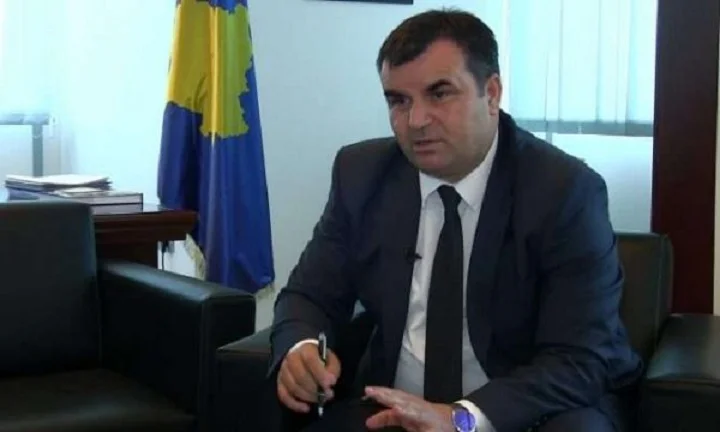
(2 years ago)Ombudsman Naim Celaj considers public discussion concerning the Civil Code to be disturbing. According to him, public statements contain hate speech, are unacceptable, and create extreme polarization. So declares the one who speaks of the Law for Elections and the Serb boycott in the country's north of the population registration process. [...]
Ombudsman Naim Celaj considers public discussion concerning the Civil Code to be disturbing. According to him, public statements contain hate speech, are unacceptable, and create extreme polarization. So declares the one who speaks of the Law for Elections and the Serb boycott in the country's north of the population registration process.
The cell says the Serb boycott in the population census is wrong.
The “Bojkoti that seems to be happening even though I don't want to call it that, not joining the Serb community in the census, I consider it a huge damage to this community itself. It's an unsanctioned right in our legislation and as such it can be exploited or exploited by citizens. But, which I consider wrong because the non-registeration of the citizens of the Serb community will have consequences for themselves, and I believe that this is a wrong approach in relation to interest and rights that citizens of this error themselves have, he claims.
The glass also speaks of the Civil Code and the inability to be brought to the assembly for approval. According to him, the current formulation in the Civil Code for the judicial resolution of same-sex marriage procedures is not formulated in accordance with the Constitution.
The Civil Code and current wording of the solution to the marriage problem or the judicial solution to the marriage procedures of the same sex and gender are not formulated in accordance with the Constitution. Because this law, this Civil Code regulates the same as the Constitution. The constitution says it must be regulated by law. Civil code says it must be regulated by law. So it leaves it unresolved and not in line with the positions and requirements of the Constitution. We do not need to draft laws and describe the Constitution, but we need to draft laws that, in line with principles of constitutional values, the Constitution makes applicable in practice”, he said.
He considers the language used unacceptable, where he says he creates extreme polarization.
I consider the problem related to the Civil Code, especially with regulating marriage procedures of the same sex or gender, I consider two aspects to be extremely disturbing. First, the disk of communication and public statements that often contain hate speech, unacceptable, and language that creates extreme polarization to situations that can escape even in such situations so that citizens come or belong to LGBTI. This language should be transformed into controversial language by expressing beliefs that each citizen has that exploits the right to freedom of expression, but without violating the lives of others who have the right to seek this right and insist on recognition of the rights that each citizen in Kosovo has enjoyed, he declares.
As for the Law for Elections, which it has submitted to the Constitutional Court, the Ombudsman has not responded to statements of current power. He says that after adopting the Kosovo Assembly, they have realised how such has been put into hasty and unequivocally public procedures.
The best thing for the ombudsman's work is that criticism does not respond with criticism, it does not answer because in our work, we are independent and that independence is guaranteed by mechanisms that give a particular weight to the ombudsman institution. And I think it's a tremendous value in our society and our constitutional system. In any case where I find that there are human rights violations, I react and that I want to convince every citizen, each side that always happens in the institution, regardless of whether or not I play well with someone, he said.
The key says the only solution has been to seek interpretation by the Constitution.
We have noted that there are some shortcomings, but the main one has been not taking measures to change women's involvement in electoral lists to political subjects, for which the ombudsman has been in 2019, there has been an indictment in court. The former ombudsman has handed over to the Constitutional Court in Pristina, an indictment with which he has demanded that quotas on the political parties' lists be 50/50, as required by the Law on Gender Equality, as the affirmation rate for achieving equality and not discrimination of women... I expect the Constitutional Court to make a decision on this issue, I am not inclined to comment either to comment on the decisions of the Constitutional Court, but I am keen to trust the Constitutional Court<1> he adds. /tv21/