4 minutes ago
Will Reiss' death bring about changes in Iran's politics?
Periskopi(2 years ago)
(2 years ago)The death of Iran's president, Ebrahim Reis, in an air accident caused shock throughout the Islamic Republic and the wider region. However, it is not expected to bring major changes to Tehran's domestic and foreign policies, experts say. Supreme Leader, Ailetah Ali Khamenei, who has the final word on it [...]
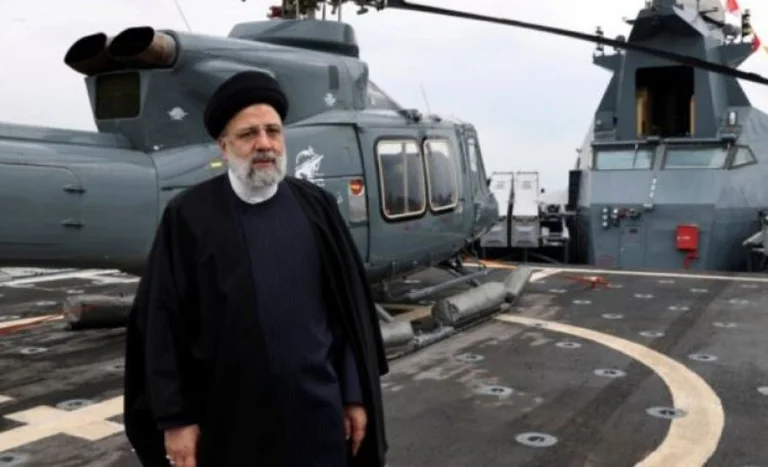
The death of Iran's president, Ebrahim Reis, in an air accident caused shock throughout the Islamic Republic and the wider region.
However, it is not expected to bring major changes to Tehran's domestic and foreign policies, experts say.
Supreme Leader, Aiotlah Ali Khamenei, who has the final word on all major state affairs, and the powerful Islamic Revolutionary Guard Corps are the main centres of power in Iran, where the president's authority is limited.
Reis' death will, in itself, not cause any significant change in Iran's “policies, says Hamidreza Azazi, associate at the German Institute for International Affairs and Security.
The president is the second in command in the hierarchy of power of the Islamic Republic, and strategic guidelines give the Supreme Leader”, he explains.
As president, Reiss supervised a brutal crackdown on protests against the estabilist in 2022, as well as the tightening of so - called moral laws.
The real consequence of the death of the ultra-conservative president, according to experts, could be the struggle for power between the country's hardline forces.
His death could also complicate Khamene's successive plans, since he was said to be the next supreme leader.
Reiss, former chief of the judiciary, was a major supporter of Khamene, while the latter was believed to be preparing him as his successor.
Sanam Vakil, director of the Middle East Programme at the Chatham House Institute in London, says Reis “was eligible for the task. According to her, he even molded his life according to the 85-year supreme leader.
“ [Raisis] was a loyal official, willing to assume the position of supreme leader. It doesn't seem there are other candidates so appropriate”, she says.
However, Reiss' death left an empty spot to fill. With Iranian law, elections should be held within 50 days during which time the clerical institution will try to find a suitable replacement.
For the time being, candidates are Parliament Speaker Mohammad Bagher Qalibach, and judiciary chief Gholamhossein Mohseni Ejei.
Azazi says the next president may have a “significant impact on the general trajectory” of Khamene's successor.
As a result, this will lead to increased interconservative competition to become president”, he concludes. /rel