24 minutes ago
About 100 injured workers this year, the Health Insurance Bill sits in the drawer
Periskopi(2 years ago)
(2 years ago)In addition to the pain and inability to move, Rexhep Gashi also worried about financial coverage of his treatment. Layed down for days at the Orthopeda Clinic of the University Clinical Centre of Kosovo, 52-year-old has the broken leg and several broken spine cells. He fell down while working on a construction stage. “Nuk [...]
Layed down for days at the Orthopeda Clinic of the University Clinical Centre of Kosovo, 52-year-old has the broken leg and several broken spine cells.
He fell down while working on a construction stage.
I don't know what happened to me at that moment. I was so tired. I think that because of my fatigue, I've also fallen”, Rexhepi tells Radio Free Europe.
The services QKUK can offer are free, while others must be covered by itself.
So he paid a vest for the spinal cord, which the doctors recommended.
“Everything has become expensive... it would be good if we had state health insurance”, Rexhepi says February, without wanting to give more details about the payment he made.
Like him, without health insurance, are all citizens of Kosovo, except for those secured through private companies, offering such insurance.
A health insurance law has been adopted for 17 years, but the issue has steadily stalled.
Health Ministry officials say a new bill now “has passed the phases of public consultations” and that the co-operative “group is in the process of administering comments”.
When citizens can benefit from it, it is not yet clear.
The Need for Health Insurance
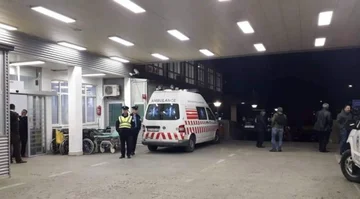
Early this week, when the REL was at the CKUK, he met Hajriz Jonuzi, also injured instead of working.
He was recovering after a long operation because of several broken bodies.
I've tied the material in the crane and when he's started going up I haven't looked at him again and I've dropped it to the top of”, Hayriz tells the moment he got hurt.
Without health insurance, he too is and says he needs it very much.
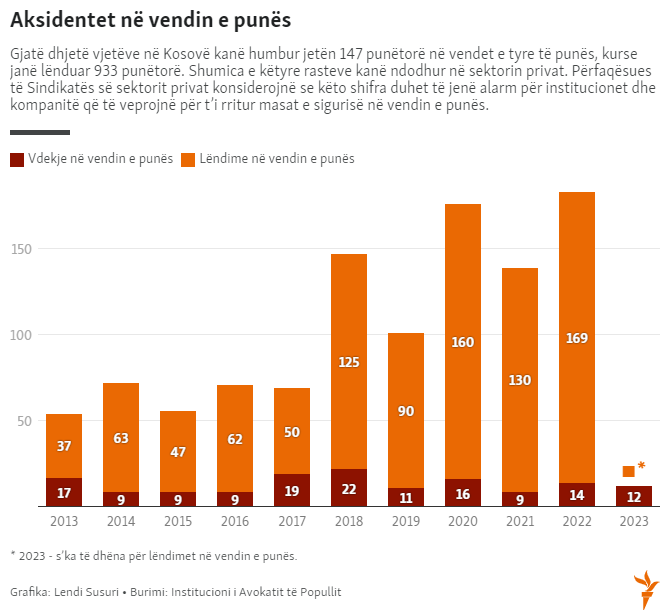
According to the Kosovo Labour Inspectorate, up until now, 98 people have been injured in jobs.
Last year, that number was 345. 11 ended with fatality.
Vesel Zinopotok, from the Labour Inspectorate, tells Radio Free Europe that the largest number of accidents and deaths in jobs are registered in the construction sector.
Yusuf Azemi, chairman of the Independent Private Sector Union, says the figures of those injured at work are, in fact, higher than official ones.
According to him, there are employees who remain silent because employers lure them with financial compensation or promotions.
He says the Law on Safety and Health at Work is under which the employer is obliged to cover all expenses for treating employees who have suffered work injury or professional illness is largely not implemented.
Two injured workers he talked to REL confirmed that, so far, they have not received any compensation from the employer.
Azma expresses concern that not all injured at work can receive appropriate treatment because, she says, the inability to pay for all the services they need on their own.
“In the absence of the Law for Health Insurance, workers do not feel secure. This is an additional reason why workers are abandoning their jobs, but Kosovo as well. In other countries they are finding greater security, both in health and financial terms”, Azemi says.
Saga that ends
Kosovo has no health insurance, although the law was passed in 2007 on this issue, but never came into force, since then the head of the United Nations Mission in Kosovo did not sign it.
After Kosovo's independence in 2008, Kosovo's own governments withdrew the law due to budgetary implications.
The Kosovo Assembly was able to adopt the new Law on Health Insurance in 2014, but neither was it implemented.
Its implementation was said to precede a period of six months for the collection of funds, which would begin on July 1, 2017.
At the time, the Kosovo government allocated 17m euros, but, later, these vehicles withdrew to be oriented to another destination, respectively, for pension fees for war veterans.
Late last month, Kosovo Health Minister Arben Vitita said the new bill has completed the phase of public consultations and that in May it is expected to proceed for approval in the Government of Kosovo.
Lates in recent years over the bill, he reasoned with them, as he said, commitments to prevent and eliminate the effects of COVID-19 pandemic.
There was a delay, because we wanted to go safely, so when the law was done, it wouldn't end up again in drawers, without being applied at all”, Vitita said in a proposal for Radio Free Europe.
At the Kosovo Parliament's Health Commission responsible for proceeding issues related to health, they share different opinions on deadlines regarding this bill.
Mayor Fatmire Kolcak, from the ruling Vetevendosje Movement, manifests confidence that the bill will arrive for approval in the Assembly during June.
But what needs to be said is that the law, when passed into the Assembly, will not be immediately applicable, because the fund must be established. However, citizens will benefit greatly from health insurance... The expectations are high, but you will go step-by-step”, Kolcak tells Radio Free Europe.
MP Shemsedin Dresaj, a member of the Commission for Health from the opposition ranks, respectively, is convinced that there is no political will for this issue to be resolved once and for all.
According to him, neither past governments nor present have taken the matter seriously.
We are the only state in the region that has no real health insurance... There is nothing more expensive than health, so there is no reason for the lack of the Law on Health Insurance, saying there is a high cost of”, Dresaj says.
Lack of health insurance is not the only challenge facing employees in Kosovo.
According to the Labour Inspectorate, many especially in the private sector complain of prolonged work hours, low wages, lack of contracts, work on weekends, and so on.
International Workers' Day, marked every May 1st, finds workers in Kosovo with an average salary of 520 euros, and with the minimum bringing in between 130 and 170 euros. /REL/