5 minutes ago
Williams: Belgrade Must Choose Between West and Russia
Periskopi(2 years ago)
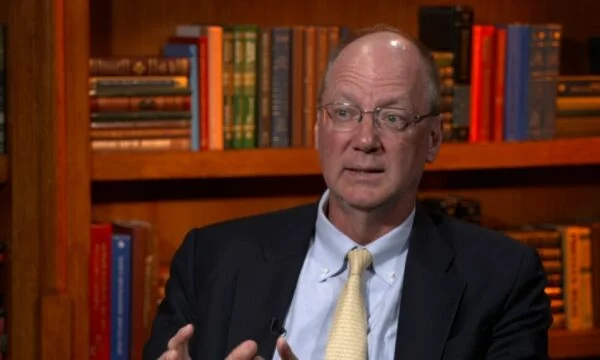
(2 years ago)Paul Williams, professor of American University in Washington and international law expert, believes the Serbian List's decision to boycott the vote for the dismissal of mayors in four municipalities in northern Kosovo conflicts with the interests of Serbian citizens in Kosovo. Prof. Williams estimates the normalisation process has stalled because Serbia [...]
Paul Williams, professor of American University in Washington and international law expert, believes the Serbian List's decision to boycott the vote for the dismissal of mayors in four municipalities in northern Kosovo conflicts with the interests of Serbian citizens in Kosovo. Prof. Williams estimates that the normalisation process has stalled because Serbia rejects the fact that Kosovo is independent and causes provocations and obstacles, including recently efforts to block Kosovo's membership in the Council of Europe. In an interview for Voice of America, Prof. Williams, says Americans and Europeans must make clear to Serbia that it must choose between the West and Russia. 25 years after NATO intervention. Williams, who was an adviser to the Kosovo delegation in Rambouillet, in his conversation with colleague Keida Kostreci, describes Kosovo as a major success story after atrocities broke down and her future was saved, but also because the US learned the value of humanitarian intervention and protecting its allies and friends.
Voice of America: Professor Williams, the Serbian List decided not to participate in the polls for the dismissal of four municipalities in northern Kosovo to pave the way for new elections. The United States and the European Union criticised the decision. What is your opinion on this position on the part of the main political subject of Kosovo Serbs?
Paul Williams: It is a real disappointment that the Serbian List has again decided to boycott the vote. It has been a quarter of a century now that Kosovo has been independent and on its journey towards democracy, the functioning of the rule of law. And this tactic of boycotting democratic votes is not a serious way to protect the interests of Kosovo Serb citizens. Kosovo has demonstrated its ability to uphold the rule of law, to have democratic elections. Honestly, the time has come for Serb leaders in Kosovo to fully embrace democracy, just as all others in Europe engage in the political process.
Voice of America: This is only the latest complication that is not only related to the north, but generally to the stalled process of normalisation between Kosovo and Serbia. In fact, EU envoy Miroslav Lajcak, commenting on this process, said the parties are not ready for normalisation. What factors do you think of this lack of will to respect last year's agreements and move forward with normalisation?
Paul Williams: I think it is important not to follow the European Union or Serbia version, under which both sides are responsible, that it is a mutual reluctance. Frankly, whenever progress is made towards normalisation, Serbia will provoke Kosovo, or create a provocation so that it can say see, the Kosovo government is not as interested in this normalisation as we are. I think Serbia has failed to realise that Kosovo is no longer part of Serbia, that it is an independent state and on its journey to Europe. Serbia has not yet decided whether it is heading towards Europe or Russia and I think it continues to hold behind Kosovo as something it can use to draw attention to its position in Europe. Kosovo has done everything asked of the international community to democratise, reform economically, be a good ally of the West. The time has come for Americans and Europeans to fully support Kosovo's political initiative, and toėia lets Serbia know that now is the time to decide: West or East? If Serbia moves east, no problem. We see what has happened to those who have attached their future to Russia. They haven't done well.
Voice of America: On the other hand, some of the Kosovo government's actions and Prime Minister Albin Kurti have been criticised as unconstructive, such as the dinar issue or earlier the license plates, and have prompted senior American officials to express disappointment. Do you think their criticism and warnings that by such actions the partnership is threatened are justified?
Paul Williams: I see it from the perspective of international law. There are 216 countries around the globe. Kosovo is one of them. What are their rights, privileges, and obligations? They are sovereignty, territorial integrity and political independence. From a legal standpoint, the Kosovo government has the full right to decide which coins are acceptable, within its jurisdiction. Of course I can do this in a refined way, but it's perfectly reasonable to ask the citizens in your territory to use your license plates, use your currency, and enforce the laws of your country. And it's not entirely appropriate for Europeans and Americans to somewhat diminish Kosovo's sovereignty, saying that 90% of your territory, for 95% of your population, rules apply, but there is an exception for this other territory. We've seen what happened in Bosnia, Republika Srpska. Whatever acceptance of Republika Srpska's interests brings more division and division within Bosnia. I think that Kosovo is very wise to think that we do not need a Republika Srpska in Kosovo, we need a full country. You should remember that I wouldn't say this if Kosovo hadn't made the progress it has made for the rule of law, protection of human rights and democracy. If there was another kind of regime, then there could be any questions about it, but in 25 years Kosovo has made significant progress, according to the standards we in the United States and Western Europe use to assess the countries.
Voice of America: Their arguments are that there are some actions that can be avoided to avoid worsening a process they think can achieve. How would you respond to these arguments?
Paul Williams: I think unfortunately one of the main chapters in the diplomatic rule book is the accommodation of the aggressor. In this case, Serbia was a military aggressor a quarter century ago, but also a political aggressor. Undeterred to confuse things, but we saw what happened in 2014 when Russia's activities and aggression towards Ukraine and brought about the war we now have. I disagree with the notion that the weaker side, or ally or friend, will not respond to the provocations of the aggressor State. I think we've learned that when a country tries to stir up another country, not only does it have to protect its rights and privileges, but it should also support the Allies, not try to minimize its response. I think we've seen the consequences when we haven't backed the Allies when they've opposed political aggression or even military aggression. And these consequences are not good.
Voice of America: But you have been mediating negotiations between parties in different countries for a long time. Are not flexibility and concessions on both sides one of the elements for success?
Paul Williams: If the parties negotiate with good will and try to respond to each other's interests, then yes, one side from a position, the other has a position. They give and receive to learn how their interests can be fulfilled. But this is a traditional approach to trade negotiations, or negotiations where friends and allies have a disagreement. In this situation, Serbia has declined that as a result of its cruel crimes, Kosovo, now isolated from Serbia, became an independent and Western-known country. And that there are a number of Serbs living in Kosovo and that are citizens of Kosovo. They are not citizens of the Republic of Serbia. Kosovo must not put any kind of pressure to secede Kosovo Serb citizens from the state of Kosovo.
Voice of America: One of the thorniest issues, if not sharper, is the Association of Serbian municipalities, which the West, US and EU say Kosovo is not showing willingness to implement, though it has signed agreements. Kosovo fears its implementation would bring the repetition of a scenario like that of Bosnia. How do you see this matter?
Paul Williams: I think Kosovo has learned lessons from history. When we work with our clients on negotiating, we always talk about comparisons with similar state practices, what happened to other countries. Kosovo needs to look only 100 miles away to see what happened with the Dayton Accords. In theory, the agreements were built to unite Bosnia. President Milosevic and others insisted on a Republika Srpska, and it was a kind of soft approach so that Bosnian Serb members would have their own community and a grouping. They have used this to undermine Bosnia's sovereignty and sincerely territorial integrity for the past 25 years. So Kosovo looks at these and there are many doubts about this association, that it could be a land horse. In theory, it sounds good, and if the international community had expressed commitment to keep it as an association, where there would be co-ordination for education, culture, language, as a financial co-operation, then it would be okay. But it is often sold as a mild approach, that it is a coordination, that it is an association. And it actually turns into a political entity, which can be used to undermine Kosovo's sovereignty and territorial integrity. So Kosovo has agreed on association, but they need iron guarantees that it will not be used to undermine its sovereignty. You might say to believe Serbia's word, but we have Bosnia as an example of what they did with this kind of association, or political identity.
Voice of America: The United States has said that the association would not violate Kosovo's integrity and authority and would comply with its Constitution. Why not accept such a guarantee?
Paul Williams: In theory it might not affect it, but in reality, and based on previous state practices, it could be exploited as a platform if these were not iron guarantees. I was with the Bosniaks as their adviser in Dayton and then with Kosovars as their adviser in Rambouillet and we heard the version that Republika Srpska, the Federation would function. That they were just temporary. That we had to rebuild and unite Bosnia. But we've seen how he actually did it. So words on paper may seem right, but it is important to be very skeptical. You can go ahead with association again, but there may be other documents clarifying or declaring goals. There is no reason why the United States and the European Union say that, if it is harmless, they can make a bilateral agreement with Kosovo, where the United States' understanding of this association agreement, or Europeans, can be clearly articulated, and which engages the United States in taking certain measures, unless it is conducted as it has been said.
Voice of America: On the other hand, President Aleksandar Vucic is not meeting the Serbian side's obligations. The latest index is trying to do everything to prevent Kosovo's membership in the European Council, though under last year's agreements, the two sides should not prevent each other's integration. How would you characterize these actions?
Paul Williams: I think these actions remove all doubts or uncertainties about Serbia's approach to Kosovo. The Council of Europe offers the possibility that Kosovo's population, whether Albanian or Serb or others, could bring their human rights cases to the European Court of Human Rights. It is a way of being part of the European community of countries, other countries devoted to democracy and the rule of law. So the question arises why Serbia opposes Kosovo's presence in the Council of Europe, which would actually help to support and protect the human rights of the Serb population in Kosovo. Serbia is simply interested in opposing Kosovo and finding ways to undermine its political independence, and the time has come for Europeans and Americans to understand Serbia's blog and take this issue between Serbia and Kosovo seriously.
Voice of America: The added table to resolve this issue cannot be seen outside the context of the war in Ukraine and efforts for Serbia not to line up with Russia but to look to the West, right?
Paul Williams: The West has already tried for three decades to pull Serbia into the Western camp. Serbia needs the West. The West does not need Serbia. Serbia sees its future, and has always been clear about it, related to Russia. And if you look at Russia's status, at the moment they're losing or in the middle of a country that has been a former republic of the Soviet Union and it's a quarter of its size, it has a quarter of its economic output. Russia is actually a tiger of paper. The future of Europe, east or west wherever you want to define it is not in Russia's hands. It's in the hands of the European Union and the United States. If America wants to lift its shoulders and let Serbia pursue its destiny, that's okay. What we've learned from the conflict in Ukraine is that we need to invest even more in our relationship with our allies, as we can thus have influence on global order and keep the world safe, not by accommodate and satisfy our enemies, or those who are undecided, like Serbia.
Voice of America: President Vladimir Putin has presented NATO's intervention in Kosovo as a precedent, setting a parallel between him and Russian aggression in Ukraine. How do you see this rhetoric?
Paul Williams: Putin has a long history of distorting history, law and precedents. Serbia had committed cruel crimes in Croatia, committed cruel crimes and genocide in Bosnia and was committing cruel crimes in Kosovo. The solution of Croatia, Bosnia and Kosovo was independence. If you are part of a territory, a country that is trying to kill its own people, you have the right to secede and become independent, to protect your people. None of these facts apply to the Ukrainian situation. Ukraine was democratic, based on the rule of law, with European orientation. Putin simply did not want Ukraine to line up side by side of the West, so he decided to first take part of Crimea and Donbas territory. The West did nothing and he decided to go in to get everything. Fortunately, Ukrainians opposed, in this case backed by Americans and Europeans, and they have been able to stop it and to some extent contain that aggression, but there is no parallel between what the international community did to protect the people of Kosovo from Serbia, which you can say was a genocide regime based on what they had done in Bosnia. There is no comparison to what Russia is doing. Rather, as we are looking at Putin's indictment of the International Criminal Court, Russians have committed crimes, atrocities against the people of Ukraine. So they are more in position than Serbia was.
Voice of America: President Vucic is also trying to stop a UN resolution next month, which would call genocide what Serbia did in Bosnia. How do you see his attempt at a document that would have no binding power?
Paul Williams: Because the policies Milosevic pursued, and territorial aggression in Croatia -- genocide against Bosnia and cruel crimes against Kosovo -- still have deep traces in the Vucic government. If there had been a real democratic transition, if a transformation of the Serbian regime, Serbian power, had taken place, then it would not bother such an initiative. Many countries that have been in situations where former leaders committed cruel crimes or genocide are willing to accept it and willing to say yes, that is the past. Now we've turned a page and we're a new government. But Serbia has not yet separated from the Milosevic period. And that's why they are very opposed to knowing that the Milosevic regime committed genocide in Bosnia, and I think it's important that today's decision-makers are aware of that. If they follow the same selection scenario as 30 years ago and pressure our friends and allies, they will have the same results, they will have a failed process.
Voice of America: Twenty-five years have passed since NATO-led intervention in Kosovo due to Milosevic's refusal to sign an agreement that would grant Kosovo autonomy. As someone involved in the Rambouillet negotiations, how do you view that decision today, and how do you view the situation today?
Paul Williams: Today we talk about the association agreement, election boycotts and car license plates. I think that if we cut off and see where the situation was 25 years ago, it was very terrible for the people of Kosovo. It was too terrible for security in Europe. The European Union barely succeeded during the war in Bosnia; UN delegated with mission failure U n NPROFOR, the UN defence forces in Bosnia, and the 2 million people of Kosovo, many of whom had been deported, displaced, were really in danger of disappearing as a people. NATO launched a humanitarian intervention, which was the right move. He opposed Milosevic's regime to say basically no. We'll finally set the line. You can't do these atrocities. And they put Kosovo on the road to independence and were recognised by over 100 countries. And more importantly, Kosovo has had peaceful democratic transitions, every time elections have been held. It's passed from one party to another and so on. Transitions towards democracy are difficult, but Kosovo has implemented this transition. So nobody in the United States can look back and say maybe we shouldn't have been involved politically, maybe we shouldn't have done humanitarian intervention. So frankly, by putting aside everyday issues, the overall view is that this is an extraordinary success for all the people of Kosovo who were spared atrocities and for all their children and future generations. As well as for the United States to understand the value of a lesson learned by a humanitarian intervention and support for allies and friends. I would mention something else, if time allows, that the people of Kosovo are highly respected for what they have accomplished. If you look at the last 20 years, there have been several other countries, such as Iraq and Afghanistan, or look at Libya, where the international community entered and offered spaces for people to make a democratic transformation. And they blew it. They have not done what they need to have peace, security, democracy and rule of law. It's not easy. So despite everyday concerns that may have existed in 25 years, it is a good time to realize that not only we saved ourselves, not only did Americans and Europeans help us save, but we have had 25 years of democracy and progress and legal state. So small difficulties here and there, but nothing compared to other countries. Other countries have squandered opportunities. Kosovo has not abused the possibility.