10 minutes ago
Swiss newspaper: Vuchy's buying time, Kurt's rushing.
Periskopi(2 years ago)
(2 years ago)Negotiator leaves. Miroslav Lajcak, the EU's special representative for negotiations between Serbia and Kosovo, resigns; The quest for a successor is ongoing. Leaving is not surprising. Talks on normalising neighbouring relations, which continue since 2011, have stalled. Nothing moves. And if so, then in the wrong direction. Blame [...]
Negotiator leaves. Miroslav Lajcak, the EU's special representative for negotiations between Serbia and Kosovo, resigns; The quest for a successor is ongoing. Leaving is not surprising. Talks on normalising neighbouring relations, which continue since 2011, have stalled. Nothing moves. And if so, then in the wrong direction. The blame for the failure of the Slovak diplomat is cheaper. Unfounded is the charge by Pristina that Lajcak is unilateral in Belgrade's favour.
That's how the current political context between Kosovo and Serbia describes the Swiss newspaper “Neue Zürcher Zeitung” in an article published today.
The reason for the impasse lies elsewhere: neither Belgrade nor Pristina are willing to implement the agreement the EU introduced in February 2023. What seemed like a discovery at the time is a non-retrospective thing, writes NZZ.
In essence, the agreement contains two points: Serbia does not officially recognise Kosovo, but behaves in accordance with circumstances. Above all, it does not prevent Pristina if it wants to join international bodies (as the UN). So it's about de facto recognition. By contrast, Pristina keeps its word given eleven years ago and is giving Kosovo Serbs limited autonomy. Concretically: Allows the creation of a community of the Serb community.
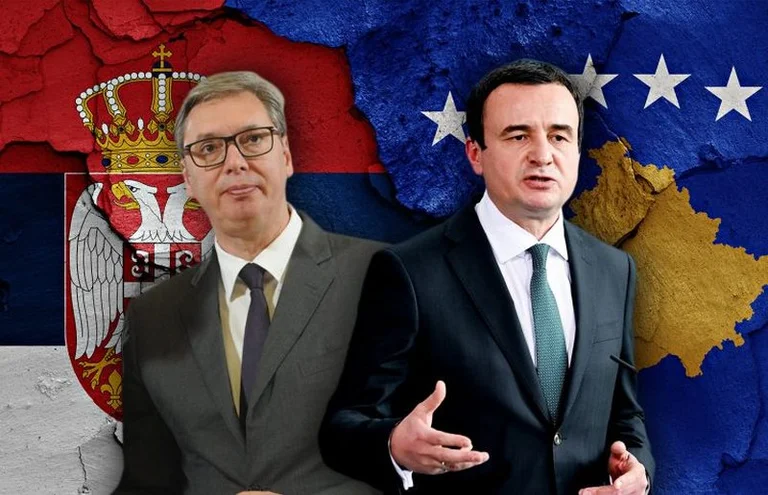
In February 2023, Serbian President Aleksandar Vuciq refused to give his consent to the written agreement. Even his opponent, Kosovo Prime Minister Albin Kurti, has not signed. But EU foreign policy chief Josep Borrell took the stance that verbal guarantees and co-operation for the agreement, however, made it legally binding”, the NZZ article continues.
But contractual partners are fighting for it. He barely returned to Belgrade, Vuciq made it clear that his country would continue to reject Kosovo's admission to the Council of Europe. And his Kosovo counterpart, Prime Minister Albin Kurti, is not raising his finger to implement the long-planned autonomy of Kosovo Serbs.
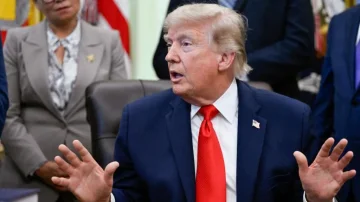
Vuciq hopes for a new chance with Trump at the White House
The Wookie's playing time. He hopes Donald Trump will again become American president in the fall. With it at the White House, the calculator becomes the cards on the Kosovo issue can be re-organised again. After all, it was Trump's envoys who supported a land swap between Pristina and Belgrade in 2018, which Vuciq and Kosovo's former president, Hashim Thaci, had negotiated.
Northern Kosovo, which is 90 percent populated by Serbs and has about 50,000 inhabitants, must turn to Serbia, and vice versa, Presevo Valley in southern Serbia, which is predominantly inhabited by Albanians, must join Kosovo. The project largely failed because of resistance from Berlin, which did not want to accept any new border changes. With Trump, Vuciq hopes, a new effort will be possible.
Kurti, on the other hand, the opponent of the land swap, is hasty. He is trying to create a fact carried out in northern Kosovo. It strengthens Kosovo's sovereignty in this part of the country with severe administrative measures and police resources. It has bases built for heavily armed special police, aimed at financial control and confiscated buildings that were built without permission. Formerly tolerated use of the Serbian dinar will be banned and Serbian appointments signs written in Cyrillic will be replaced, the Swiss newspaper writes.
“In the eyes of the Serbian population, Kosovo's state power looks like an invading regime. Until Kurt's coming to power in 2021, the Kosovo state in northern Kosovo was more roommates than the householder, the article continues.
Ethnic settlements areas in and around Kosovo
After the 1999 war, the Serbian state never completely disappeared from northern Kosovo. The healthcare system, hospitals and ambulance clinics have always been funded by Belgrade. So do schools and university, which operate according to Serbian programmes. By 2013, the judiciary, municipal administrations, and a part of the police were in the hands of Serbs. In 2013 alone, an agreement between Pristina and Belgrade led to the integration of police and courts into the Kosovo system. In exchange, Kosovo would have to introduce the autonomous association of municipalities, which did not happen however.
This collective sovereignty worked well in everyday life. Residents received their services either from Kosovo or Serbia. Some enjoyed the privilege of employment in both administrations. And Pristina paid energy spending because it saw no way to collect unpaid bills in the north. From the start, Kurt's purpose was to end this situation. Because he sees these abnormalities as a threat to the territorial integrity of his country. But how should the state of Kosovo really integrate this field?
Kurti fears Serbian autonomy
There are basically two options: either through autonomy or through centralisation. For the first option, the Serb community community would be the nucleus. It would have institutionalised co-operation between municipal authorities and create a political-administration infrastructure for Kosovo Serbs -- broad but integrated self-government in the state of Kosovo. However, to reduce Belgrade's influence, Pristina would have to invest in large scale. Pristina will have to pay for what Serbia has so far supported education and health from its budget. But there is not enough money and, above all, political will is lacking.
Kurti does not trust Serbian autonomy. He does not see it as an instrument of self-determination, but as a gateway to Belgrade's influence. Against that, it mobilised central institutions, which are supposed to enforce their rules by force if necessary. This repeatedly leads to violent confrontations and to a growing tension by Kosovo Serbs towards the state, whose authority most have not yet accepted.
In November 2022, a dispute over the use of Serbia's license plates escalated. The Serbian commander of the northern region in Kosovo Police was later fired for disobedience. Within a few days, and no doubt after consulting with Belgrade, Kosovo Serbs left the civil service collectively -- police, courts, municipal authorities.
Since then, Kosovo police have been the ones who have secured peace and order in the north. Kosovo mayors took the lead in municipalities and were elected only by a part of the population -- Serbs had boycotted the elections. A vicious cycle of rejection, resistance and depression, which does not provide any good for the future, continues the NZZ.
The worst incident yet took place in September 2023. A Serb uniformed militia attacked a Kosovo police patrol. A police officer and three attackers died in battle. The police later found large weapons depots. Weapons have come from Serbia.
EU, US show up in defeat NATO as security guarantor
The combined efforts of the EU and Americans to convince Pristina and Belgrade to implement the normalisation agreement have achieved absolutely nothing. This is surprising at first glance. But what negotiators lack in their diplomatic arsenal are positive incentives. What worked fifteen years ago no longer works: the EU integration lure. In Serbia, support for membership has dropped below 50 per cent. And Kosovo still has no candidate status. Five EU states refuse to recognise him.
The responsibility for Kosovo's security currently lies mainly on the shoulders of the NATO-led KFOR force. Almost four thousand men and women, as well as the EU's mission for rule of law EULEX, fill a dangerous institutional vacuum that has been born over the past two years.