10 minutes ago
Serbs against registration: Can there be consequences?
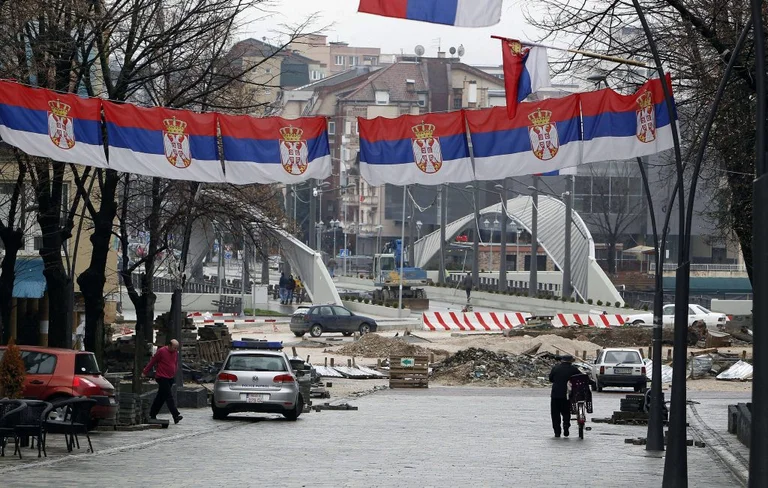
Periskopi(2 years ago)
(2 years ago)Residents of the majority Serb municipalities in Kosovo -- Gracanica, Northern Mitrovica and Leposaviqi -- with whom the Radio Free Europe team has spoken (REL) -- have different views regarding participation in the population census that began on April 5th and lasts until May 17th. Last census in [...]
Residents of the majority Serb municipalities in Kosovo -- Gracanica, Northern Mitrovica and Leposaviqi -- with whom the Radio Free Europe team has spoken (REL) -- have different views regarding participation in the population census that began on April 5th and lasts until May 17th.
The last census of the population in Kosovo in 2011 was not held in four municipalities in the north of Serbia's majority, while Serbs south of the Iber River, at Belgrade's invitation, largely boycotted the process, reports Radio Free Europe.
Similar message has been delivered this time, but not by Belgrade, not for boycotting the process.
The Serbian list, the largest Serb party in Kosovo, has found that Serbs will not participate in the census.
This party has official Belgrade's support.
Members of this party are also at the helm of institutions financed by Serbia's budget.
For example, Serbian List Chairman Zlatko Ellek is director of the Clinical Hospital Centre in North Mitrovica.
Branimir Stojanovic from the Serbian People's Movement party, though he believes the “is not the time” for population registration, says it is almost impossible to cancel the process now.
He stresses that citizens should be aware of the consequences they face if they do not participate in the census.
Allexander Arsenijevic from Serbia's Democracy believes that the delay for another time of population registration is the only solution and that this process can be developed when the socio-political situation is stabilised.
According to the 2011 population census, the total number of residents in Kosovo is around 1.8 million, of which about 25,000 are Serbs.
However, according to estimates by nongovernmental Serb organisations in Kosovo, about 100,000 members of the Serb community live in Kosovo
What do residents in northern Kosovo say?
Miodragou from Leposaviqi, the majority Serb municipality in northern Kosovo, says it will respond to the census, despite the Serbian politicians' messages that “is not the time for such a thing”.
Time is running out, we're counting already. We are citizens of Kosovo and I think we should register”, he says.
Yellen, also from Leposavich, I still don't know if it will be recorded.
I don't know, at the moment I don't think about this”, she says.
Dragan from Northern Mitrovica says he will not participate in population census that began 5 April
As a reason he emphasises that Kosovo authorities want to show how few Serbs live in Kosovo, due to the large migration of its countrymen in recent years.
Our people are not here. People have gone to Serbia, but have not announced they have done so”, he says.
Sonja from Northern Mitrovica has decided to respond to the census and says this process should not be influenced by politicians, but for citizens to decide for themselves whether it is in their favour or not.
I live here and I think I'm gonna stay here for a living. I don't have a choice, I just live here and I'm going to register”, she points out.
Jasmin considers Serbs should register.
Let's know how many of us are here, that this is ours... most people will register, why not? Let it be known how we are here and not always with eternal speculation”, she says.
Serbian stances south of Ibri
The residents of Gracanica, with whom the Radio Free Europe team has talked, have divided opinions.
As Dragan from this predominantly Serb municipality, near Pristina, says that “should register because we live here”, there are those who express scepticism.
Milica says he has not yet decided whether to respond to the census, but thinks the exact number of Serbs living in Kosovo should be known.
The “Since there is no known how many Serbs there are (in Kosovo), how many have left, which is the structure by age, probably should participate (in the census). So let's know what we're dealing with here”, she says.
But Vesna considers Serbs should not be registered, “because the people have already left”.
“What record you? The few poor ones left? Everyone who had a fortune is out of here. I don't see the purpose (for population registration)”, she says.
Why are Serb political representatives against population registration?
Political representatives of Serbs in Kosovo consider there are currently no conditions for population registration. According to them, the current power in Kosovo has no sense of the Serb community and is trying to reduce their role and importance in society.
The Serbian List found that members of the Serb community would not participate in the population census, due to, as they say from this party, <x0) impressions” from the regime of Kosovo Prime Minister Albin Kurti.
As form of “impression”, the Serbian List, among other things, mentions the Kosovo Central Bank regulation, which made it difficult to receive payments in dinars, which are paid from Serbia's budget.
This regulation has entered into force on February 1st and envisions the euro as the sole means of cash payment.
Branimir Stojanovic from the Serbian People's Movement, in his statement to the REL, also mentions “Repressive measures” of Kosovo authorities, adding that Serbs in Kosovo are less and less due to a set of government decisions in Pristina.
Serbia's <x0).Number was reduced, meanwhile, the return process was completely interrupted. Under such conditions, it is unfair and unrealistic to implement the census because many people are unable to return, although they want to return”, Stojanovic says.
According to UN Agency for Refugees data (UNHCR), about 200,000 people have been displaced from Kosovo to Serbia in 1999-2004.
The Kosovo Statistics Agency, which is responsible for implementing the population registration process, has published questionnaires on which recorders will collect information.
Among them is the census of family living outside Kosovo.
Allnexander Arsenijevic, leader of Serbian Democracy from Northern Mitrovica, stresses that the departure of Serbs from Kosovo is continuing because, as he describes, “institutional violence” of Kosovo authorities.
He considers that there is no point in even discussing population registration.
According to him, the official Pristina wants Serbs not registered, so that it can then be testified that they are not much and that they should not enjoy great rights.
He estimates that it would best be for the whole process to be postponed to normalise the socio-political situation.
The political climate is never favourable for registration, but we're talking about a hurricane that hit our community. I'm sure that we as a community can participate in the census only when the situation<x1 is normal, consider Arsenijevic.
The result from the census boycott?
However, Branimir Stojanovic believes that citizens from the Serb community should decide for themselves whether to participate in the census, stressing that they should know that the boycott will have direct financial consequences for local powers.
Based on the Law on the financing of local self-government, separation of state grants for municipalities is based on the total population, minority population and geographic space. That means the census of minority communities plays an important role in the budget sharing for municipalities where they live.
“Bojkot (registering) may also have serious political implications for political processes, on the narration supported by Kurti and many of its close people by Vetevendosje, that there are far fewer Serbs than there really are, and for this reason the rights we have guaranteed are very large”, Stojanovic says.
Bekim Salihu from the Institute for Advanced GAP Studies in Pristina, says the possible non-participation of Serbs in the population registration process will have implications on the municipal budget and local economic development.
“S first, municipalities where the majority Serb population lives will face reduced budgets, because a significant portion of their budget is shared by the Government on the basis of the number of residents. Second, Serb-led municipalities will not be able to assess their human and economic potential, which will lead to shortcomings in any strategy or plans that they undertake. Therefore, population registration has positive effects and no community should refuse to participate”, Salihu says.
Fines
Kosovo Statistics Agency (ASK) has warned that persons who decide not to sign up may face fines envisioned by law -- from 30 to 2,000 euros.
Fines for businessmen are even higher and totaling up to 20 thousand euros.
ASK spokeswoman Hazbije Qeric says about REL's recorders are obliged to go to the same family economy three times, in case they can't meet the citizen at the first two times to get the record information.
During their visit to the housekeeping, recorders are obliged to leave an announcement that they have arrived and have not found anyone.
However, Currici points out that citizens who refuse to provide information requested by the recorder can be fined from 30 to 2,000 euros.
The competent officers dealing with the law execute (regulated)”, Qariqi said.
It clarified that competent organs, in this case, are Kosovo courts and police.