16 minutes ago
Hasani: Kosovo's indictment of Serbia for genocide tried to fail, we can only testify to war crimes
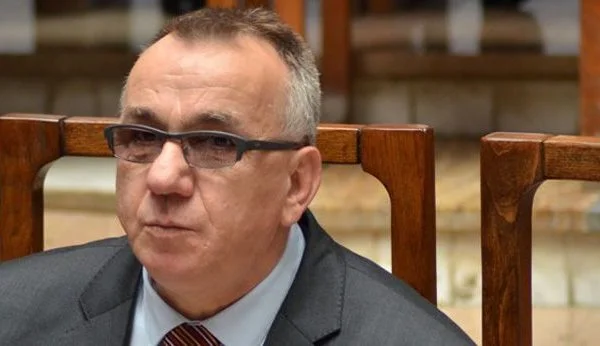
Periskopi(2 years ago)
(2 years ago)The General Assembly of the United Nations is expected to adopt a resolution with which July 11th will be announced on Srebrenica Genocide Memorial Day. Enver Hasani, professor of Law and International Relations at Pristina University, says the effect of this resolution will be great on political terms and [...]
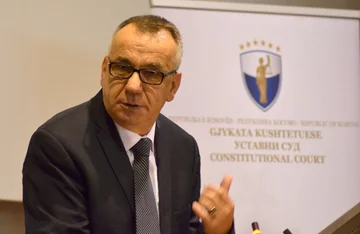
The General Assembly of the United Nations is expected to adopt a resolution with which July 11th will be announced on Srebrenica Genocide Memorial Day. Enver Hasani, professor of Law and International Relations at Pristina University, says the effect of this resolution will be great in political and moral terms and that with it is delivered a message to the “authoritarian countries in Europe and beyond, that Western culture and civilization no longer stand up to the denial of genocide and the deglarification of its heads”
Speaking of hysteria in Serbia and Republika Srpska towards this initiative of Germany and Rwanda in the UN supported by other powerful Western countries, Hasani says M reactions. Dodik and A. Vuciq should be seen in the light of the current Serbian mentality, where they see themselves as the victims of others as victims and genocide. According to Hasani, it is due to the fact that Serbia has gone into a process of deancing like Germany after World War II.
Serbia refuses to submit such a process and considers the West to blame for its entire disaster, in particular for removing Kosovo's hand, which they see and experience in metaphysic terms. That's the whole problem: Serbs have committed genocide everywhere in the former Yugoslavia, and that's what they did with the name of Kosovo in their mouth, their own extinguishing Jerusalem. In the name of this myth, they are again able to commit crimes and genocide, if that is the case. Therefore, the West is striving, through Serbia's integration into Euro-Atlantic structures, in the long run, to achieve its deconcilisation and the molding of Serbian society according to Western standards of good governance”, he stresses.
According to Hasan, such a resolution also aims for Serbs to come to their senses “report with their role in the genocide in Bosnia and Herzegovina and other crimes committed during the wars in the former Yugoslavia” even though such a thing “is not an act, but a long process and as part of Serbia's Euro-Atlantic integration”.
Commenting on plans for Kosovo's indictment of Serbia, which Prime Minister Kurti has been running since coming to power, Hasani insists that Kosovo can testify only to committing war crimes, not to genocide.
“Sic I said three years ago, again I have to repeat that raising the genocide indictment against Serbia would constitute the greatest favour for Serbia, because such an indictment is deemed to fail. This represents a step that according to the rule should not take a government and a political force because the future of Kosovo and its citizens,”, is affected.
“For the crime of genocide, even the little evidence that existed has been compromised and can't be rendered into any judicial procedure, while proving special purpose or dolus specialisAs this element of the genocide criminal record is called, it constitutes an impossible mission because Western states are unlikely to offer wiretapping or other evidence charging the Serbian government and state for genocide”, Hasani adds.
The Complete Interview
Express newspaper: There is a draft resolution running for genocide in Srebrenica and is expected to be put to the polls at the UN General Assembly next month. Its goal is to condemn the denial of genocide with it, to punish the praise of (Serb) criminals, etc. If there are enough votes and approval, what would be its effect?
Hasan : This answer has two dimensions, a judicial dimension, and a political and moral dimension. In the narrow aspect of law, UN Assembly resolutions do not have judicial powers, except in cases of high importance related to preserving international peace and security. In these cases, resolutions are adopted by two thirds of all members of the Assembly. This is not the case with the draft resolution for the 11 July declaration as a day of commemoration of genocide in Srebrenica. As a result, its effect is political and moral as a message to the state of Bosnia and Herzegovina, its citizens and direct victims of genocide that the world has not forgotten and forgotten the massacres and genocide committed against them. Beyond that message, another important aspect is the message about the future, never to repeat such evil. For this reason, the draft resolution has provisions for concrete property of states in the field of education and other spheres to take concrete measures for the education and research of genocide crime so that it no longer repeats itself. In addition to these political and moral effects, such a resolution has great mobilizing powers in the international community so that its members will have an orientation for political action and the enterprise of measures in relation to eventual genocide deniers in Srebrenica.
The history of UN General Assembly resolutions shows that in some cases, despite the limited judicial effect at the beginning of their extraction, they have in time become instruments with huge judicial judicial power, known as the norm jus cogensThe application of which does not stand for exceptions, deviations, or arrogance, except by establishing standards with equal law enforcement. Such are the case, suppose, the 1970 colonial resolution and the resolution on friendly relations between countries and 1970. In the realm of international peace and security, such is another resolution, known as “United for Peace” (1950). The first two resolutions have played a huge role in the decolonisation process, turning the UN into a midwife for the birth of new states in Africa and Asia in the years of the last century's CHA60s and CHA70s. Resolution “United for Peace”, however, has had a more limited effect and served as a means of pressure on major powers, members of the Security Council to play their role with the UN Charter in maintaining and promoting international peace and security.
To return to your question a little more directly, I judge that the effect of this resolution will be great in political and moral terms, because I will convey a clear message to authoritarian countries in Europe and beyond, that Western culture and civilisation no longer endure the denial of genocide and the deglarification of its heads. This, in other words, will serve as a clear distinction between Western culture and civilisation and other parts of the globe in which the genocide issue is still taken as something that happens and can happen without punishment.
Express newspaper: Sponsors of the resolution are Germany and Rwanda. What symbolic forward is this, and in general what message does the initiative carry for Serbia and Republika Srpska as two countries denying the Srebrenica genocide confirmed by the JND?
Hasan: Symbols clear: Nazi Germany has been victimizing and leading the genocide, while Rwanda in the April period of July 1994 has been the victim of brutal genocide, while the UN has observed, disappointing the expectations and expectations of millions of Rwandans and around the world that it would not allow that. In the two cases, however, the international community has played a crucial role in healing the wounds of genocide and human trauma. With international communities here is largely meant by the Western world.
In the German case, overcoming the genocide situation has been done through the promotion and enforcement of a process known as dencipheration: the Germans of 1945 have not been enthusiastic about accepting the genocide committed in their behalf, so there has been a need to install this process from the West. Part of this process has been the Nuremberg Tribunal, who has judged Nazi criminals who have individually been responsible for the genocide crime of Jews, Roma, Slavs, disabled persons, the community we now term as LGBT Plus and other groups marked as undesirable by the Nazi regime of time. Densification has been a profound process and has included reforming youth through drafting new learning plans and programs and research, including in the first place in relation to German history and Germany's relationship with other peoples.
In Rwanda's case, efforts to heal the traumas of genocide have also been assisted by the Western world through development programmes, change of plans and curriculums and research in relation to the role and position of colonists and ethnic groups Hutu and Tuts, as well as the country's perspective, including their report with neighbours. In two cases, it is worth a powerful re-exemplification of Westerners who have helped these two states transform and overcome the traumas of genocide. If it were for the UN, in two cases nothing would have been done. The same is true in the case of Srebrenica and the genocide of Bosnia and Herzegovina's people and State: it is the Western world that is leading the civilisation process to prevent the repeat genocide through the legalisation of its leaders and the very act of such ugliness.
Express newspaper: In 2015 there was an initiative for the Security Council to pass such a resolution but was blocked by Russia's warning to veto. What's the difference now that the Assembly approves of it, if that happens?
Hasan: Had such a resolution been adopted by the Security Council, it would have been made under Chapter V. II of the UN Charter. This means that the eventual vows contained in that resolution would have had compulsory power with general effect on all states of the world. The states, in other words, would have been obliged to take the measures required by the Security Council, as they are, to assume, the introduction and teaching of the conviction of attempted denial of genocide and legalisation of its leaders, the mandatory assignment of July 11th as the date for commemorating genocide in Srebernica and so on. For not complying with such obligations, there would have followed the sanctions that the Security Council could always take against those states that fail to comply with his orders given under Chapter V. II of the UN Charter.
Express newspaper: Serbia and Republika Srpska are not mentioned in the draft resolution, but there is a hysteria in Belgrade and Banja Luka reactions. Milorad Dodik, the leader of the Serbs of Bosnia and Herzegovina, from Belgrade to “Peace” denied the genocide, while Aleksandar Vuciq is contesting voting procedures at the UN General Assembly, while mentioning genocides to other states, Turkey genocide Armenian, Germany Nazi genocide and so on. In fact, Germany is also enthralled by the genocide committed in Namibia at the beginning of the century. The20s, naming it the first modern genocide, while Turkey attributes the crimes committed against Serbs during the Ottoman Empire as genocide. How do you view these reactions?
Hasan: In Serbia, unfortunately, there is a general belief that they are victims and others victimising. Such a mental code existed among the Germans after World War II. In two cases, such mental situation has been the result of the long-term indoctrination of peoples with the ideology of extreme nationalism. In contrast to Germany, which was subjected to an intensive and systematic debut process, Serbia has not had the chance to benefit from such assistance from Western countries. If it were not for denacification, Germany would have been an isolated, primitive, and fragmented country between Western countries and Russia, whereas Europe today would not exist in this image that we see. Serbia refuses to submit such a process and considers the West to blame for its entire disaster, in particular for removing Kosovo's hand, which they see and experience in metaphysic terms. That's the whole problem: Serbs have committed genocide everywhere in the former Yugoslavia, and that's what they did with the name of Kosovo in their mouth, their own extinguishing Jerusalem. In the name of this myth, they are again able to commit crimes and genocide, if that is the case. Therefore, the West is striving, through Serbia's integration into Euro-Atlantic structures, in the long run, to achieve its denacisation and the molding of Serbian society according to Western standards of good governance.
M. Dodik and A. Vuciq should be seen in the light of the current Serbian mentality, where they see themselves as the victims of others as victims and genocide. That's what the average Germans thought in 1945. So thought the majority of the Hutu population who actively participated in the genocide against the Tuts community in April of July 1994. Part of this indoctrinom is the generation of propagandistic arsenal through the attack of other peoples, as Serb leaders do today when they accuse Germans, Turks, Rwandans and others of genocide. Serbs and their leaders do not understand that, the fact that Western countries once committed genocide, sets forth the main incentive to never repeat such an ugly crime and, moreover, to prevent others from committing the crime in question within Western political and cultural space. One day a generation of Serbs will understand that. I don't expect this to be done by A. M. Dodik and this generation of the Serbian people, because there has not been a process of disparation.
Express newspaper: What happens to this resolution for Serbia, and, if we use a terminology of theirs, for the Serbian “world”, in terms of law, political and image?
Hasani: The Serbs' coming to their senses in proportion to their role in the genocide in Bosnia and Herzegovina and other crimes committed during the wars in the former Yugoslavia is not an act, but a long process and as part of Serbia's Euro-Atlantic integrations. Serbia cannot have an alternative other than the Euro-Atlantic world, for the simple fact that this world is the perimeter that covers what Serbs describe as the Serbian “bot”. This Serbian world can only be realised within Euro-Atlantic integrations and as long as it does not conflict with it. On the contrary, that world remains a worthless, weightless, political, and otherwise.
Admittedly, the proposed resolution does not affect Serbs as a nation. It has to do with announcing a date aimed at commemorating a permanent tragedy, so generations coming to understand and educate themselves in an anti-genocide and anti-violence spirit. In a legal sense, surely sponsor countries and countries that vote for it will accept the pledges of the resolution as obligations. In February, politically, it never affects the image and weight of the Serbian nation in the Balkans and beyond, while legally the provisions of the resolution in question, certainly become part of the judicial order of sponsor states as well as those who vote for it.
As it is known, Serbia has been acquitted of genocide because the International Court of Justice in 2007 has found that it had no international responsibility for the genocide crime in Srebrenica and, therefore, could not be forced to pay any compensation for the genocide in question. At the same time, the International Court of Justice had found that the July 11th massacres in Srebrenica were committed by Republika Srpska forces and, as such, constituted genocide.
Express newspaper: There were reports that with this resolution Serbia will be declared a genocide state?
Hasani: A country cannot be declared genocide. The responsibility for genocide in Srebernica has nothing to do with the Republic of Serbia, as the International Court of Justice found. The crimes committed in Bosnia and Herzegovina, including genocide, are individual crimes for which dozens of Serb military and civilians from Bosnia and Herzegovina have been convicted. These two types of responsibility must be strongly identified: there is never a chance that a state will be declared a genocide state. This is the standard of international law, based on the difference between the responsibility of the state and the individual criminal responsibility of the carriers of state functions. The state answers to violations of international law, as the International Court of Justice has found in Serbia's 1994 case, when it said it violated the provisions of the Genocide Convention, because it has not taken measures to prevent Bosnia and Herzegovina's Serb incidents and aid in carrying out genocide. JND, therefore, has not said Serbia is guilty of genocide, for the simple fact that the state cannot be brought to the dock and convicted. This implies that the resolution in question, once adopted, could never serve as a basis for any compensation or for raising any lawsuit against Serbia for compensation, nor for producing any other consequences for Serbia and the Serbian people.
Express newspaper: In Kosovo the issue of the indictment for genocide against Serbia is current, or as Prime Minister Kurti “said about crimes committed during the war in Kosovo, which are war crimes, crimes against humanity and genocide”. Can this be done, and how?
Hasan: As I said three years ago, I still have to repeat that raising the genocide indictment against Serbia would amount to greater favour for Serbia, because such an indictment is deemed to fail. This represents a step that, according to the rule, should not make a government and a political force, because it touches the future of Kosovo and its citizens.
The failure of such a indictment will be at the beginning, because Kosovo cannot be the plaintiff because it is not a member of the UN and no party at the Genocide Convention. Even if it were a party, or even if a third state were to file such a lawsuit instead of Kosovo, judging the merits of the case would be against us because, at best, Kosovo can only testify to war crimes, not genocide. For the crime of genocide, even the few evidence that existed has been compromised and can't be exchanged into any judicial procedure, whereas the evidence of special purpose has either dolus specialisAs this element of the genocide criminal record is called, it is an impossible mission because Western states are unlikely to offer wiretaps or other evidence charging the Serbian government and state with genocide. This was done in the case of Srebernica, but only in relation to international criminal responsibility -- not even in the case of violations of the Genocide Convention -- which was completed in 2007. In Kosovo's case, in other words, there has been no criminal procedure against the Serbian leadership, where the charges and final conviction have been for genocide, as has been the case with Bosnia and Herzegovina's Serb military and Srebrenica. For these reasons, I repeat, the establishment of such an indictment constitutes adventure and total state responsibility and a huge service to Serbia. The International Court of Justice's ruling would clear Serbia as if Pont Pilate, who would then win a historic argument for not including the recent genocide in Kosovo. This situation has happened with Bosnia and Herzegovina (2006) and Croatia (2015). For Kosovo in particular, the case of Bosnia and Herzegovina's indictment is a good guide: The International Court of Justice in 2007 has found that there has been genocide in Srebrenica, that Serbia has violated Article 1 of the Genocide Convention because it has not prevented the genocide in Srebrenica, but it has not been proved that genocide in Srebrenica would not have happened had Serbia tried to prevent such a thing; therefore, financial compensation for failing to prevent the genocide in Srebrenica is not considered by the International Court of Justice as the proper form for compensation.