4 minutes ago
dinar talks in Brussels continue, next meeting in two weeks
Periskopi(2 years ago)
(2 years ago)The next meeting is expected to be held after two weeks in Brussels again, the Kosovo government announced after today's meeting that ended without results. Kosovo and Serbia have failed to agree on the issue of the Serbian dinar, which was banned in Kosovo on February 1st, nor after Thursday's third consecutive meeting in [...]
The next meeting is expected to be held after two weeks in Brussels again, the Kosovo government announced after today's meeting that ended without results.
Kosovo and Serbia have failed to reconcile the issue of the Serbian dinar, which was banned in Kosovo on February 1st, nor after Thursday's third consecutive meeting in Brussels, confirmed the chief negotiators of both countries who accused each other of failing to find a solution.
This time around, the Serbian side refused to co-operate and to place the interest of citizens as a priority, insisting on licensing an illegal entity like “Postanska Banka”. Following the EU proposal, the Serb side has again been unwilling to reflect on this proposal and have required additional time. The next meeting is expected to be held after two weeks in Brussels again”, the government's communiqué says.
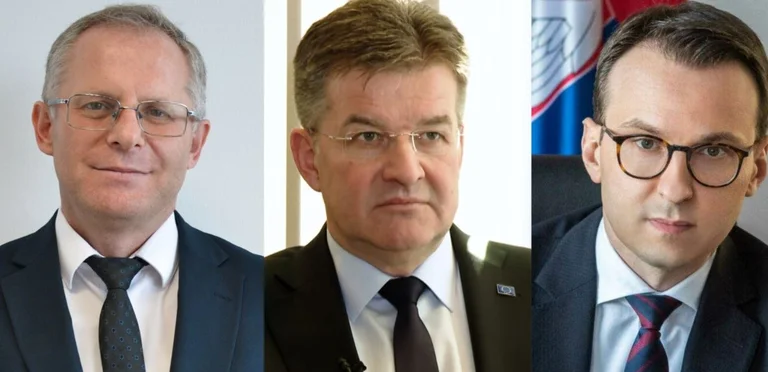
Even today, we have had major differences”, Kosovo's chief negotiator, Besnik Bislimi, said, speaking to reporters after meeting with Serbian counterpart Petar Petkovic, under EU envoy for dialogue Miroslav Lajcak.
“While the Kosovo side has discussed options for how Kosovo Serbs can get financial support even further from Serbia, the Serbian side has been working as Postanska bank lawyer (Serbian Post Savings Minister) and has been discussing how to license it”, Bislimi said.
Meanwhile, Serbia's chief negotiator, Petar Petkovovic, said Pristina did not show “enough willow” for an agreement and that even a meeting regarding the topic is expected.
We reiterated our position and proposal, which is balanced and implies a compromise solution. On the other hand, there was not enough will on the part of Pristina. I won't talk any more about it, since there will be another meeting on this”, he said.
The use of the dinar for cash payments in Kosovo was banned on 1 February, when the Kosovo Central Bank enacted a new regulation, which defined the euro as the only official currency in the country.
The European Union, which facilitates the dialogue between Kosovo and Serbia in Brussels, hoped that differences in the approach between the sides would be overcome and a solution would be reached, under which Serbian citizens in Kosovo could continue to accept benefits from the Serbian state.
After meetings in Brussels, Lajcak said Thursday's talks were for finding a <x0 temporary resolution” for persons affected by the CEC.
The “managed to bring together attitudes between the two sides' proposals. I plan to continue discussions very quickly based on EU ideas for compromise”, he wrote on X, formerly known as Twitter.
The European Union, which facilitates the dialogue between Kosovo and Serbia in Brussels, hoped that differences in the approach between the sides would be overcome and a solution would be reached, under which Serbian citizens in Kosovo could continue to accept benefits from the Serbian state.